Best Training Treats for Blue Heelers (and How Many to Give)
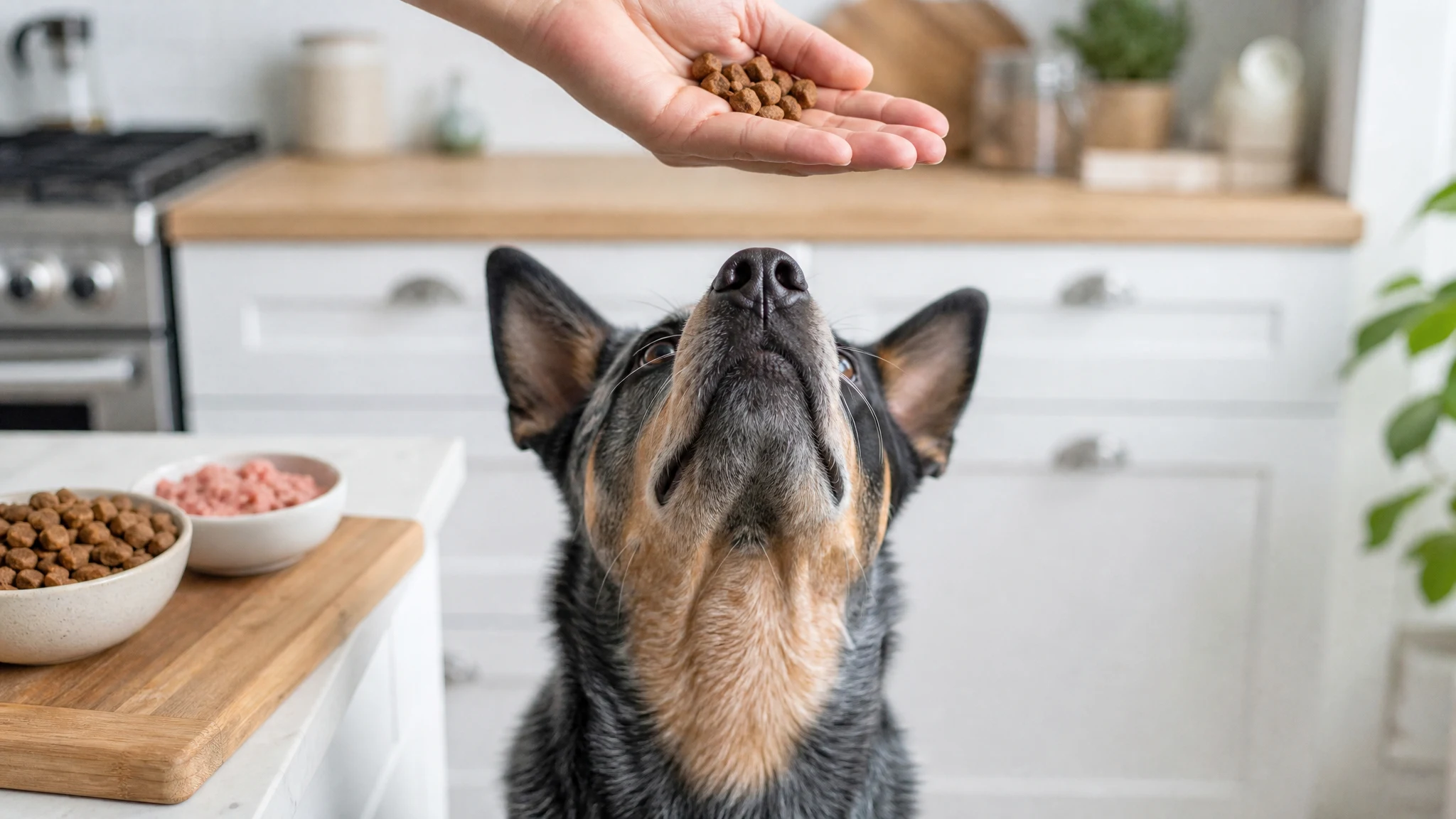
General nutrition information compiled from product labels and published sources, not veterinary advice. Your veterinarian is the right person to choose a diet for your dog, especially one with a health condition.
Blue Heelers are quick, driven workers. The Australian Cattle Dog Club of America describes a breed that adults reach roughly 17 to 20 inches tall, and MetLife Pet Insurance lists a typical adult weight of 35 to 50 pounds. That is a medium dog with a lot of brain and a lot of energy, and training sessions can feel like a full-time job.
Treats make that job easier. They also add calories fast. This guide shows how to choose the best treats for Blue Heelers, how to size and count them, and how to avoid the mistakes that lead to a heavier dog and a distracted student.
One note on method: we did not feed or taste-test any treats. This is a label-reading and planning guide, so it sorts treats by category and does not rank brands.
What you need
- Two or three kinds of small treats from different categories (see below).
- A treat pouch or pocket you can reach quickly.
- The calorie information from your dog's regular food bag or the brand's own product page.
- A kitchen scale or measuring cup, and a pen or phone note for tracking.
- Your dog's usual daily food amount, as your veterinarian has advised.
The three treat categories worth knowing
Soft training treats
These are moist, chewy treats that you can tear into tiny pieces. They are easy to swallow in one second, which keeps a training session moving. Check the label for a calorie statement. Many soft treats are more calorie-dense than they look, so tear them smaller than you think you need to.
Freeze-dried single protein treats
These contain one animal ingredient, such as one kind of meat. They are light, strong smelling and easy to crumble. A short ingredient list also makes it simpler to see what your dog is eating, which helps if your veterinarian ever asks you to limit certain ingredients. Because they are dry and brittle, break them into crumbs and keep a little water available.
Vegetables
Small pieces of plain, dog-safe vegetables are a low-calorie option for dogs that work for any food. Carrot pieces are a common example. Introduce one new vegetable at a time, and ask your veterinarian which ones suit your dog. Not every Heeler will love them, and that is fine. You can use vegetables for easy repetitions and save the stronger treats for harder tasks.
You can also use part of your dog's regular food as treats. PetMD notes that Heelers are often fed twice a day, and that amounts should follow the bag guidance and the dog's ideal weight. Pulling some kibble from the daily portion for training keeps the total from creeping up.
How many treats is too many?
A commonly cited guideline, including calorie guidance from the World Small Animal Veterinary Association (WSAVA), is to keep treats to about 10 percent of a dog's daily calories, with the rest coming from a complete and balanced diet. Ask your veterinarian to confirm the right daily calorie target for your own dog, since age, activity and body condition all change it.
PetMD also warns that too many treats can lead to overweight Heelers. The same page says calorically dense, high-quality diets may suit this active breed. That makes treat counting more important, not less, because the main food may already be rich.
Step by step: setting up a treat plan
- Find your daily calorie target. Ask your veterinarian how many calories your Heeler should eat each day. Do not guess from the bag alone, because bag guides are starting points. For example, the Royal Canin Medium Adult dry food page lists 340 kcal per cup, and the Hill's Science Diet Adult Perfect Digestion page lists 368 kcal per cup. Two foods can differ noticeably per cup, so use your own bag's number.
- Work out the 10 percent. Here is a made-up example to show the math. If a dog's plan is 1,000 kcal per day, the treat allowance is about 100 kcal. Your dog's number will differ.
- Read the treat's calories. Look for kcal per treat or kcal per piece on the package or the brand's own page. If it only gives kcal per kilogram, ask the brand or your veterinarian to help convert it, or choose a treat that states a per-piece number.
- Cut the treats small. For a 35 to 50 pound dog, a piece about the size of a pea, or smaller, is a practical starting size. Small pieces let you reward many repetitions without a calorie bill. They also keep the dog from stopping to chew, so the session flows.
- Count and pre-portion. Before each session, put the day's treat allowance in a container, or count out the pieces. When the container is empty, treats are done for the day, apart from praise and play.
- Subtract from meals if needed. On heavy training days, take a small amount out of dinner so the day's total stays the same. Your veterinarian can tell you how much is sensible.
- Reward promptly, with reward-based methods. Give the treat within a second or two of the behavior you want. This follows the humane, reward-based approach that the American Veterinary Society of Animal Behavior (AVSAB) supports. Skip anything involving punishment or intimidation.
- Rotate and ration by difficulty. Use vegetables or kibble for easy cues at home. Use soft or freeze-dried treats for harder work, such as recalls outdoors or settling near distractions.
- Fade the treats slowly. Once a behavior is reliable, reward it every second or third time, at random, and use praise, a toy or a game of fetch the rest of the time. Heelers tend to enjoy having a job, so work can be its own reward.
- Weigh and check body condition regularly. Ask your veterinarian to show you how to feel for ribs and a waist. If your dog is gaining, trim the treat allowance before changing anything else.
Treat size for a medium working breed
Heelers are medium dogs, so there is no need for the large chunks sold as dog biscuits. Think pea-sized for most training, and a little bigger only for a jackpot reward after something difficult. A very small puppy may need even smaller pieces.
Soft treats are the easiest to resize. Freeze-dried pieces can be crushed. Vegetables can be diced. If your dog gulps without chewing, that is a sign the piece is the right size, not too small.
Puppies need extra care
Puppies often need many rewards, which makes counting harder. PetHealthMD notes that free-feeding puppies leads to excess weight gain that strains growing bones and joints. The same idea applies to unlimited treats. Keep portions measured and use part of the puppy's meals for training.
The Australian Cattle Dog Club of America lists hip and elbow evaluation among its health testing requirements for the breed. Diet cannot cure or prevent those conditions, and a veterinarian decides what is right for an individual puppy. Steady, healthy growth and a lean body are sensible goals to discuss at checkups.
If you are also choosing the main food, see our label-by-label comparison of dog foods for Blue Heelers. The calorie numbers there help with the treat math above.
Common mistakes to avoid
- Treating without counting. Handfuls add up. Count the pieces.
- Cutting treats too large. Bigger pieces slow down training and add calories.
- Using one treat for everything. A strong treat for easy tasks wears out its value. Match the reward to the effort.
- Rewarding late. A delayed treat teaches the wrong thing. Aim for a second or two.
- Forgetting family and visitors. Everyone who hands out treats needs to follow the same allowance.
- Ignoring ingredient lists. If your veterinarian has asked you to avoid an ingredient, read the label every time.
- Treating a food label as a medical claim. Marketing about "joint support" or similar on a treat does not replace veterinary care.
- Chasing trends in grain-free marketing. The FDA says its investigation into a possible link between certain diets and canine dilated cardiomyopathy (DCM) is a complex scientific issue that is not resolved, and that adverse event reports alone do not establish cause. Its latest update is dated December 23, 2022. If you have concerns about your dog's heart or diet, talk with your veterinarian.
What to expect
With a steady plan, many owners find that their Heeler stays more focused during short sessions, and that treat calories are easier to manage. Small, quickly delivered rewards may help a smart, energetic dog learn cues faster. Results vary by dog, age and consistency, and no treat can promise a particular outcome.
Weight is the best thing to track. If your dog's body condition stays steady while you train, your treat plan is probably in the right range. If it drifts, adjust the treats first and ask your veterinarian for help.
Quick checklist
- Know the daily calorie target from your veterinarian.
- Keep treats to about 10 percent of daily calories.
- Cut pieces to pea size or smaller.
- Mix soft treats, freeze-dried single protein pieces and vegetables.
- Count them out in advance and subtract from meals on heavy training days.
- Check body condition every few weeks.
Sources
- PetMD, Australian Cattle Dog breed page
- Australian Cattle Dog Club of America, Your New Australian Cattle Dog
- Australian Cattle Dog Club of America, OFA-CHIC Health Testing Requirements
- MetLife Pet Insurance, Australian Cattle Dog breed spotlight
- PetHealthMD, Feeding Your Large Breed Puppy
- FDA CVM, Investigation into Potential Link between Certain Diets and Canine Dilated Cardiomyopathy
- Royal Canin US, Medium Adult dry product page
- Hill's Pet Nutrition, Science Diet Adult Perfect Digestion product page