Are Blue Heelers Good Dogs for First-Time Owners?
General nutrition information compiled from product labels and published sources, not veterinary advice. Your veterinarian is the right person to choose a diet for your dog, especially one with a health condition.
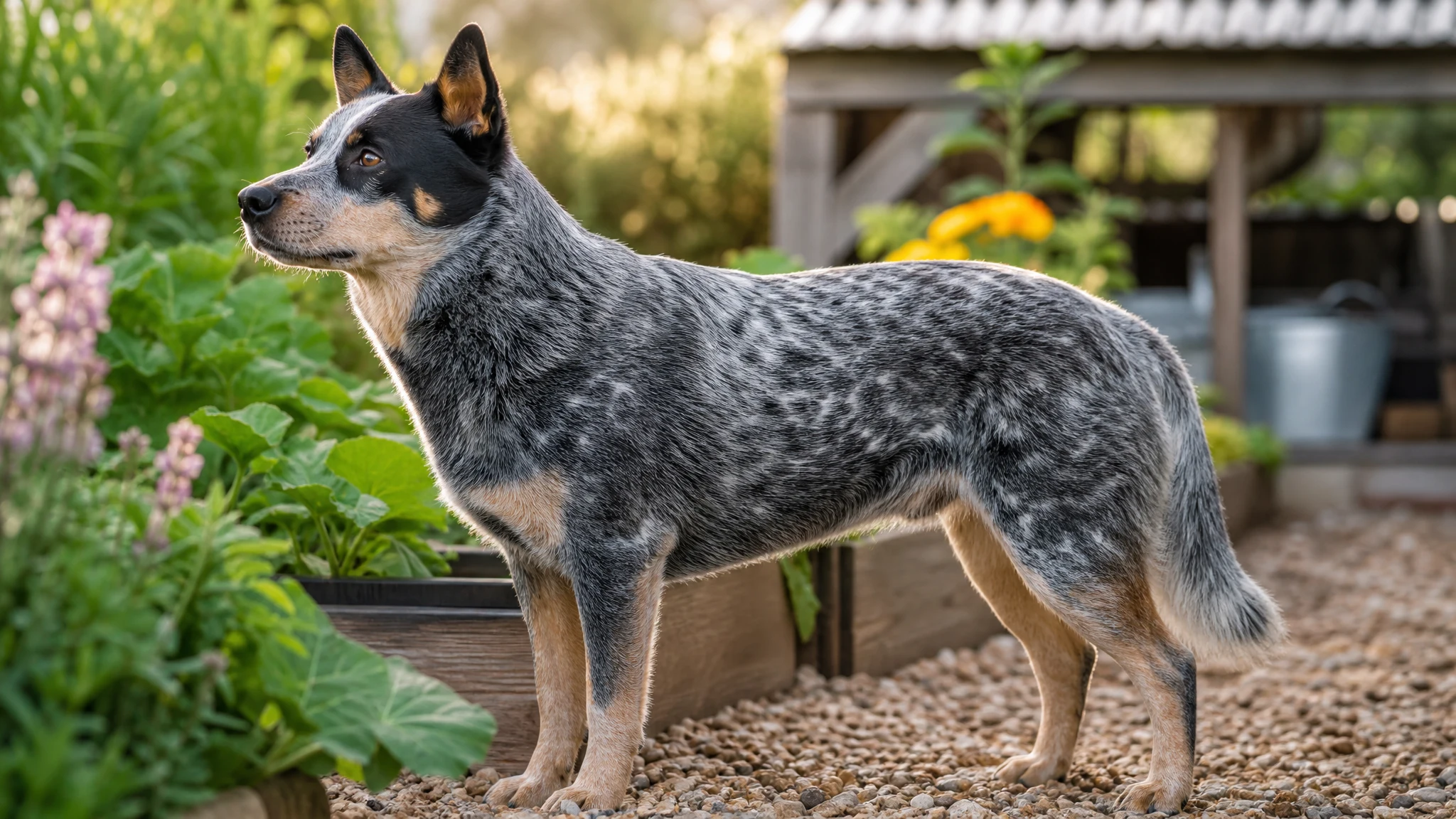
The honest answer is: it depends on you, not only on the dog. A Blue Heeler, formally the Australian Cattle Dog, can work for a first-time owner who plans ahead. It can also be a poor fit for someone who wants a low-effort pet.
This guide walks you through a decision process in steps. It covers what to gather, what to check, and where first-time owners tend to slip, including feeding. It cannot predict how one individual dog will turn out.
What you need before you decide
- A realistic picture of your weekly routine, including how many hours you are away from home.
- A budget for food, routine veterinary care and training classes. Check local clinics for prices, because this guide does not quote any.
- Contact details for a breed club or breeder who can answer questions. The Australian Cattle Dog Club of America (ACDCA) is a good starting point.
- A notebook for comparing food labels, listing questions for your veterinarian and tracking your dog's weight.
- A commitment to reward-based training, which is the approach supported by the American Veterinary Society of Animal Behavior (AVSAB).
Step 1: Understand the size and lifespan you are signing up for
MetLife Pet Insurance and PetMD both list the adult weight as 35 to 50 pounds. The Australian Cattle Dog Club of America gives adult height at the withers as 18 to 20 inches for males and 17 to 19 inches for females. That makes a Heeler a medium dog, not a giant one.
The ACDCA also gives a life expectancy of about 12 to 16 years. For a first-time owner, that is the biggest point. You are planning for well over a decade of daily care, food and vet visits.
Step 2: Be honest about activity
PetMD describes the Australian Cattle Dog as an active breed, and Orvis lists it in the Herding Group. An active dog needs a job, regular exercise and mental work. A short walk around the block may not be enough.
Ask yourself these questions:
- Can I give daily exercise every week, including bad-weather days?
- Am I willing to teach tricks, games and basic manners with treats and praise?
- Do I have a safe, fenced place to let a dog move?
If you answer no to most of these, a different breed may suit you better. For specifics on temperament and exercise needs, ask the ACDCA or a breeder you trust. This article does not quote numbers for them.
Step 3: Learn the health questions to ask
The ACDCA lists the OFA-CHIC health testing requirements for the breed. They include hip and elbow evaluation, an OFA evaluation for congenital deafness based on a BAER test, and a DNA test for primary lens luxation. PetMD also describes progressive retinal atrophy (PRA), an inherited eye disease that can be screened with a DNA test.
When you talk to a breeder, ask which of these tests the parents have had and request the results. Do not rely on a verbal promise.
None of these conditions is managed by diet alone. PetMD says hip dysplasia is uncommon in the breed and that symptoms are managed with joint supplements or anti-inflammatory medication. Your veterinarian decides what is right for an individual dog.
Step 4: Plan the food before the dog comes home
Feeding is where many first-time owners feel lost. Pet food labels are full of marketing language, so it helps to read the label like a document.
Read the adequacy statement
AAFCO sets model language for pet food and does not approve or certify any product, according to AAFCO's own consumer guidance. The recognized life stages are gestation and lactation, growth, maintenance, and all life stages. Match the statement to your dog's age.
Know the 70-pound line
AAFCO defines a large breed as one expected to weigh more than 70 pounds fully grown. At 35 to 50 pounds, a Heeler is below that line, so a large-breed puppy formula is not required. Whole Dog Journal explains the label clause: foods that carry an "except for growth of large size dogs" statement should not be fed to large-breed puppies. That does not apply to a Heeler in the same way.
As examples of how this reads on real labels, the Royal Canin Medium Puppy statement covers growth including large-size dogs. VICTOR's Hi-Pro Plus Small & Medium Breed Puppy statement is for all life stages except growth of large-size dogs. Both are described on the brands' own pages, Royal Canin and VICTOR. We compared label data only. We did not run feeding trials or taste tests, and we are not recommending one over the other.
Treat label amounts as a starting point
PetMD says calorically dense, high-quality diets may suit this active breed, typically fed in two meals a day, with amounts following the bag guidance and the dog's ideal weight. Royal Canin's page calls its feeding chart only a guide. Hill's says to adjust amounts to maintain optimal weight and to ask your veterinarian if unsure.
For a deeper look at the factors that matter, see Blue Heeler nutrition and the diet factors that matter.
Step 5: Set up puppy feeding habits early
If you are bringing home a puppy, growth rate matters. IVC Journal notes that growth rate and calorie intake matter for developmental orthopedic disease in any growing dog, and that free-feeding is discouraged. PetHealthMD says free-feeding puppies leads to excess weight gain that strains growing bones and joints.
- Measure each meal instead of filling the bowl.
- Feed at set times and pick up the bowl when mealtime ends.
- Weigh your puppy on a schedule and share the numbers with your veterinarian.
- Switch foods slowly. Hill's suggests mixing increasing amounts of the new food with decreasing amounts of the old over 7 days.
Step 6: Build a reward-based training routine
Use treats, toys and praise to teach what you want. Keep sessions short and end on a success. AVSAB-aligned training avoids shock, prong or choke collars and avoids dominance methods such as alpha rolls or scruffing.
One practical link to food: PetMD warns that too many treats lead to overweight Heelers. Use part of your dog's daily meal as training rewards, or choose very small treats, and count them toward the day's intake.
Tips for first-time owners
- Talk to the breed club first. Breed clubs can point you to health-tested breeding programs and rescue contacts.
- Compare labels in your notebook. Write down the adequacy statement, first five ingredients, calories per cup and guaranteed analysis side by side.
- Know that numbers vary. Some brands publish only dry matter averages, not guaranteed minimums, so the numbers are not always comparable. Ask the brand if the label is unclear.
- Keep the vet in the loop. Your veterinarian decides about diet for an individual dog, including any prescription diet.
- Stay calm about the headlines. The FDA's investigation into diet and canine dilated cardiomyopathy (DCM) has had no public update since December 23, 2022. FDA describes the question as a complex scientific issue that is not resolved, and says adverse event reports alone do not establish cause. If you are worried, ask your veterinarian.
Common mistakes to avoid
- Choosing on looks alone. The breed is attractive, but daily needs matter more than appearance.
- Skipping health test results. Ask for hip, elbow, hearing and eye testing results from the breeder.
- Buying a large-breed puppy food by default. A Heeler is under 70 pounds as an adult, so it is not required.
- Free-feeding. It makes weight and growth hard to control.
- Letting treats pile up. They are easy to overlook in a training-heavy household.
- Judging a food by marketing. Rely on the label, not the bag's front panel.
What results to expect
If you follow these steps, you may find it easier to judge whether the breed suits your lifestyle. A steady routine of exercise, training and measured meals may help a dog settle into home life, though every dog differs. Weighing regularly and adjusting portions with your veterinarian may help you keep your dog at a healthy weight.
No food or routine can promise a particular outcome for health or behavior. If, after Step 2, the exercise and training commitment feels too large, that is useful information too. Waiting or choosing a different breed is a reasonable result.
Sources
- Australian Cattle Dog Club of America, Your New Australian Cattle Dog
- Australian Cattle Dog Club of America, OFA-CHIC Health Testing Requirements
- PetMD, Australian Cattle Dog breed page
- MetLife Pet Insurance, Australian Cattle Dog breed spotlight
- AAFCO, Understanding Pet Food
- AAFCO, Reading Labels
- Whole Dog Journal, In the Fine Print: Nutritional Adequacy Statements
- IVC Journal, Feeding large breed puppies
- PetHealthMD, Feeding Your Large Breed Puppy
- FDA CVM, Investigation into Potential Link between Certain Diets and Canine Dilated Cardiomyopathy