Are Blue Heelers Good With Kids? What Parents Should Know
General nutrition information compiled from product labels and published sources, not veterinary advice. Your veterinarian is the right person to choose a diet for your dog, especially one with a health condition.
Parents ask this before they bring a Blue Heeler home, and it deserves a careful answer. No page can promise how one dog will behave with your children. Temperament depends on the individual dog, its breeding, its early experience and how well the household is run.
What we can do is give you a practical plan. This guide covers the part we can speak to with sources: daily routines around food, treats and activity. These are where kids and a Blue Heeler (the Australian Cattle Dog) meet most often. It also tells you where to get breed temperament information from people who know the dogs.
What the sources say, and what they do not
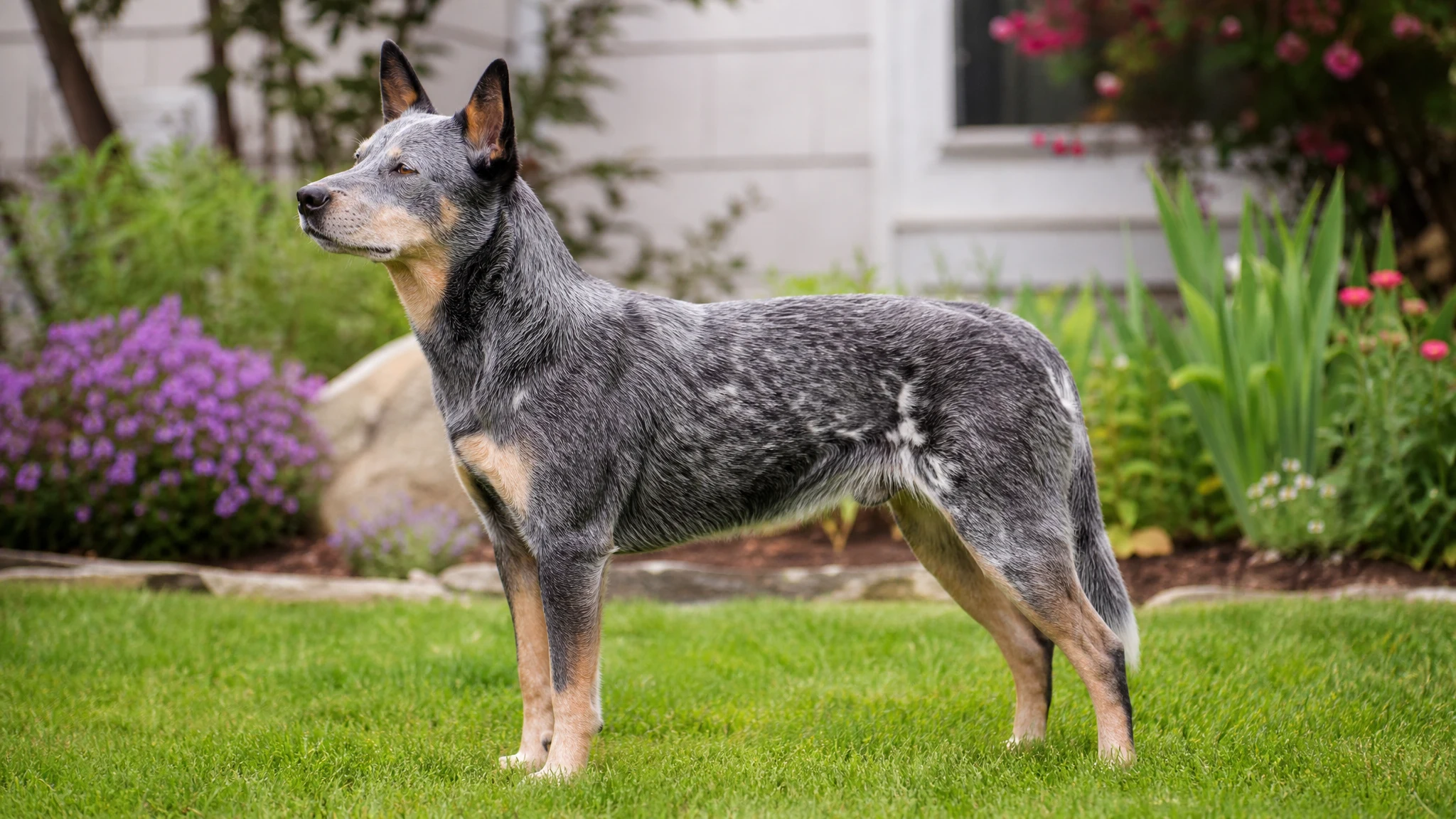
The Australian Cattle Dog Club of America (ACDCA) describes the breed's height as 18 to 20 inches for males and 17 to 19 inches for females at the withers. It gives a life expectancy of about 12 to 16 years. That is a long commitment, so a child who is 5 today may be a teenager or adult when the dog is old.
PetMD calls the Australian Cattle Dog an active breed and gives an adult weight of 35 to 50 pounds. A medium-sized, energetic dog can knock over a toddler even in play. Plan for that.
We did not find a sourced statement on how the breed behaves with children that we are comfortable repeating here. So we will not guess. Ask the ACDCA, a breed rescue or a reputable breeder directly, and ask to meet adult dogs from the same line with children present. Ask your veterinarian, too.
Materials you will need
- A dog bed or mat in a quiet spot that children do not enter.
- A baby gate or exercise pen to create a dog-only space.
- A measuring cup or kitchen scale for meals.
- A covered container for treats, kept out of children's reach.
- The label or feeding guide from the food you choose.
- A written family rules sheet, in words your child can read or understand.
- Your veterinarian's contact details.
Step-by-step: setting up a kid-friendly Blue Heeler routine
Step 1: Decide who feeds the dog, and when
PetMD says Heelers typically eat two meals a day. Pick the times and write them on the fridge. An adult does the measuring every time. Children can help by carrying the empty bowl or asking the dog to sit, but they should not be the ones scooping.
Fixed meal times beat free-feeding. For growing puppies, the IVC Journal and PetHealthMD both discourage free-feeding, and PetHealthMD says it leads to excess weight gain that strains growing bones and joints. A set schedule also makes it obvious when the dog skips a meal, which is worth telling your vet about.
Step 2: Give the dog a protected place to eat
Feed in the same spot, away from the busiest part of the house. Teach the family one simple rule: nobody goes near the dog while the bowl is down. Children should never reach for the bowl, chews or toys while the dog is using them.
This is basic safety for any dog, not a claim about the breed. A dog that can eat in peace has less reason to feel crowded.
Step 3: Choose a food by reading the label
Start with the nutritional adequacy statement. AAFCO sets model language and does not approve or certify pet food, so the wording on the bag is the manufacturer's own statement. Look for the life stage: AAFCO recognizes gestation/lactation, growth, maintenance and all life stages.
A Blue Heeler's adult weight of 35 to 50 pounds is below AAFCO's 70 pound cutoff for large-size dogs. Per Whole Dog Journal, foods labeled "except for growth of large size dogs" are meant to be kept away from large-breed puppies. That does not describe a Heeler, which is not in the large-size class. A large-breed puppy formula is not required for the breed.
PetMD says calorically dense, high-quality diets may suit this active breed. Calories still matter, so compare them. For a label-by-label look at specific foods, see our comparison of dog foods for Blue Heelers. We compared label data only. We did not run feeding trials or taste tests.
Step 4: Use the feeding guide as a starting point
Brands print feeding guides, and these are only starting points. Royal Canin's page says its guide is only a guide and recommends two to four equal portions per day. Hill's tells owners to adjust amounts to maintain optimal weight and to ask a veterinarian if unsure. PetMD likewise says amounts should follow the bag guidance and the dog's ideal weight.
Weigh the dog's food, or measure with the same cup every time. If two family members both feed the dog because each thought the other had not, you can end up doubling a meal. A simple checklist on the fridge prevents that.
Step 5: Set clear treat rules for children
Kids love to give treats. PetMD warns that too many treats lead to overweight Heelers. Decide on a daily treat limit with your veterinarian's input and put that many treats in a small jar each morning. When the jar is empty, treating is over for the day.
Reward-based training, in line with the American Veterinary Society of Animal Behavior (AVSAB), works well with children involved. Let kids practice simple cues like sit and down with a treat from the jar. Never use shock, prong or choke collars, or physical corrections, and teach children never to hit, grab or roll the dog.
Step 6: Plan for the dog's energy
An active breed that is under-exercised may become pushy or restless around the house, and that is when small children get bumped. Daily walks and games with an adult in charge are part of the plan. Ask the ACDCA or a breed rescue what activity level is realistic for your dog's age.
Do not use food as the only outlet. A dog that is bored and fed extra is on its way to excess weight.
Step 7: Supervise, and give the dog an exit
Any dog and any young child should be supervised by an adult who is paying attention, not just in the same room. Teach children to leave the dog alone when it is sleeping, eating, chewing or retreating to its bed. Make sure the dog can always walk away to its gated space.
Watch the dog's body language and talk to a veterinarian or a certified reward-based trainer if you see stiffness, growling or avoidance. Do not punish a growl. It is information.
Tips and common mistakes
- Letting kids feed from the table. It teaches the dog to hover around children at mealtimes. Keep the dog's food in its own spot.
- Treating the feeding guide as a rule. It is a starting point. Adjust with your veterinarian based on the dog's body condition.
- Buying large-breed puppy food by default. A Heeler's adult weight is below the 70 pound line, so it is not needed. Check the AAFCO statement instead.
- Believing a food can fix health or behavior. Diet does not address inherited conditions. PetMD lists progressive retinal atrophy and the ACDCA lists deafness and primary lens luxation among the breed's inherited conditions, and none of them is diet related. For hip and elbow dysplasia, ask your veterinarian about healthy weight and growth rate.
- Skipping the breeder questions. The ACDCA's health testing requirements include hip and elbow evaluation, a BAER hearing test and DNA tests. Ask any breeder for the results.
- Switching foods overnight. Hill's suggests mixing the new food into the old over 7 days.
What results to expect
If you follow a steady routine, you may find mealtimes calmer and treat habits easier to manage. Children who know the rules may be less likely to crowd the dog at its bowl. A measured diet and a treat limit may help keep your dog at a healthy weight, though your veterinarian decides what that means for an individual dog.
None of this guarantees how a particular Blue Heeler will behave with your children. Meet the dog, ask the breed club and rescue groups your questions and keep supervising.
Questions to take to your veterinarian
- What is a healthy weight for this dog, and how often should we check it?
- How many treats a day fit into this dog's calories?
- Is my puppy growing at a good rate?
- Which life stage statement fits my dog's age?
Sources
- Australian Cattle Dog Club of America, Your New Australian Cattle Dog
- Australian Cattle Dog Club of America, OFA-CHIC Health Testing Requirements
- PetMD, Australian Cattle Dog breed page
- AAFCO, Understanding Pet Food
- AAFCO, Reading Labels
- Whole Dog Journal, In the Fine Print: Nutritional Adequacy Statements
- IVC Journal, Feeding large breed puppies
- PetHealthMD, Feeding Your Large Breed Puppy
- Royal Canin, Medium Adult product page
- Hill's Pet Nutrition, Science Diet Adult Perfect Digestion product page
- Hill's Pet Nutrition, Science Diet Adult 7+ product page