Blue Heeler Puppy Price: Why Costs Vary So Much by Breeder
General nutrition information compiled from product labels and published sources, not veterinary advice. Your veterinarian is the right person to choose a diet for your dog, especially one with a health condition.
If you have looked at more than one Blue Heeler litter, you have probably noticed that the asking prices do not line up. One breeder quotes a figure that makes you pause. Another quotes something far lower. Both call the puppies Australian Cattle Dogs.
This guide shows you how to compare breeders on more than the number. It does not give a typical price, because no verified price figure exists that we can cite. Prices change by region and by year, so ask each breeder for their current figure in writing.
What You Will Need
- A notebook or spreadsheet with one row per breeder.
- The list of health tests from the Australian Cattle Dog Club of America (ACDCA) OFA-CHIC requirements page.
- A list of questions to send each breeder by email, so answers are in writing.
- A rough budget for the first year, including food, which is covered in step 6.
- Patience. A fast decision is the most common way to overpay or to buy a poorly documented puppy.
Step 1: Use the Right Name
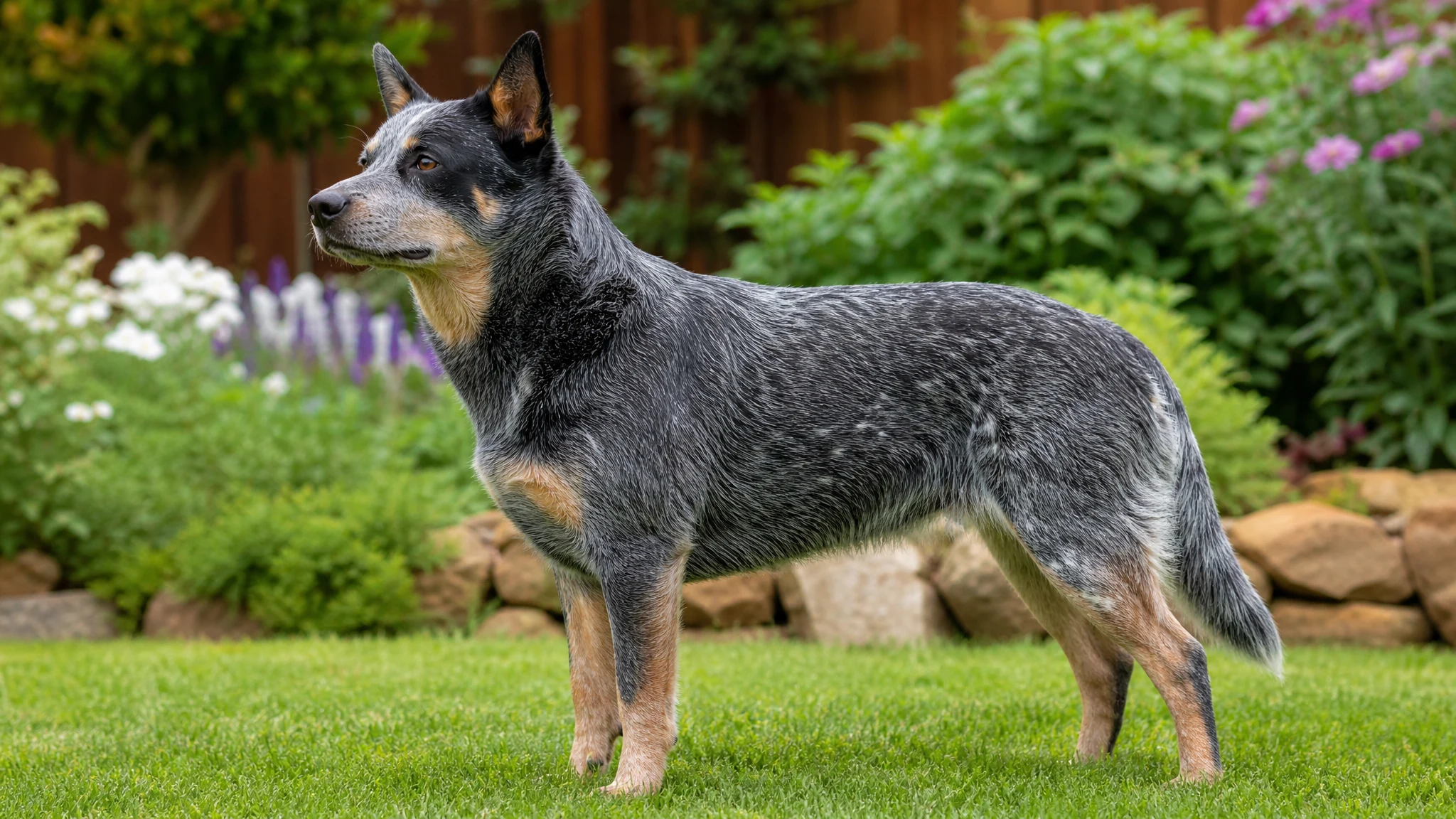
"Blue Heeler" is the common name. The breed's official name is Australian Cattle Dog, according to PetMD's breed page. Breeders, clubs and registries use the official name, so use it when you look for club listings and health records.
Some sellers use "Blue Heeler" or "Red Heeler" only as a marketing label. A seller who cannot say what registry the parents are in, or what health records exist, is a seller to approach with caution.
Step 2: Know What Moves a Price
We could not find a verified source that lists average Blue Heeler puppy prices, so we will not guess. These are the factors that commonly make breeder costs differ. Each one is something you can ask about.
- Health testing of the parents. Testing costs money, and a breeder who does it carries that cost.
- Veterinary care. Prenatal care, puppy checks and vaccinations are real expenses.
- Raising conditions. Space, time, socialization and good food for the mother and litter all take effort.
- Documentation. Registration paperwork and written agreements.
- Demand and location. These vary, and a breeder can set any price they like.
A higher price does not prove a healthier puppy. A lower price does not prove a problem. The price only becomes meaningful when you can see what it covers.
Step 3: Ask About Health Testing
The ACDCA lists the health tests required for an OFA-CHIC number for the breed. These include hip and elbow evaluation, an OFA evaluation for congenital deafness based on the BAER test, and a DNA test for primary lens luxation. The ACDCA also lists optional tests, such as patellar luxation, a cardiac exam, and the rcd4 PRA DNA test.
PetMD notes that progressive retinal atrophy (PRA) is an inherited eye disease that is screened with a prcd-PRA DNA test.
Ask each breeder:
- Which tests were done on both parents?
- Can I see the results, not just hear about them?
- Are the results listed with OFA or another public database?
Several of these conditions are inherited. They are not caused by diet, and food does not change what a parent's test shows. Testing is about breeding choices, which is why it belongs in a price conversation.
Step 4: Compare What Is Included
Two quotes can look the same and still cover different things. Write down what each breeder includes:
- Vaccinations and deworming already done, and with what dates.
- Registration paperwork.
- A written contract, including what happens if you can no longer keep the dog.
- A health guarantee, if one is offered. Read its limits closely, because the terms vary by breeder.
- Whether the breeder will answer questions after you take the puppy home.
If a breeder will not put terms in writing, treat that as useful information.
Step 5: Meet the Parents and See the Setting
Ask to meet the mother, and the father if he is on site. Look at how the dogs live and how the puppies are kept. The ACDCA gives adult size as males 18 to 20 inches and females 17 to 19 inches at the withers. Adults weigh about 35 to 50 pounds, according to PetMD and MetLife Pet Insurance. Parents far outside that range are worth a question.
Life expectancy is about 12 to 16 years, per the ACDCA. That is a long commitment. Spreading a purchase price over that time may make a higher quote look different than it does on day one.
Step 6: Budget for Food, Not Just the Puppy
The purchase price is only the start. Food is a steady cost, and it is easy to underestimate. For a deeper look at feeding, see our guide to Blue Heeler nutrition and the diet factors that matter.
A few points specific to this breed:
- At 35 to 50 pounds, a Blue Heeler is below the AAFCO large-size cutoff of 70 pounds. A large-breed puppy formula is not required, per the IVC Journal and PetHealthMD.
- Rate of growth and calories still matter for any growing dog. Free-feeding puppies leads to excess weight gain that strains growing bones and joints, according to PetHealthMD.
- PetMD says Heelers are active, that calorie-dense, high-quality diets may suit them, and that two feedings a day is typical. It also says to follow the bag guidance and the dog's ideal weight.
- PetMD warns that too many treats can lead to an overweight Heeler.
We compared label data from several brands. We did not run feeding trials or taste tests. The figures below come from each brand's own product page, and we list no prices because we have no verified ones.
| Puppy food | Label statement | Calories | Min protein / min fat |
|---|---|---|---|
| Royal Canin Size Health Nutrition Medium Puppy (dry) | Growth, including large size dogs | 410 kcal ME per cup | 30.0% / 18.4% |
| VICTOR Hi-Pro Plus Small & Medium Breed Puppy (dry) | All life stages, except growth of large size dogs | 383 kcal per cup | 30.0% / 18.0% |
| Hill's Science Diet Puppy Chicken & Barley Entree (wet, 13 oz can) | Growing puppies and gestating or lactating females | 495 kcal per can | Dry matter averages: 29 protein, 20.3 fat |
The "except for growth of large size dogs" wording on the VICTOR label does not rule it out for a Blue Heeler. That clause concerns dogs of 70 pounds or more as adults, a class this breed is not in. For more on how the clause works, see the Whole Dog Journal article on nutritional adequacy statements.
Feeding guides are starting points. Royal Canin's page asks for your pet's details to calculate a recommendation. VICTOR's page suggests four feedings spaced through the day for this puppy formula. Your veterinarian decides what is right for your individual puppy, and the breeder may also say what the litter has been eating.
Check each brand's page for current prices and availability. Kibble size is not listed for these products, so check with the brand if it matters to you.
Step 7: Put the Numbers Side by Side
Now fill in your notebook. For each breeder, record:
- The quoted price and what it includes.
- Parent health tests, and whether you saw the results.
- Vaccination and deworming records.
- Contract and guarantee terms.
- How the breeder answered your questions.
Often a mid-range quote with full records is a clearer value than the cheapest one with none. You may reach a different conclusion, and that is fine, as long as it rests on what you were able to verify.
Tips
- Ask the same questions of every breeder, so the answers are comparable.
- Wait for a litter instead of rushing. Good breeders often have waiting lists, though practices vary.
- Call your veterinarian early and ask what a first-year visit schedule looks like. Ask for a cost range from the clinic itself.
- Contact the ACDCA if you want help finding breeders who follow the club's health testing guidance.
Common Mistakes to Avoid
- Choosing on price alone. Either direction can mislead you.
- Accepting a spoken promise. If it is not in writing, you cannot rely on it later.
- Paying a deposit before seeing records. Ask first, pay later.
- Assuming food will fix inherited problems. Hip and elbow dysplasia, deafness, PRA and lens luxation are inherited conditions. PetMD says hip dysplasia is uncommon in the breed. Diet affects growth rate and healthy weight, but a veterinarian decides what is right for an individual dog.
- Overfeeding a growing puppy. Measure meals rather than leaving food out all day.
What to Expect
Following these steps may help you see why quotes differ, and may make it easier to tell a well-documented litter from a poorly documented one. It cannot guarantee a healthy dog. Even carefully bred puppies can develop health problems, so keep some money set aside for veterinary care.
You will likely end up with a short list of breeders whose records you can check. That is a better position than choosing from a list of prices alone.
Sources
- Australian Cattle Dog Club of America, OFA-CHIC Health Testing Requirements
- Australian Cattle Dog Club of America, Your New Australian Cattle Dog
- PetMD, Australian Cattle Dog breed page
- MetLife Pet Insurance, Australian Cattle Dog breed spotlight
- IVC Journal, Feeding large breed puppies
- PetHealthMD, Feeding Your Large Breed Puppy
- Whole Dog Journal, In the Fine Print: Nutritional Adequacy Statements
- Royal Canin, Medium Puppy product page
- VICTOR Pet Food, Hi-Pro Plus Small & Medium Breed Puppy product page
- Hill's Pet Nutrition, Science Diet Puppy Chicken & Barley Entree product page