Blue Heeler Puppy Red Flags: Questions to Ask Before You Buy
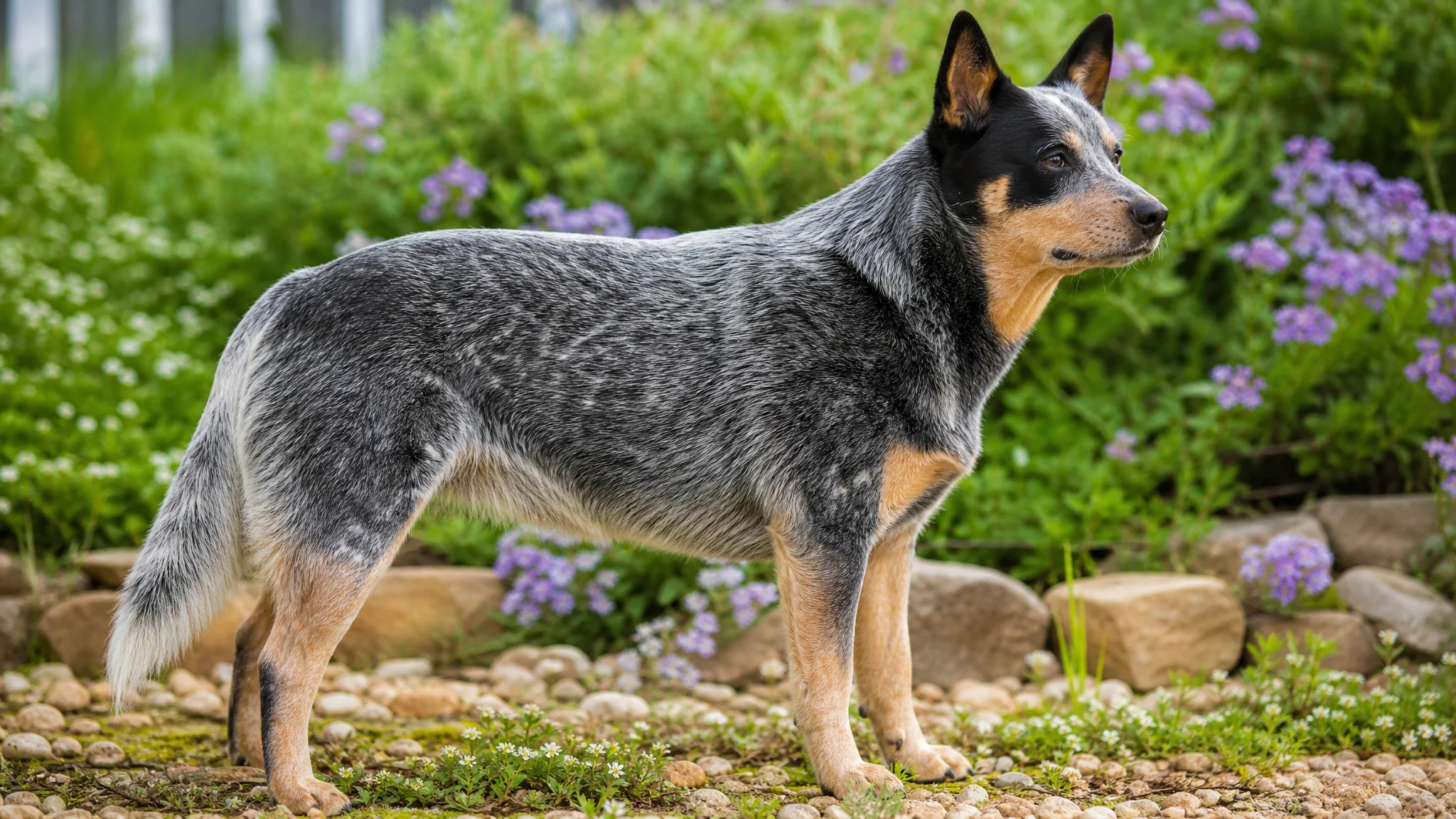
General nutrition information compiled from product labels and published sources, not veterinary advice. Your veterinarian is the right person to choose a diet for your dog, especially one with a health condition.
A Blue Heeler puppy is easy to fall for. The hard part is finding out how the puppy was bred and raised before you commit. A calm list of questions helps, and so does knowing which answers should make you pause.
This guide walks through that process in order. It uses the health testing named by the Australian Cattle Dog Club of America (ACDCA) and breed facts from PetMD. Blue Heeler is the common name for the Australian Cattle Dog, so that is the name breed clubs use.
What You Need Before You Start
- A notebook or phone notes to record each answer.
- The ACDCA page on OFA-CHIC health testing requirements, open in a browser tab.
- The breeder's full name and kennel name, so you can look up health results yourself.
- A list of your own needs: activity level, home setup, and how much time you have for exercise and training.
- A veterinarian you can call for a first-visit appointment once you have a puppy.
Step 1: Know the Breed You Are Buying
Start with the basics so you can judge what a breeder tells you. The ACDCA lists adult height at 18 to 20 inches for males and 17 to 19 inches for females. MetLife Pet Insurance and PetMD both give an adult weight of 35 to 50 pounds. The ACDCA gives a life expectancy of about 12 to 16 years.
PetMD describes Heelers as an active breed. A breeder who calls the puppies "couch dogs" or "low energy" is not describing the breed as these sources do.
Step 2: Ask Which Health Tests the Parents Have Had
This is the most important step. The ACDCA's OFA-CHIC requirements name the tests it expects for the breed. Based on that page, they include:
- Hip and elbow evaluation.
- A deafness evaluation through OFA, based on a BAER test.
- A DNA test for primary lens luxation, an inherited eye condition.
PetMD also lists progressive retinal atrophy (PRA) as an inherited eye disease that can be screened with a prcd-PRA DNA test. The ACDCA lists other tests as optional, including patellar luxation, a cardiac exam and some PRA DNA tests. Check the ACDCA page for the current full list, because requirements can change.
Ask for the results for both parents, not just a statement that they are "healthy" or "vet checked." Then look the dogs up in the OFA database yourself, using the names the breeder gives you.
Red flags at this step
- The breeder says the breed "has no health problems."
- The only proof is a general vet check, with no breed-specific test results.
- Results exist for one parent only, with no explanation.
- The breeder gets annoyed when you ask to verify results.
Step 3: Ask About the Parents and How They Live
Ask to meet the mother in person. Ask about her age, her temperament and how many litters she has had. Ask what the parents do all day: work, sport, or family life.
Be wary if you cannot see where the puppies are kept. Be wary too if the breeder offers to meet you in a parking lot, or says the mother is "at another home." Reasonable breeders expect these questions.
I cannot give you a legal or ethical standard for how many litters is too many. If the ACDCA or your local breed club has a code of ethics, ask the breeder whether they follow it, and read it yourself.
Step 4: Ask About Deafness and the BAER Test
Congenital deafness is inherited in the breed, according to the ACDCA. It is not related to diet. Ask whether the puppies have been BAER tested and whether the breeder can show you the result.
Do not rely on a casual claim such as "he comes when I clap." A puppy can respond to vibration or movement. Ask what testing was done and get it in writing.
Step 5: Ask About Records, Contracts and Return Terms
Ask what paperwork comes with the puppy. Typical items to ask about are a written contract, vaccination and deworming records, registration papers and the parents' health results. Ask what happens if you cannot keep the dog later.
I do not have a verified figure for what a Blue Heeler puppy should cost. Fees vary, so check with the ACDCA or a local breed club about what to expect. A very low price, pressure to pay a deposit immediately, or payment only through unusual channels are all reasons to stop and think.
Registration rules and any legal requirements for selling puppies depend on where you live. Check with your state or local agency and with the registry the breeder names.
Step 6: Ask What the Puppies Are Eating
Feeding is a fair question to ask a breeder. Ask what food the puppies are on now, how often they eat, and how much. You can then continue the same food at first and change it gradually later.
Some points from the sources are worth knowing:
- An adult Blue Heeler at 35 to 50 pounds falls below the AAFCO large-size cutoff of 70 pounds. A large-breed puppy formula is therefore not required, according to the IVC Journal.
- Look at the AAFCO statement on any puppy food. Foods with the "except for growth of large size dogs (70 pounds or more as an adult)" wording are not aimed at large-breed puppies, per Whole Dog Journal. That wording is not a problem for a Heeler.
- PetHealthMD says free-feeding puppies leads to excess weight gain that strains growing bones and joints. A breeder who leaves a bowl of food out all day is not following that advice.
- PetMD says Heelers are typically fed twice a day as adults, and that excess treats can lead to overweight dogs.
AAFCO sets model language and does not approve or certify pet food, according to AAFCO. A breeder who says a food is "AAFCO approved" is using the wrong words.
Be careful with any claim that a food will prevent hip problems or other conditions. The ACDCA names hip and elbow dysplasia as joint conditions that are tested for in parents. Growth rate and calorie intake matter for any growing dog, but a veterinarian decides what is right for an individual puppy. For a label-by-label look at puppy and adult foods, see our comparison of dog foods for Blue Heelers. That comparison uses label data only. We did not run feeding trials or taste tests.
Step 7: Compare the Answers and Decide
Put your notes side by side if you are talking to more than one breeder. Mark each answer as clear, vague or missing. Missing health results and a refusal to let you visit weigh more than a friendly manner.
You are allowed to walk away. If something feels rushed or evasive, waiting for another litter costs less than a puppy with problems that could have been screened for.
Tips
- Ask the same questions of every breeder so the answers are comparable.
- Ask for health results in writing and check them against the OFA database yourself.
- Ask what the breeder will do if a health problem shows up later, and get that in the contract.
- Book a first veterinary visit soon after the puppy comes home.
- Ask for the name of the food and the feeding schedule, and keep both steady for the first few days.
Common Mistakes to Avoid
- Buying on cuteness. Photos tell you nothing about parents' hips, eyes or hearing.
- Accepting "vet checked" as health testing. A general exam is not the same as the breed-specific tests the ACDCA names.
- Skipping the visit. If you cannot see the mother and the puppies' living space, you are guessing.
- Treating a healthy-looking puppy as proof. Inherited eye conditions and deafness may not be obvious in a young puppy.
- Overfeeding a growing puppy. Follow the label guide as a starting point and ask your veterinarian to check your puppy's weight.
What You Can Reasonably Expect
Asking these questions may help you find a breeder who is open about testing and who raises puppies with care. It cannot guarantee a healthy dog, since inherited conditions and ordinary illness can still occur. Parents with clear results on the recommended tests may lower the chance of certain inherited problems, but they do not remove it.
A good breeder will usually welcome your questions and ask a few of their own about your home and your plans for the dog. That is a good sign.
Sources
- Australian Cattle Dog Club of America, OFA-CHIC Health Testing Requirements
- Australian Cattle Dog Club of America, Your New Australian Cattle Dog
- PetMD, Australian Cattle Dog breed page
- MetLife Pet Insurance, Australian Cattle Dog breed spotlight
- IVC Journal, Feeding large breed puppies
- PetHealthMD, Feeding Your Large Breed Puppy
- Whole Dog Journal, In the Fine Print: Nutritional Adequacy Statements
- AAFCO, Understanding Pet Food