High-Protein Dog Food: Who Actually Needs It
General nutrition information compiled from product labels and published sources, not veterinary advice. Your veterinarian is the right person to choose a diet for your dog, especially one with a health condition.
"High protein" is one of the loudest claims on a dog food bag. For a Blue Heeler, an active herding dog, it sounds like an obvious match. The label alone doesn't settle it, though.
This guide walks you through a simple process for judging whether a high-protein food makes sense for your Heeler. You will compare label numbers and weigh them against your dog's age, weight and activity. Then you will bring a short list to your veterinarian, who decides for your individual dog.
One note on method. We compared label data published by the brands. We did not run feeding trials or taste tests, and nothing here is a verdict on how a food performs in a real bowl.
What you need before you start
- Your dog's current weight, ideally from a recent vet visit or a home scale.
- Your dog's age and a rough idea of daily activity (short walks, running, herding, dog sports).
- The bag or can of the food you feed now, or the brand's own product page for any food you are considering.
- A notepad or spreadsheet to record protein, fat, calories and the AAFCO statement for each food.
- A list of everything your dog eats in a day, including treats and chews.
Step 1: Know your dog's size and what it means for food choice
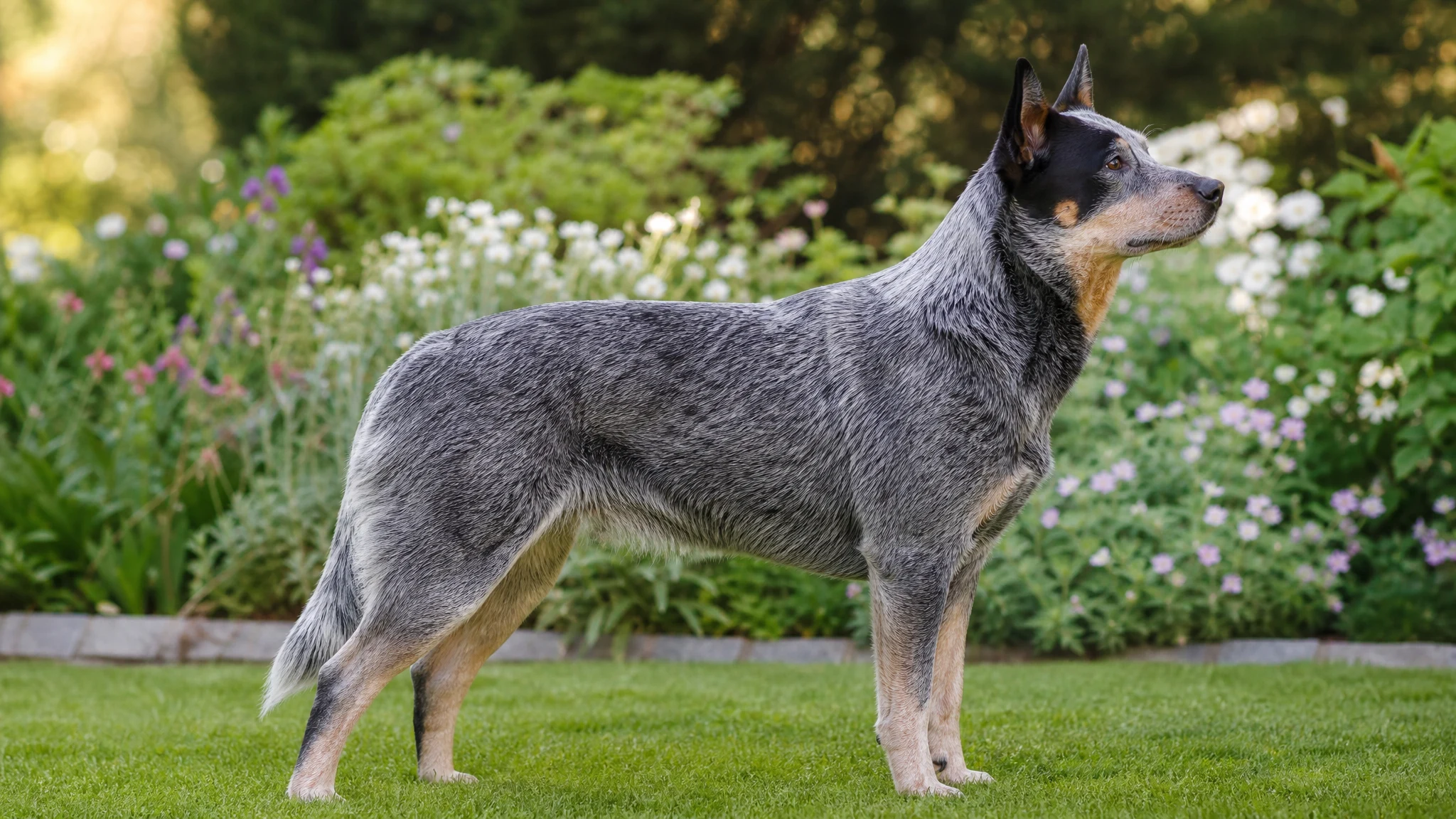
The Australian Cattle Dog, which most people call the Blue Heeler, is a medium dog. PetMD and MetLife Pet Insurance both list adult weight at 35 to 50 pounds. The Australian Cattle Dog Club of America lists males at 18 to 20 inches and females at 17 to 19 inches at the withers.
That puts Heelers well under the 70 pound adult weight that AAFCO uses as its large-size cutoff. In practice, a Heeler puppy does not need a large-breed puppy formula. Many people assume it does.
Step 2: Decide what "active" actually means for your dog
PetMD describes the Australian Cattle Dog as an active breed and says calorically dense, high-quality diets may be ideal. It also says two feedings a day is typical, and that amounts should follow the bag guidance and the dog's ideal weight.
Notice what that says. It talks about calories and quality. It does not name a protein percentage.
A Heeler who works stock or trains hard most days has different needs from one who gets a leash walk and a backyard game of fetch. Be honest about which one you have. A food built for a working dog can be too rich for a pet dog with an easy week.
Step 3: Read the AAFCO statement first, protein second
AAFCO says it sets model language and does not approve or certify pet food. The recognized life stages are gestation/lactation, growth, maintenance and all life stages. The adequacy statement tells you whether a food is meant for your dog's stage.
Check these points on every label:
- Puppy or growing dog: look for a growth or all-life-stages statement.
- The large-size clause: Whole Dog Journal explains that some statements say "except for growth of large size dogs (70 pounds or more as an adult)." That wording matters for giant-breed puppies. A Heeler is not in that class, so it is not a barrier for this breed.
- Adult dog: a maintenance or all-life-stages statement is the match.
Step 4: Compare protein, fat and calories side by side
Record the guaranteed minimum protein and fat, plus calories per cup, from each brand's own page. Here is what several brands publish for dry foods:
| Food (dry) | Protein min. | Fat min. | Calories per cup |
|---|---|---|---|
| Royal Canin Size Health Nutrition Medium Adult | 23.0% | 12.0% | 340 kcal ME |
| Royal Canin Size Health Nutrition Medium Puppy | 30.0% | 18.4% | 410 kcal ME |
| VICTOR Hi-Pro Plus | 30.0% | 20.0% | 406 kcal |
| VICTOR Hi-Pro Plus Small & Medium Breed Puppy | 30.0% | 18.0% | 383 kcal |
The pattern is worth noticing. The higher-protein foods also carry more fat and more calories per cup. That is usually what separates them from standard adult recipes.
VICTOR states that Hi-Pro Plus is for high-energy, active dogs. Its label lists beef meal, grain sorghum, chicken fat, whole grain millet and dried blood meal as the first five ingredients. Royal Canin's Medium Adult lists brewers rice, chicken by-product meal, oat groats, wheat and corn protein meal first.
Hill's Science Diet publishes dry matter averages rather than guaranteed minimums for the foods we looked at. Its Adult Perfect Digestion Chicken & Barley recipe shows a 25.1 dry matter protein average, for example. Those numbers are not the same kind of figure as a guaranteed minimum, so don't line them up directly against the table above.
Moisture is the other trap. Freshpet's Tender Chicken recipe lists 9.5% minimum protein, and its Grain-Free Chicken recipe lists 10%. Both are fresh foods with high water content, so those percentages cannot be set beside kibble numbers. Compare wet and fresh foods only after converting to dry matter, or ask the brand for that figure.
For a longer comparison of specific foods, see our label-by-label comparison of dog foods for Blue Heelers.
Step 5: Match the food to the dog, not the headline
Use your notes to sort your Heeler into one of these groups:
- Hard-working or very athletic adult: a higher-calorie, higher-protein food may be a reasonable option to discuss with your vet. The reason is mostly calories. PetMD points to calorically dense diets for this active breed.
- Typical pet adult: a standard maintenance food with a matching AAFCO statement is often enough. A food like Royal Canin Medium Adult sits at 340 kcal per cup and 23% protein on its label.
- Growing puppy: choose a growth or all-life-stages statement, and watch the pace of growth. IVC Journal notes that growth rate and calories matter for developmental orthopedic disease in any growing dog, and free-feeding is discouraged. PetHealthMD says free-fed puppies gain excess weight that strains growing bones and joints.
- Older or less active dog: calories deserve more attention than protein. Ask your vet whether a mature adult formula fits.
Step 6: Set a starting amount and adjust slowly
Every feeding guide on a bag or product page is a starting point. Royal Canin says its guide is only a guide and suggests two to four equal portions a day. Hill's says to adjust amounts to maintain optimal weight, and to ask your veterinarian if unsure.
Start with the label amount for your dog's ideal weight, split into two meals. Then check your dog's body condition every couple of weeks and adjust with your vet's input.
Step 7: Switch foods gradually
Hill's recommends mixing increasing amounts of the new food with decreasing amounts of the old over 7 days. Use the same approach for any change, especially a move to a richer food. Sudden jumps in fat and calories are a common reason for loose stools.
Tips for choosing well
- Count treats. PetMD warns that too many treats lead to overweight Heelers. A richer food plus generous treats adds up fast.
- Compare calories, not just protein. A food with a big protein number and a big calorie count can overfeed a dog who needed neither.
- Read the first five ingredients, but remember that ingredient order alone does not show nutrient content.
- Keep the breed's health picture in mind. Progressive retinal atrophy, congenital deafness and primary lens luxation are inherited conditions that are screened by testing. The Australian Cattle Dog Club of America's CHIC page lists the required tests. They are not diet-managed conditions.
- Joints deserve a vet conversation. Hip and elbow dysplasia are on the CHIC requirements. PetMD says hip dysplasia is uncommon in the breed. No food is shown by these sources to prevent or treat it. Healthy weight and steady growth are the diet-related pieces your vet can help with.
Common mistakes to avoid
- Assuming more protein is always better. The sources we used tie an active Heeler's needs to calories and quality, not to a protein target.
- Feeding a large-breed puppy formula by default. At 35 to 50 pounds, a Heeler is below AAFCO's large-size cutoff.
- Comparing wet, fresh and dry foods on the label percentages. Water content skews the numbers.
- Free-feeding a puppy. Measured meals give you control over growth.
- Chasing a diet-and-heart headline. The FDA's investigation into diet and canine dilated cardiomyopathy has an update dated December 23, 2022. FDA says the association is complex and unresolved, and that adverse event reports alone do not establish cause. If you have questions about your dog's heart or diet, your veterinarian is the right person to ask.
- Treating a food as medicine. Prescription diets are something only a veterinarian prescribes for a diagnosed condition.
What results to expect
If a higher-protein, higher-calorie food suits your Heeler, you might see steady energy through the day and a stable body weight. Coat, stool quality and appetite can also be signs of how a dog is doing on a food. These are loose indicators and not promises. Many things affect them besides diet.
If your dog gains weight, leaves food, or has ongoing digestive upset, scale back or return to the previous food and call your vet. Give any new food several weeks before you judge it, and judge it by body condition more than by the label's claims.
Bring this to your vet
Take your notes to the next appointment: your dog's weight, activity, current food, treats and the two or three foods you are considering. Ask whether your dog's body condition suggests more or fewer calories. Ask too whether your Heeler's age and health history change the picture. For kibble sizes and anything not on the label, check directly with the brand, since not every product page lists them.
Sources
- PetMD, Australian Cattle Dog breed page
- MetLife Pet Insurance, Australian Cattle Dog breed spotlight
- Australian Cattle Dog Club of America, Your New Australian Cattle Dog
- Australian Cattle Dog Club of America, OFA-CHIC Health Testing Requirements
- AAFCO, Understanding Pet Food
- AAFCO, Reading Labels
- Whole Dog Journal, In the Fine Print: Nutritional Adequacy Statements
- IVC Journal, Feeding large breed puppies
- PetHealthMD, Feeding Your Large Breed Puppy
- FDA CVM, Investigation into Potential Link between Certain Diets and Canine Dilated Cardiomyopathy
- Royal Canin, Medium Adult product page
- Royal Canin, Medium Puppy product page
- VICTOR, Hi-Pro Plus product page
- VICTOR, Hi-Pro Plus Small & Medium Breed Puppy product page
- Hill's Pet Nutrition, Adult Perfect Digestion Chicken & Barley product page
- Freshpet, Tender Chicken Recipe product page
- Freshpet, Grain-Free Chicken Recipe product page