How Big Do Blue Heelers Get? A Growth and Weight Guide
General nutrition information compiled from product labels and published sources, not veterinary advice. Your veterinarian is the right person to choose a diet for your dog, especially one with a health condition.
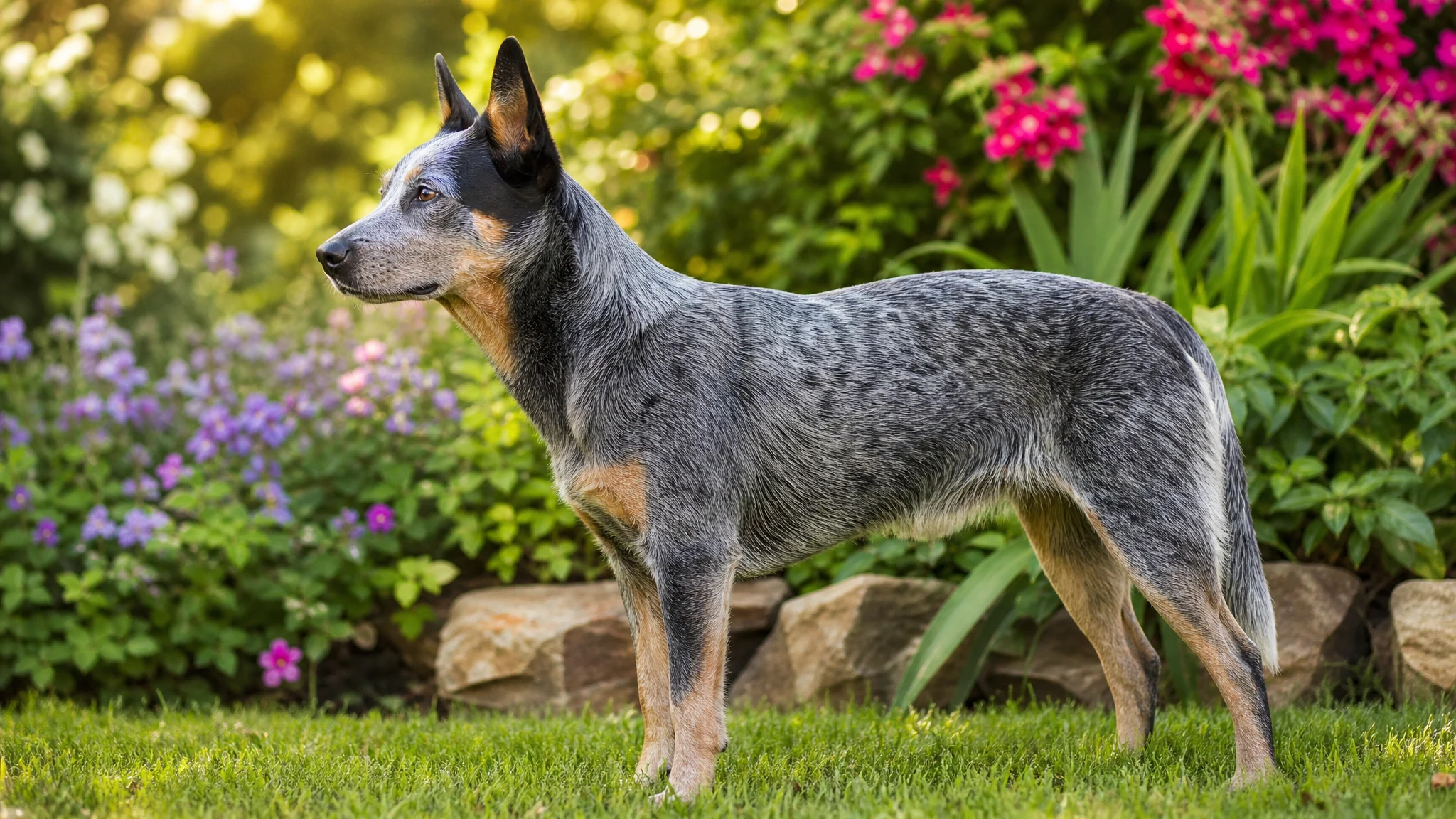
A Blue Heeler is a medium dog. The breed's formal name is Australian Cattle Dog, and "Blue Heeler" is the common name most owners use. Knowing the expected adult size helps you pick the right food, set a healthy weight goal and avoid feeding mistakes while your puppy grows.
This guide shows you how to track your Heeler's growth and weight step by step. It also explains which label details matter when you choose a food for each life stage.
How big do Blue Heelers get?
PetMD's Australian Cattle Dog breed page and the MetLife Pet Insurance breed spotlight both give an adult weight of 35 to 50 lb. The Australian Cattle Dog Club of America (ACDCA) says males stand 18 to 20 inches at the withers and females stand 17 to 19 inches. The ACDCA also gives a life expectancy of about 12 to 16 years.
| Measure | Typical adult range | Source |
|---|---|---|
| Weight | 35 to 50 lb | PetMD and MetLife Pet Insurance |
| Height, males | 18 to 20 inches | ACDCA |
| Height, females | 17 to 19 inches | ACDCA |
| Life expectancy | About 12 to 16 years | ACDCA |
These are ranges, not promises. An individual dog can land outside them. Your breeder, your dog's parents and your veterinarian are better guides to your own dog's frame.
I could not find a reliable source that states the age at which a Heeler counts as fully grown. Ask your veterinarian or breeder when to move from puppy food to adult food.
Why the 70 lb line matters for food labels
AAFCO defines a large breed as a dog expected to weigh more than 70 lb when fully grown. At 35 to 50 lb, a Blue Heeler is below that cutoff. According to IVC Journal, that means large-breed puppy formulas are not required for this breed.
This explains a label phrase you will see often. Whole Dog Journal explains that some AAFCO statements say a food is complete for growth "including growth of large-size dogs (70 pounds or more as an adult)." Others say "except for" growth of large-size dogs. The "except for" wording is aimed at dogs bigger than a Heeler will be, so it does not rule the food out for a Heeler puppy. Your veterinarian can confirm the right choice for your dog.
AAFCO itself says it sets model language and does not approve or certify pet food. A statement on the bag is the maker's claim that the food meets AAFCO nutrient levels. It is not an AAFCO endorsement.
What you need
- A kitchen or baby scale for puppies, or a pet-store or clinic scale for a bigger dog
- A soft tape measure
- A notebook or phone note for dates, weights and feeding amounts
- The food bag or can, so you can read the AAFCO statement and the feeding guide
- A measuring cup, or better, a kitchen scale for portioning food
- Your veterinarian's contact details for check-ups and weight questions
Step by step: track growth and feed for a healthy weight
Step 1: Record a starting point
Weigh your Heeler and write down the date. Measure height at the withers, the top of the shoulders, with the dog standing square. Record the food, the daily amount and the number of meals.
A starting record makes later changes easy to see. It also gives your veterinarian something concrete to review.
Step 2: Weigh on a regular schedule
Weigh at the same time of day, ideally before a meal. For a puppy, many owners choose a fixed day each week. For an adult, a monthly check is usually enough. Ask your veterinarian what schedule suits your dog.
Write each number down. A single weigh-in tells you little. The trend over several weeks is what counts.
Step 3: Read the AAFCO statement on the food
AAFCO, in Reading Labels, recognizes these life stages: gestation/lactation, growth, maintenance and all life stages. Match the statement to your dog. A puppy needs growth or all life stages. An adult can eat maintenance or all life stages.
Here is how the label data on a few foods compare. We compared label data from the brands' own pages. We did not run feeding trials or taste tests, so this is not a performance ranking.
- Royal Canin Size Health Nutrition Medium Puppy is a dry food. Its statement covers growth including large-size dogs. The label lists a 30 percent protein minimum, an 18.4 percent fat minimum and 410 kcal ME per cup.
- VICTOR Hi-Pro Plus Small & Medium Breed Puppy is dry. Its statement covers all life stages except growth of large-size dogs. The label lists a 30 percent protein minimum, an 18 percent fat minimum and 383 kcal per cup.
- Royal Canin Size Health Nutrition Medium Adult is dry and is formulated for adult maintenance. The label lists a 23 percent protein minimum, a 12 percent fat minimum and 340 kcal ME per cup.
- Hill's Science Diet Adult Perfect Digestion Chicken & Barley is dry. Hill's states that AAFCO feeding tests support it for adult maintenance. The page lists 368 kcal per cup. It gives dry matter averages rather than guaranteed minimums, so its protein and fat numbers are not directly comparable to the others.
Kibble size was not listed on any of these pages. Check with each brand if that matters for your dog. Calories per cup differ by roughly 70 kcal across the dry foods above, so swapping brands without adjusting the amount can change how much your dog eats.
Step 4: Use the feeding guide as a starting point
PetMD notes that Heelers are active, that calorically dense, high-quality diets may suit them, and that two meals a day is typical. It also says amounts should follow the bag guidance and the dog's ideal weight.
Treat the bag chart as an opening estimate. Royal Canin's own page says its guide is only a guide and that grams are the most accurate way to measure. Hill's says to adjust amounts to maintain optimal weight and to ask your veterinarian if unsure. Neither brand's amounts are a rule for your dog.
Step 5: Feed measured meals, not an open bowl
IVC Journal says the rate of growth and calorie intake matter for developmental orthopedic disease in any growing dog, and it discourages free-feeding. PetHealthMD likewise says free-feeding puppies leads to excess weight gain that strains growing bones and joints.
Measure each meal and pick up the bowl when mealtime ends. This also makes it easy to see when appetite changes.
Step 6: Check body condition and adjust slowly
Run your hands along your dog's ribs. Your veterinarian can show you what a healthy body condition feels like for a Heeler. If your numbers and the hands-on check disagree with the bag chart, adjust the amount in small steps and keep recording.
When you change foods, Hill's advises mixing increasing amounts of the new food with decreasing amounts of the old over 7 days.
Step 7: Count the treats
PetMD warns that too many treats lead to overweight Heelers. It does not list obesity as a breed predisposition, so this comes down to everyday habits. If you train with food rewards, take those calories out of the daily meal amount.
Tips and common mistakes
- Buying a large-breed puppy food by default. A Heeler is below the 70 lb cutoff, so it is not required. A medium or all-life-stages food that fits the label is a reasonable conversation to have with your veterinarian.
- Chasing the top of the weight range. A bigger dog is not a healthier one. Judge by body condition and your veterinarian's advice.
- Assuming a high-calorie food means more of it. PetMD says calorie-dense foods may suit this active breed. Dense foods mean smaller portions, so check kcal per cup.
- Comparing guaranteed minimums to dry matter averages. They are measured differently, as the Hill's pages show.
- Using a food to fix a health worry. No food prevents or treats hip dysplasia or any other condition. A veterinarian decides what is right for an individual dog, and prescription diets are only something a veterinarian prescribes.
Growth, joints and inherited conditions
The ACDCA's OFA-CHIC health testing requirements include hip and elbow evaluation. Hip and elbow dysplasia are joint conditions, and growth rate and healthy weight are relevant to them. PetMD describes hip dysplasia as uncommon in the breed. It says joint supplements or NSAIDs manage symptoms, and that decision belongs to your veterinarian.
The CHIC list also covers congenital deafness (via BAER testing) and primary lens luxation (a DNA test). PetMD adds progressive retinal atrophy, which is screened with a DNA test. These are inherited, and they are not diet related. If you are choosing a puppy, ask the breeder which screenings the parents had.
For a wider look at what shapes a Heeler's diet, see our guide to Blue Heeler nutrition and the diet factors that matter.
What to expect
If you weigh regularly, measure meals and match the food's statement to your dog's life stage, your Heeler will likely stay within the 35 to 50 lb range that PetMD and MetLife describe. A steady, gradual gain through puppyhood is generally what owners hope to see, and a lean, active adult is a reasonable goal. Individual dogs vary, and no feeding plan guarantees a particular size or health outcome.
If your dog's weight jumps, stalls or drops without explanation, call your veterinarian rather than adjusting food alone.
Sources
- PetMD, Australian Cattle Dog breed page
- MetLife Pet Insurance, Australian Cattle Dog breed spotlight
- Australian Cattle Dog Club of America, Your New Australian Cattle Dog
- Australian Cattle Dog Club of America, OFA-CHIC Health Testing Requirements
- IVC Journal, Feeding large breed puppies
- PetHealthMD, Feeding Your Large Breed Puppy
- Whole Dog Journal, In the Fine Print: Nutritional Adequacy Statements
- AAFCO, Understanding Pet Food
- AAFCO, Reading Labels
- Royal Canin, Medium Adult product page
- Royal Canin, Medium Puppy product page
- VICTOR Pet Food, Hi-Pro Plus Small & Medium Breed Puppy
- Hill's Pet Nutrition, Adult Perfect Digestion Chicken & Barley