How Much Do Blue Heelers Weigh? A Healthy Weight Chart by Age
General nutrition information compiled from product labels and published sources, not veterinary advice. Your veterinarian is the right person to choose a diet for your dog, especially one with a health condition.
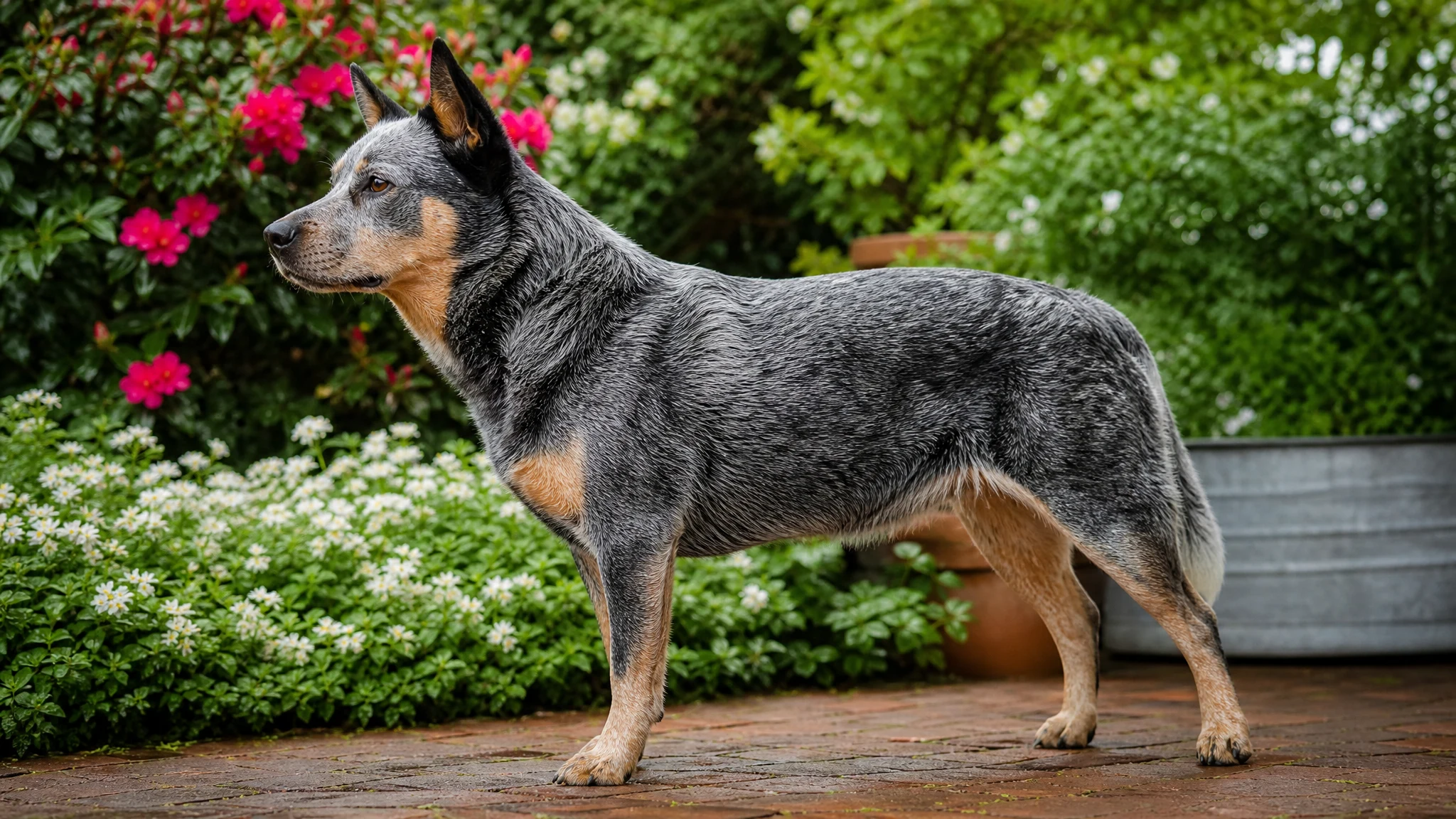
Blue Heelers, officially called Australian Cattle Dogs, are medium, muscular working dogs. Adults usually land between 35 and 50 pounds. That is a wide range, and it is why one owner's dog can look lean at 42 pounds while another's looks soft at the same number.
This guide gives you the adult range from published sources, then shows you how to build your own weight chart by age for your dog. We do not give a puppy week-by-week number table, because the sources we trust do not publish one for this breed. A made-up chart would do more harm than good.
What the breed sources say about size
Here are the figures from breed clubs and veterinary-information sites.
| Measure | Figure | Source |
|---|---|---|
| Adult weight | 35 to 50 lb | PetMD and MetLife Pet Insurance |
| Height at the withers | Males 18 to 20 in, females 17 to 19 in | Australian Cattle Dog Club of America |
| Life expectancy | About 12 to 16 years | Australian Cattle Dog Club of America |
Two independent sources agree on 35 to 50 pounds, which is reassuring. Still, a range is not a target. Your dog's frame, height and muscle matter more than the number alone.
One more useful fact: the pet food industry's large-breed cutoff, as described by PetHealthMD, is an adult weight over 70 pounds. A Blue Heeler sits well below that line, so a formula built specifically for large-breed puppies is not required.
Why we can't give you one exact weight by age
We could not find a published breed-specific growth curve from the Australian Cattle Dog Club of America, PetMD or MetLife. We also could not find a source that says at what age a Blue Heeler counts as fully grown. So for the age-by-age part, please check with your veterinarian or your puppy's breeder. They can see your dog's actual parents, frame and growth history.
What we can say, from the IVC Journal, is that growth rate and calorie intake matter for bone and joint development in any growing dog. PetHealthMD adds that free-feeding puppies leads to excess weight gain that strains growing bones and joints. Slow, steady and lean is the goal. Fast is not.
How to build your own healthy weight chart, step by step
What you need
- A scale. A baby scale works for puppies. For a bigger dog, weigh yourself holding the dog, then weigh yourself alone, and subtract.
- A notebook or spreadsheet.
- A measuring cup, or better, a kitchen gram scale for food.
- Your dog's food bag or can, so you can read the calories and feeding guide.
- Your veterinarian's contact details, for a second opinion on what "healthy" means for your dog.
Step 1: Record the starting weight
Weigh your dog at the same time of day, ideally before a meal. Write down the date, the weight and the dog's age. Consistency matters more than precision. A scale that is off by a pound still shows you the trend if you use it every time.
Step 2: Set up your age checkpoints
Make a simple log like the one below. Fill in your own numbers. If your vet weighed your puppy at a visit, add those too.
| Age checkpoint | Your dog's weight | Body shape notes | Food and amount |
|---|---|---|---|
| 8 weeks | |||
| 12 weeks | |||
| 4 months | |||
| 6 months | |||
| 9 months | |||
| 1 year | |||
| Each year after |
These checkpoints are just a handy schedule. They are not breed targets. Ask your veterinarian how often to weigh a growing puppy.
Step 3: Check the body shape, not just the number
A weight on its own can mislead. Use your hands and eyes at each checkpoint:
- Run your hands along the ribs. You should be able to feel them under a thin layer of padding without pressing hard.
- Look from above. A healthy adult usually shows a waist behind the ribs.
- Look from the side. The belly should tuck up toward the hind legs rather than hang level or sag.
If you cannot feel ribs, or the waist has disappeared, mention it to your veterinarian. If ribs, hips and spine stick out sharply, mention that too. Your vet decides what is right for your individual dog.
Step 4: Read the feeding guide as a starting point
Every bag or can has a feeding guide. Treat it as a first estimate, not a rule. PetMD says Heeler feeding amounts should follow the bag guidance and the dog's ideal weight, and that two meals a day is typical. It also notes that this is an active breed, and that calorically dense, high-quality diets may suit it.
Calories per cup vary a lot between foods, which is why two owners feeding "one cup" can get very different results. For example, Royal Canin lists its Size Health Nutrition Medium Adult dry food at 340 kcal per cup on its product page. VICTOR lists Hi-Pro Plus at 406 kcal per cup on its product page. The same scoop of each delivers a different amount of energy. We compared label data only. We did not run feeding trials or taste tests.
If you switch foods, recompute the amount from the new label. Our label-by-label comparison of dog foods for Blue Heelers lists calories per cup where the brands publish them.
Step 5: Weigh, adjust slowly, and write it down
Check your dog's weight on the same schedule you set. If the trend is moving up faster than the body shape suggests it should, trim the daily amount a little and recheck. If your dog looks thin, ask your vet before adding much. Small changes are easier to read than big ones.
Do not free-feed a puppy. Measure meals, and count treats as part of the day's food.
Tips and common mistakes
- Counting treats as free. PetMD warns that too many treats can make a Heeler overweight. Use part of the daily meal as training rewards when you can.
- Trusting the scoop. A cup of kibble can vary in weight. A gram scale is more reliable, and Royal Canin's own page says grams are the most accurate form of measurement.
- Chasing a single number. A muscular 48-pound dog and a soft 48-pound dog are not the same. Body shape tells you more.
- Feeding for fast growth. A chubby puppy is not a healthy puppy. Rapid growth is something to avoid, not celebrate.
- Buying large-breed puppy food by default. The 70-pound cutoff does not apply to Heelers. Read the AAFCO statement instead. Foods labeled "except for growth of large size dogs" are described by Whole Dog Journal as not meant for large-breed puppies, which a Heeler is not.
- Skipping the vet's view. Weight changes can have causes that food does not explain, so raise any sudden gain or loss with your veterinarian.
What about joints and health?
The Australian Cattle Dog Club of America's CHIC program requires hip and elbow evaluation for the breed. PetMD says hip dysplasia is uncommon in Heelers. Keeping a growing dog lean is a sensible habit, but no food or weight plan prevents or treats a joint condition. If you are worried about your dog's joints, a veterinarian is the right person to ask.
Other inherited issues in the breed, such as progressive retinal atrophy, congenital deafness and primary lens luxation, are not diet related, according to the sources above.
What results to expect
If you weigh regularly and adjust portions in small steps, you may find it much easier to spot weight creep early. Many owners find that a written log makes vet visits simpler, since you can show the trend rather than guess. Results differ from dog to dog, and no routine can promise a particular weight or health outcome.
The honest summary is this: aim for an adult in the 35 to 50 pound range with a visible waist and ribs you can feel. Then let your veterinarian confirm what is right for your own dog.
Sources
- PetMD, Australian Cattle Dog breed page
- MetLife Pet Insurance, Australian Cattle Dog breed spotlight
- Australian Cattle Dog Club of America, Your New Australian Cattle Dog
- Australian Cattle Dog Club of America, OFA-CHIC Health Testing Requirements
- IVC Journal, Feeding large breed puppies
- PetHealthMD, Feeding Your Large Breed Puppy
- Whole Dog Journal, In the Fine Print: Nutritional Adequacy Statements
- Royal Canin, Medium Adult dry product page
- VICTOR Pet Food, Hi-Pro Plus product page