How to Choose a Healthy Blue Heeler Puppy From a Litter
General nutrition information compiled from product labels and published sources, not veterinary advice. Your veterinarian is the right person to choose a diet for your dog, especially one with a health condition.
Picking a puppy is mostly about what happens before you meet the litter. The Blue Heeler, formally called the Australian Cattle Dog by the Australian Cattle Dog Club of America (ACDCA), has several inherited conditions that a good breeder screens for. No one can promise a puppy will stay healthy, but you can improve your odds by asking the right questions and reading the paperwork.
This guide walks through the steps in order. It covers what to bring, what to ask, what to watch for in the litter and how to plan the first weeks of feeding.
What You Need Before You Start
- A short list of questions for the breeder (the steps below give you most of it).
- A notebook or phone to record what you see and what the breeder tells you.
- The name of a veterinarian you can call to book a first visit.
- Time. Plan to visit at least once, and expect to wait for a litter.
- An honest picture of your life. Heelers are an active herding breed, and PetMD describes them as needing plenty of activity.
Step 1: Know What a Blue Heeler Should Look Like
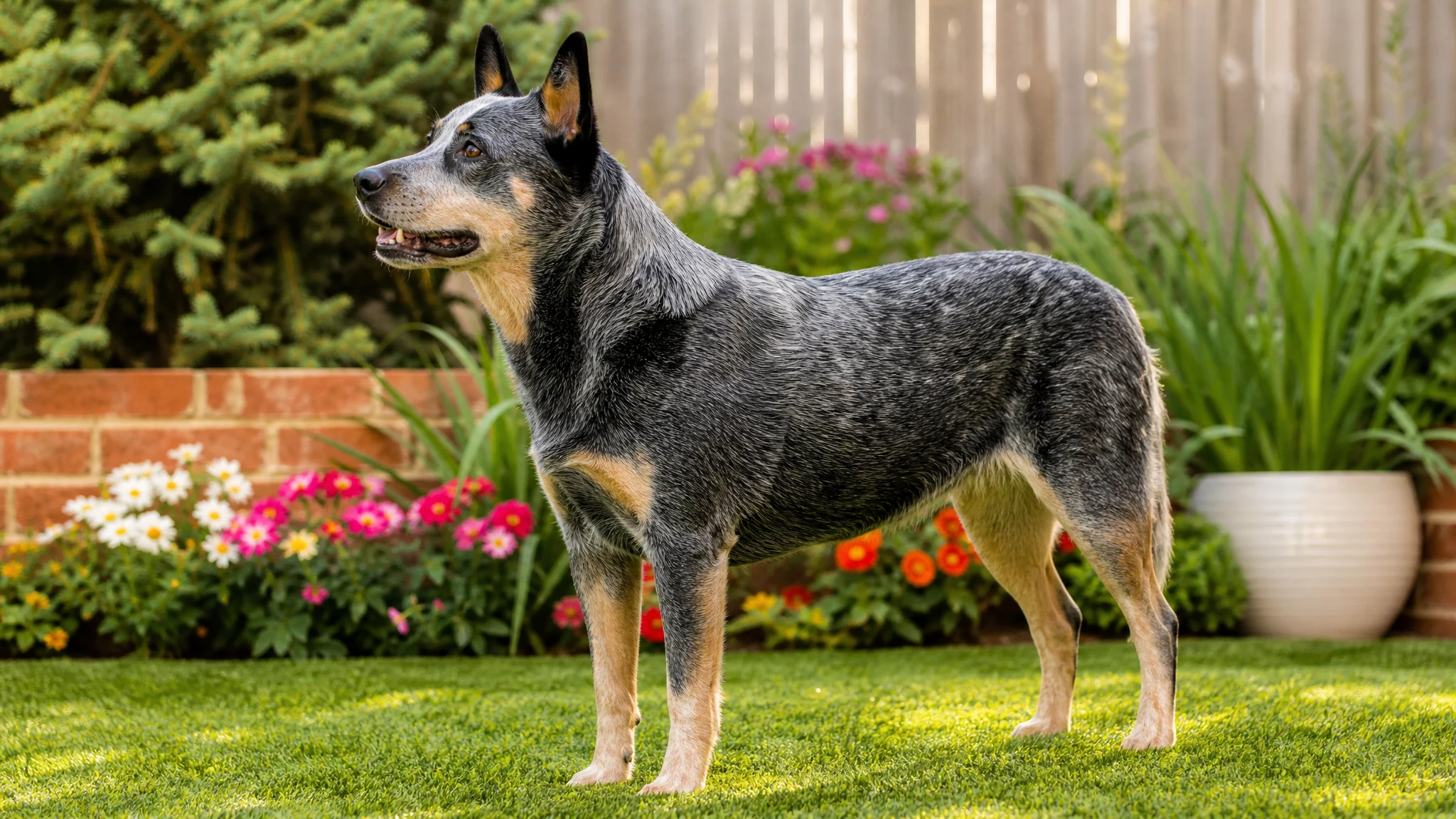
Start with the basics so you can spot a mismatch. The ACDCA gives adult height as 18 to 20 inches for males and 17 to 19 inches for females at the withers. PetMD and MetLife Pet Insurance both list an adult weight of 35 to 50 pounds. The ACDCA gives a life expectancy of about 12 to 16 years.
This is a medium dog with a long working life. You are choosing a companion for well over a decade, so a slower, more careful search is worth it.
Step 2: Ask Which Health Tests the Parents Have Had
This is the most important step. The ACDCA publishes the OFA-CHIC health testing requirements for the breed. CHIC is a testing registry, so a CHIC number tells you the parents were screened for the listed conditions. It does not tell you what any individual puppy will develop.
According to the ACDCA, the required tests are:
- Hip evaluation and elbow evaluation, for hip and elbow dysplasia.
- Hearing evaluation by OFA, based on a BAER test, for congenital deafness.
- A DNA test for primary lens luxation, an inherited eye condition.
The ACDCA also lists optional tests, including patellar luxation, a cardiac exam, an rcd4 PRA DNA test, PennHIP at 6 months and hock OCD radiographs. PetMD adds that progressive retinal atrophy (PRA) is an inherited eye disease that can be screened with a prcd-PRA DNA test.
Ask to see the actual results for both parents, not just a statement that they are healthy. If a breeder cannot or will not share them, that tells you something. You can look up the current requirements on the ACDCA site and compare them with what the breeder shows you.
Step 3: Meet the Mother and, If Possible, the Father
Puppies often resemble their parents in size, build and manner. Watch how the mother moves and how she reacts to strangers. Heelers can be reserved with new people, so a little caution is not a flaw, but panic or aggression is worth asking about.
Look at the whole setup too. The area should be clean, the dogs should look well fed and the breeder should be happy to answer questions. A breeder who rushes you or pushes a quick deposit deserves more scrutiny.
Step 4: Observe the Whole Litter Before Picking
Sit quietly for a while and watch the puppies without trying to pick one. Look for these general signs:
- Bright, clear eyes with no heavy discharge.
- Clean ears, skin and coat, with no bald patches or constant scratching.
- Steady, comfortable movement with no limping or stiffness.
- Normal, firm stools and no signs of belly upset in the pen.
- Interest in people and in play, along with normal rest.
These are common-sense checks, not a diagnosis. A veterinarian is the one who can find problems that you cannot see.
Step 5: Ask About Hearing
Deafness is inherited in this breed, and the ACDCA names BAER-based evaluation in its CHIC requirements. Ask whether the puppies have been hearing tested, and what the breeder does if a puppy is found to be deaf. A deaf dog can be a fine pet for the right home, but you should know before you commit, not after.
Step 6: Match Temperament to Your Household
Once the health questions are answered, think about personality. Ask the breeder how each puppy behaves, since they have watched the litter far longer than you have. A very pushy puppy may be a lot for a first-time owner. A very timid one may need extra patient socialization.
Whatever you choose, plan on reward-based training from the first day. The American Veterinary Society of Animal Behavior (AVSAB) supports humane, reward-based methods, and an energetic herding breed does well with clear, positive guidance and plenty of mental work.
Step 7: Read the Contract and Plan a Vet Visit
Read any written agreement before you pay. Look for what the breeder says about returning the puppy, health records and vaccinations. Then book a veterinary exam soon after the puppy comes home. Your veterinarian can check the puppy and advise on vaccines, parasite control and neutering timing for your dog.
Step 8: Plan the First Feeding Before Pickup
Ask the breeder what the puppies are eating and keep that food on hand for the first days. Switching foods suddenly can upset a puppy's stomach. If you change later, Hill's Pet Nutrition suggests mixing increasing amounts of the new food with decreasing amounts of the old food over 7 days.
Size matters for the food choice. At 35 to 50 pounds, a Blue Heeler is below the 70 pound cutoff that AAFCO uses for large breed dogs, so a large breed puppy formula is not required. Whole Dog Journal explains that AAFCO growth statements include a clause about growth of large-size dogs. A Blue Heeler puppy can eat a food that carries a growth or all life stages statement, and your veterinarian can confirm the right one for your dog.
The IVC Journal notes that growth rate and calories matter for bone and joint development in any growing dog and discourages free-feeding. PetHealthMD likewise says free-feeding puppies leads to excess weight gain that strains growing bones and joints. Measure meals and follow the label guide as a starting point, and ask your veterinarian to adjust it. For a wider look at what goes into a Heeler's bowl, see our guide to Blue Heeler nutrition and the diet factors that matter.
Diet does not decide whether a dog develops hip dysplasia, deafness or an inherited eye condition. Those are matters of genetics and veterinary care. The ACDCA treats deafness and lens luxation as inherited, and PetMD says PRA is not managed by diet.
Tips for a Better Search
- Visit more than once if you can. Puppies behave differently when rested and when tired.
- Ask for health records in writing and keep copies.
- Be ready to wait. A good match is worth more than a quick pickup.
- Let your veterinarian review any paperwork you are unsure about.
- Check each claim yourself against the ACDCA testing requirements.
Common Mistakes to Avoid
- Choosing on looks alone. Coat color and a cute face say nothing about health testing.
- Accepting "vet checked" as enough. A general check is not the same as parent screening for hips, elbows, hearing and eye conditions.
- Skipping the parents. Not meeting the mother leaves a big gap.
- Paying a deposit under pressure. Take your time.
- Overfeeding treats. PetMD warns that too many treats can lead to overweight Heelers.
- Buying a large breed puppy food by default. It is not required for this breed.
What to Expect
If you follow these steps, you may end up with a puppy from parents who were screened for the conditions the ACDCA lists, and with a clearer idea of its temperament. That can reduce the chance of some surprises, but it cannot rule them out. Health testing lowers risk and does not remove it.
A realistic outcome is a puppy that settles in with steady routines, measured meals and early vet care. Your veterinarian remains the best guide for any individual dog.
Sources
- Australian Cattle Dog Club of America, Your New Australian Cattle Dog
- Australian Cattle Dog Club of America, OFA-CHIC Health Testing Requirements
- PetMD, Australian Cattle Dog breed page
- MetLife Pet Insurance, Australian Cattle Dog breed spotlight
- IVC Journal, Feeding large breed puppies
- PetHealthMD, Feeding Your Large Breed Puppy
- Whole Dog Journal, In the Fine Print: Nutritional Adequacy Statements
- Hill's Pet Nutrition, Science Diet product page (food switching guidance)