How to Find a Responsible Blue Heeler Breeder Near You
General nutrition information compiled from product labels and published sources, not veterinary advice. Your veterinarian is the right person to choose a diet for your dog, especially one with a health condition.
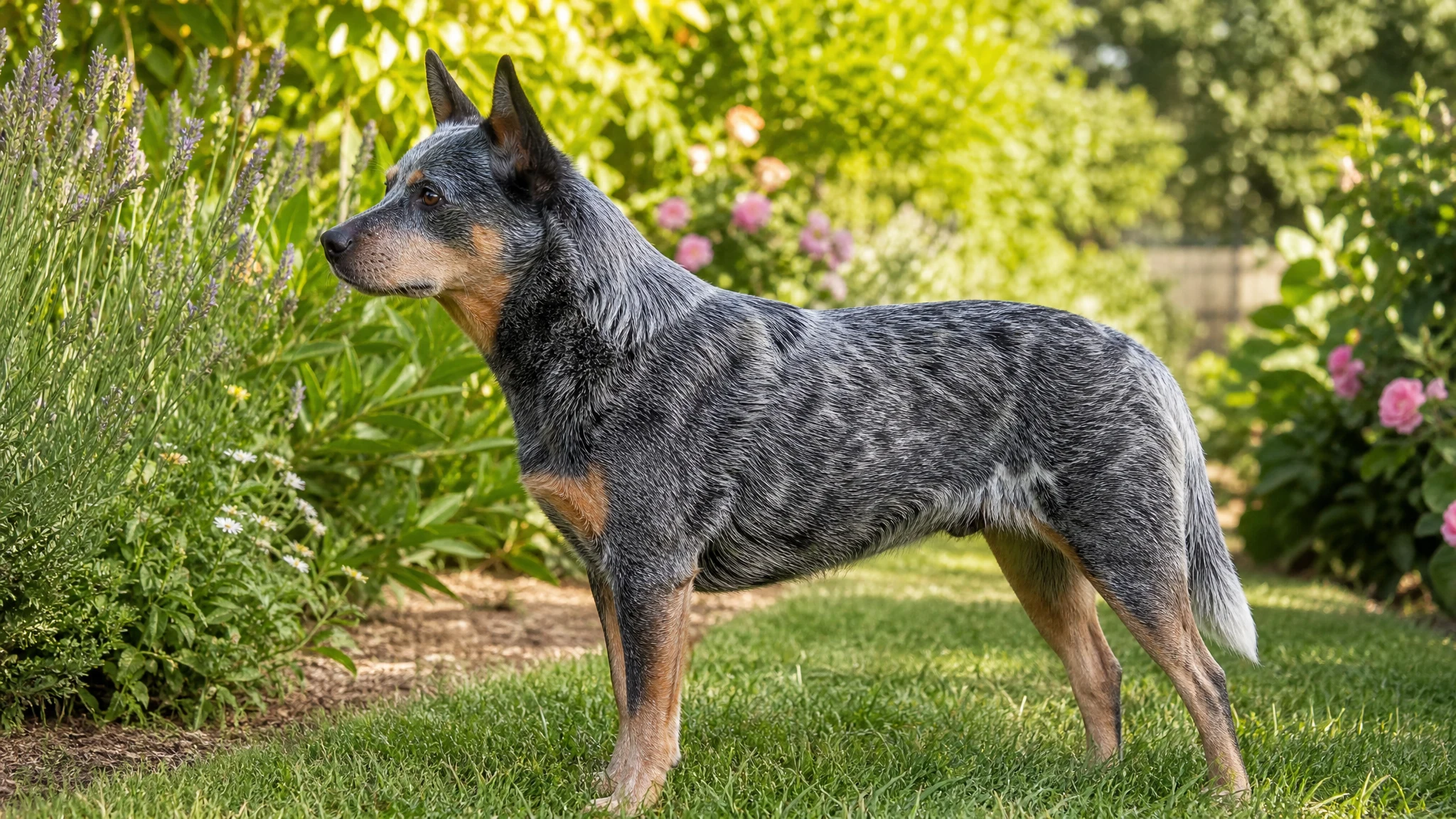
Most people call the dog a Blue Heeler. The official breed name is Australian Cattle Dog, and that is the name clubs and registries use. The two names describe the same breed, so keep both in mind when you read breeder pages.
Choosing a breeder is one of the biggest decisions you will make for your dog's health and temperament, and it also shapes how you feed the puppy. This guide walks through the process one step at a time. It names real organizations to check with and does not recommend any individual breeder.
What You Need Before You Start
- A short list of what you want: an active companion, a sport or herding partner, or a family pet. Be honest about your daily exercise time.
- A notebook or document for each breeder, with space for answers and dates.
- The list of health tests in this article, printed or saved on your phone.
- A clear budget for the puppy, a first vet visit and food. The sources we used give no breeder price figures, so ask each breeder directly and do not assume a number.
- Patience. A good breeder may have a waiting list.
Step 1: Learn What a Healthy Heeler Looks Like
Start with the breed itself so you can spot claims that do not add up. The Australian Cattle Dog Club of America (ACDCA) describes males at 18 to 20 inches and females at 17 to 19 inches at the withers. It gives a life expectancy of about 12 to 16 years. PetMD and MetLife Pet Insurance both list an adult weight of 35 to 50 pounds.
That puts the breed in the medium size range. A breeder who advertises a "giant" or "extra large" Heeler is describing something outside the breed's usual range, and you should ask why.
A long life expectancy also means a long commitment. Plan for well over a decade.
Step 2: Start With the Breed Club
The ACDCA publishes guidance for people getting their first Australian Cattle Dog, titled Your New Australian Cattle Dog. Read it before you contact anyone. It is a better starting point than a general classified site.
Ask the club, or check its website, about how it connects buyers with member breeders and whether it has a code of ethics. We did not find those details in our sources, so check with the club directly rather than assume. Local and regional cattle dog clubs may also exist. Confirm any club's details with the club itself.
Step 3: Know the Health Tests to Ask About
This step does the most to separate responsible breeders from careless ones. The ACDCA lists its OFA-CHIC health testing requirements for the breed on its CHIC requirements page. Those requirements include:
- Hip evaluation and elbow evaluation, because hip and elbow dysplasia are joint conditions seen in the breed.
- An OFA evaluation for congenital deafness, based on a BAER test.
- A DNA test for primary lens luxation, an inherited eye condition.
The ACDCA also lists optional tests: patellar luxation, a cardiac exam, an rcd4 PRA DNA test, PennHIP at 6 months, and hock OCD radiographs. PetMD adds that progressive retinal atrophy (PRA) is an inherited eye disease that can be screened with a prcd-PRA DNA test.
Ask which tests were done on both parents, and ask to see the results. Do not accept "vet checked" as a substitute. Results from an official registry can be verified. A general statement cannot.
Testing lowers uncertainty. It does not guarantee a puppy will never have a health problem, and a breeder who says otherwise is overselling.
Step 4: Contact Several Breeders and Ask Good Questions
Contact more than one breeder. Write down the same questions for each so you can compare the answers fairly.
- Which health tests have both parents had, and may I see the results?
- How often do you breed this litter's mother, and how many litters do you produce a year?
- Can I meet the mother, and the father if he lives on site?
- Where do the puppies spend their first weeks, and how are they socialized?
- What food are the puppies eating now, and what will you send home with me?
- What happens if I can no longer keep the dog?
- Do you have a written contract, and what does it cover?
A responsible breeder should expect these questions and be comfortable answering them. They will probably ask you questions too, about your home, your schedule and your experience with active dogs. That is a good sign.
Step 5: Visit in Person or Request a Live Video Visit
Look at the whole environment. Check whether the space is clean, whether the puppies seem curious and relaxed, and whether the mother appears healthy and comfortable. Notice whether the adults you meet have a stable temperament. Heelers are an active herding breed, so some alertness is normal, but panic or aggression toward visitors is worth a pause.
If you cannot visit, ask for a live video call that shows the puppies, the mother and the space. A set of photos alone does not show you much.
Step 6: Review the Contract and Health Paperwork
Before you pay any deposit, read the contract in full. Look for terms on health records, return policy and what the breeder expects of you. Ask for the vaccination and deworming records in writing. Do not wire money or pay a deposit to someone who will not answer questions.
We cannot tell you what a fair contract contains for your state. If you are unsure, ask the breed club or a veterinarian to explain the terms in general. You may also want a lawyer to read it.
Step 7: Plan the Puppy's Food Before Pickup
Ask what the puppy is eating, and plan to keep that food going for the first days. Sudden changes can upset a puppy's stomach, so switch gradually, and ask your veterinarian how.
Since the adult weight is 35 to 50 pounds, a Blue Heeler is below the AAFCO large-size cutoff of 70 pounds. The IVC Journal notes that this means large-breed puppy formulas are not required for a dog this size. If you compare labels, an AAFCO statement that says a food is for growth "including growth of large size dogs (70 lb. or more as an adult)" can be fed to a Heeler puppy. The Whole Dog Journal explains that foods with the "except for" version of the wording should not be fed to large-breed puppies. Check what a label says and ask your veterinarian about your own puppy.
Growth rate and calories matter in any growing dog. The IVC Journal and PetHealthMD both discourage free-feeding puppies, since excess weight gain strains growing bones and joints. That matters in a breed where hip and elbow dysplasia are on the CHIC testing list. Food does not prevent or treat those conditions, and your veterinarian decides what is right for an individual dog.
For a deeper look at feeding, read our guide to Blue Heeler nutrition and the diet factors that matter.
Tips for a Smoother Search
- Put it in writing. Ask for test results, contract terms and feeding plans in writing.
- Be ready to wait. A good litter may be reserved well before birth.
- Compare, do not rush. Use the same question list with every breeder.
- Verify, then trust. Check official registry results rather than relying on a description.
- Think about energy. PetMD describes the breed as active, so be sure your lifestyle matches.
Common Mistakes to Avoid
- Buying on looks alone. A rare coat color tells you nothing about health or temperament.
- Accepting vague health claims. "Healthy parents" is not a test result.
- Skipping the visit. If a seller refuses any meeting or video call, treat that as a warning.
- Paying before reading. Never send a deposit before you have seen the contract.
- Feeding without a plan. Overfeeding a growing puppy, or handing out too many treats, can lead to extra weight. PetMD warns that excess treats lead to overweight Heelers.
- Ignoring your own readiness. A Heeler needs time, exercise and consistent, reward-based training.
What to Expect From the Process
If you follow these steps, you may end up with a clearer list of breeders who share their health testing openly and answer your questions without pressure. You may also feel more confident reading test results and contracts. A thorough search can take weeks or months, and a waiting list is common.
Careful selection can improve your odds of a healthy puppy, but no process can promise one. Keep your veterinarian involved from the first visit, and keep asking questions after you bring your dog home.
A Note on How We Approached This Guide
This article is based on published breed club and veterinary sources. We did not visit, rate or test any breeder, and we do not recommend one. For anything specific to your area, such as breeder licensing or sales rules, check with your state or local agency.
Sources
- Australian Cattle Dog Club of America, Your New Australian Cattle Dog
- Australian Cattle Dog Club of America, OFA-CHIC Health Testing Requirements
- PetMD, Australian Cattle Dog breed page
- MetLife Pet Insurance, Australian Cattle Dog breed spotlight
- IVC Journal, Feeding large breed puppies
- PetHealthMD, Feeding Your Large Breed Puppy
- Whole Dog Journal, In the Fine Print: Nutritional Adequacy Statements