Human Foods Blue Heelers Should Never Eat
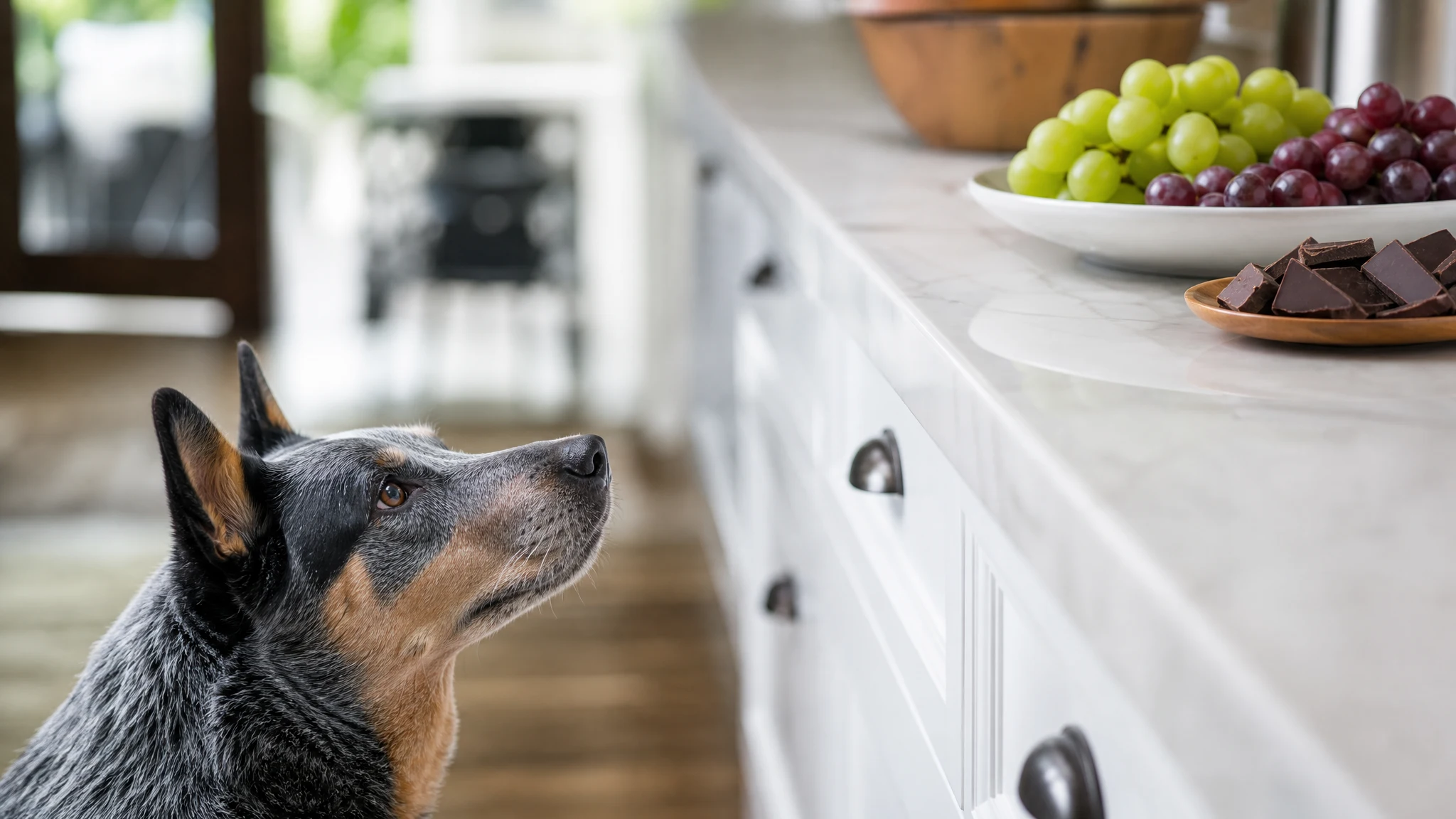
General nutrition information compiled from product labels and published sources, not veterinary advice. Your veterinarian is the right person to choose a diet for your dog, especially one with a health condition.
Blue Heelers, the Australian Cattle Dog, are quick, curious and food-motivated, which makes them good at finding trouble on a kitchen counter. This FAQ covers human foods dogs can't eat, based on the toxic-food guidance from ASPCA Animal Poison Control, and it also covers snacks that are generally considered safe.
It is general information, not a diagnosis. If your dog has eaten something on this list, skip to the emergency section.
The Basics
What can Blue Heelers not eat?
The ASPCA Animal Poison Control list includes chocolate, grapes and raisins, xylitol, onions and garlic, macadamia nuts, alcohol and caffeine. Raw yeast dough, cooked bones and very fatty scraps are also common problems. The sections below explain why each one matters.
Are the dangers different for a Blue Heeler than for other dogs?
The toxic foods are the same for all dogs. A Blue Heeler is a medium dog, at 35-50 lb according to PetMD and the Australian Cattle Dog Club of America, so a small amount of a harmful food can matter more than it would for a larger dog. Their energy and curiosity also mean they investigate bags, bins and low shelves.
Is there a safe amount of a toxic food to test?
No. How a dog reacts depends on the food, the dog's size and the individual dog, and nobody can predict it at home. The safe approach is to keep these foods out of reach and call for advice if your dog gets into them.
Sweets, Sweeteners and Baked Goods
Can Blue Heelers eat chocolate?
No. ASPCA Animal Poison Control lists chocolate as toxic to dogs because it contains compounds called methylxanthines. Dark chocolate and baking chocolate are generally considered more concerning than milk chocolate, but none of it is a safe treat.
Why is xylitol so dangerous?
Xylitol is a sugar substitute found in some sugar-free gum, candy, baked goods and a few peanut butters. ASPCA Animal Poison Control lists it as toxic, and it can cause a sudden drop in blood sugar and liver problems in dogs. Check ingredient labels before sharing anything sugar-free, including peanut butter.
Is raw bread or yeast dough a problem?
Yes. Raw yeast dough can expand in the stomach and produce alcohol as it ferments, which is why ASPCA Animal Poison Control lists it as a hazard. Keep rising dough covered and well out of reach.
Are sweet baked goods and desserts okay as a treat?
They are not a good idea. Many contain chocolate, raisins, nuts or xylitol, and the rest are mostly sugar and fat. PetMD also warns that too many treats lead to overweight Heelers, so a plain dog-safe snack is a better choice.
Fruits, Vegetables and Nuts
Can Blue Heelers eat grapes or raisins?
No. ASPCA Animal Poison Control lists grapes and raisins as toxic because they can cause kidney failure in dogs. The exact cause is not well understood, so there is no way to say one grape is fine. This includes raisins hidden in cereal, trail mix and baked goods.
Are onions and garlic harmful?
Yes. ASPCA Animal Poison Control lists onions, garlic, chives and leeks as harmful because they can damage a dog's red blood cells. Raw, cooked and powdered forms all count, so be careful with leftovers and seasoned sauces.
Can Blue Heelers eat macadamia nuts?
No. ASPCA Animal Poison Control lists macadamia nuts as toxic, with signs that can include weakness, vomiting and tremors. Cookies with macadamia pieces are a common way dogs get into them.
What about avocado?
ASPCA Animal Poison Control lists avocado as a concern, mainly because of a compound called persin in the fruit, pit, leaves and bark. The large pit is also a choking and blockage risk. It is easiest to leave avocado out of your dog's bowl altogether.
Drinks, Salt and Fat
Is alcohol dangerous for dogs?
Yes. ASPCA Animal Poison Control lists alcohol as toxic, and that includes food containing it, such as some desserts and unbaked dough. Never leave open glasses where a dog can reach them.
Can Blue Heelers have coffee, tea or energy drinks?
No. Caffeine is on the ASPCA Animal Poison Control list of toxic substances. Coffee grounds, tea bags and caffeine products are all risky, so bin them securely.
Is salty food a problem?
It can be. ASPCA Animal Poison Control warns that too much salt can cause illness in dogs, and chips, pretzels and cured meats are the usual sources. Salty snacks have no place in a dog's diet.
Are fatty scraps and bacon okay?
They are best avoided. Rich, fatty food can upset a dog's stomach and may trigger a painful inflammation of the pancreas called pancreatitis. Trimmings from the roast or the grease pan are not a good reward.
Are cooked bones safe to chew?
No. Cooked bones can splinter and cause choking or injury to the mouth and gut. If you want a chew, ask your veterinarian which options suit your dog.
Safe Snacks
Can Blue Heelers eat carrots and other vegetables?
Plain carrots and green beans are commonly used as low-calorie snacks. Serve them plain, with no butter, oil, onion or seasoning. Cut pieces to a size that is easy to chew.
Can Blue Heelers eat fruit?
Some fruit, such as blueberries or apple slices without the core and seeds, is commonly offered as an occasional treat. Avoid grapes and raisins, and remove pits and seeds. Fruit still contains sugar, so keep portions small.
Can Blue Heelers eat plain cooked chicken?
Plain, boneless, fully cooked chicken is a common training reward. Leave off seasoning, sauces, onion and garlic. Count it as part of the day's food, not as an extra.
How many treats are too many?
PetMD notes that excess treats lead to overweight Heelers and says feeding amounts should follow the bag guidance and the dog's ideal weight. Treat portions are a question for your veterinarian, who knows your dog's body condition. For the main meals, our label-by-label dog food comparison looks at the label data for several foods. We compared labels and did not run feeding trials or taste tests.
If Your Dog Eats Something Unsafe
What should I do right away?
Call your veterinarian or an emergency animal hospital, or contact ASPCA Animal Poison Control, and have the food, the packaging and your dog's approximate weight ready. Do not wait for symptoms. Some toxins take time to show signs.
Should I make my dog vomit at home?
Do not try that unless a veterinarian or poison control professional tells you to. The right step depends on what was eaten and when, and some methods can cause harm. Professionals can judge the situation and tell you what to do.
What should I tell the veterinarian?
Say what your dog ate, roughly how much, and when it happened. Bring any wrapper or ingredient list, which is useful for things like xylitol. Mention any symptoms you have noticed, such as vomiting, tremors or unusual tiredness.
Sources
- PetMD, Australian Cattle Dog breed page
- Australian Cattle Dog Club of America, Your New Australian Cattle Dog
The toxic-food guidance above follows the ASPCA Animal Poison Control list. Check the ASPCA website for the current list and contact details.