Queensland Heeler vs Blue Heeler: Are They the Same Dog?
General nutrition information compiled from product labels and published sources, not veterinary advice. Your veterinarian is the right person to choose a diet for your dog, especially one with a health condition.
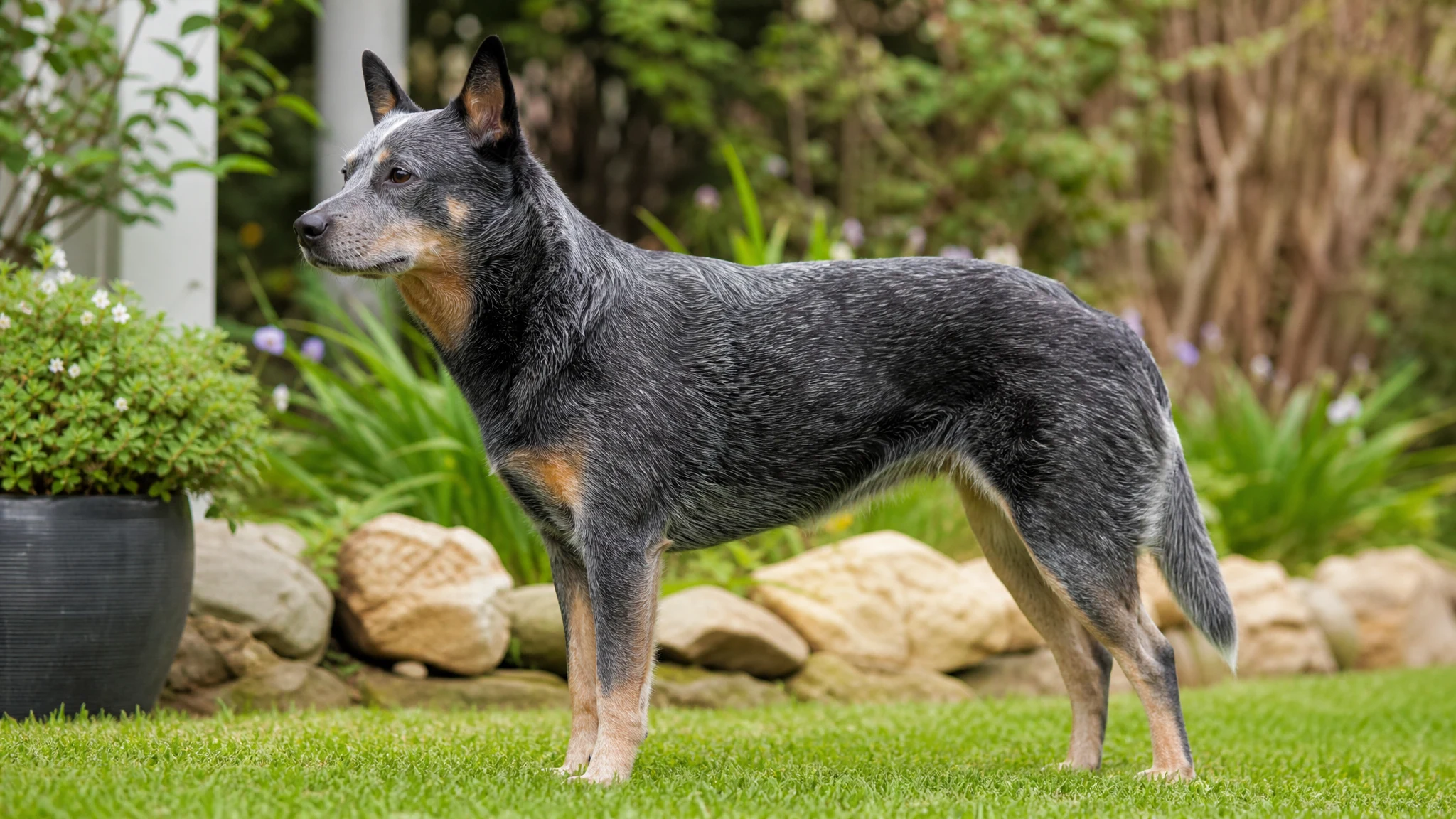
Short answer: yes, in everyday use. "Blue Heeler" and "Queensland Heeler" are common names people use for the Australian Cattle Dog. The Australian Cattle Dog Club of America and PetMD both use that official name.
This guide shows you how to confirm that for yourself. It also shows how to carry the answer into feeding, because a dog food label cares about the breed's size and life stage, not its nickname.
What You Need
- The breed name from your dog's registration papers, breeder paperwork or adoption record, if you have them.
- A tape measure and a bathroom scale, or a recent weight from your veterinarian.
- The bag or can of the food you feed now, so you can read its label.
- About 20 minutes and a notebook.
Step 1: Start With the Official Name
The breed's official name is Australian Cattle Dog, according to the PetMD Australian Cattle Dog breed page. Breed clubs and registries file the dog under that name.
"Blue Heeler" is the common name. We have not found a registry page that lists it as an official or alternate name, so treat it as a nickname. "Queensland Heeler" works the same way. It is a nickname people use for the same breed. For the history behind each nickname, check with the Australian Cattle Dog Club of America or the American Kennel Club.
PetMD also uses the shortened term "heelers" for the breed.
Step 2: Check the Size
Size matters for food choices, so this step is useful as well as a way to confirm the breed.
- Weight: PetMD and MetLife Pet Insurance both give an adult weight of 35 to 50 lb.
- Height: The Australian Cattle Dog Club of America lists males at 18 to 20 inches and females at 17 to 19 inches at the withers.
Measure your dog from the floor to the top of the shoulder blades, standing square. Write down the number next to its weight.
A mixed-breed dog may fall outside these ranges. Ranges describe the breed in general, and no single dog is a perfect match. If your dog is a mix, ask your veterinarian what weight is right for that individual.
Step 3: Match the Name to the Right Questions
Once you know the names point to one breed, you can use any of them in conversations. Your veterinarian, a breeder or a breed club will understand "Blue Heeler," "Queensland Heeler" and "Australian Cattle Dog" as the same dog.
When you look up health information, use "Australian Cattle Dog." Breed club testing pages use that name. For example, the Australian Cattle Dog Club of America's OFA-CHIC health testing requirements cover hip and elbow evaluation, a hearing test and DNA testing for primary lens luxation. PetMD describes progressive retinal atrophy as an inherited eye disease screened with a DNA test.
Those conditions are mostly inherited, and some are not diet related. Food does not replace screening or veterinary care.
Step 4: Translate Breed Size Into Food Labels
This is where the name question becomes practical. No food in our research is made specifically for Blue Heelers or Australian Cattle Dogs. Check with each brand if you want to know whether one exists. What you can do is read the label for size and life stage.
AAFCO, which sets model language for pet food but does not approve or certify any food, recognizes four life stages: gestation and lactation, growth, maintenance, and all life stages. Its Reading Labels page explains them.
Some growth and all-life-stages statements mention "large-size dogs (70 pounds or more as an adult)." Whole Dog Journal explains that foods carrying the "except for" version of that clause should not be fed to large-breed puppies. A Blue Heeler at 35 to 50 lb is below that 70 lb cutoff. So a food that says "except for growth of large size dogs" is not ruled out for a Heeler puppy, and a large-breed puppy formula is not required.
That does not mean any food will do. It means the large-breed clause is not the deciding factor for this breed.
Step 5: Compare Labels Side by Side
We compared label data from the brands' own pages. We did not run feeding trials or taste tests, and we cannot say how any dog will respond to a food. Calories per cup are the most useful number to compare, because the bag's feeding guide is built on them.
| Food | Label statement | Calories per cup |
|---|---|---|
| Royal Canin Size Health Nutrition Medium Adult (dry) | Adult maintenance | 340 kcal ME (calculated) |
| Hill's Science Diet Adult Perfect Digestion Chicken & Barley (dry) | Adult maintenance, backed by AAFCO feeding tests | 368 kcal |
| VICTOR Hi-Pro Plus (dry) | All life stages except growth of large size dogs | 406 kcal |
| Royal Canin Size Health Nutrition Medium Puppy (dry) | Growth, including large size dogs | 410 kcal ME (calculated) |
The spread is real. The Royal Canin adult food and the VICTOR food differ by 66 kcal per cup. The same scoop of each delivers a different amount of energy, so you cannot swap them cup for cup.
Kibble size is not listed on the product pages we reviewed, so check with each brand if that matters for your dog.
You can read more on the brand pages: Royal Canin Medium Adult, Hill's Science Diet Adult Perfect Digestion and VICTOR Hi-Pro Plus.
Step 6: Use the Feeding Guide as a Starting Point
PetMD describes the Australian Cattle Dog as an active breed. It says calorically dense, high-quality diets may be ideal, that two feedings a day is typical, and that amounts should follow the bag guidance and the dog's ideal weight.
- Find your dog's current weight and, if you can, an ideal weight from your veterinarian.
- Read the feeding chart on the bag. Treat it as a starting point, not a target. Royal Canin's page says its guide is only a guide, and Hill's says to adjust amounts to maintain optimal weight.
- Split the daily amount into two meals.
- Weigh the dog every few weeks and adjust with your veterinarian's input.
For puppies, the sources are consistent on one point. IVC Journal says growth rate and calories matter for developmental orthopedic disease in any growing dog, and PetHealthMD says free-feeding puppies leads to excess weight gain that strains growing bones and joints. Measured meals are the safer habit. Your veterinarian decides what is right for an individual puppy.
Tips and Common Mistakes
- Assuming a nickname means a different breed. Searching or shopping by "Queensland Heeler" or "Blue Heeler" will not change what the label must say. Read the life stage statement instead.
- Buying a large-breed formula by default. At 35 to 50 lb, your dog is below the AAFCO 70 lb cutoff, so it is not needed.
- Counting on the cup, not the calories. Compare kcal per cup before switching brands.
- Letting treats pile up. PetMD warns that excess treats lead to overweight Heelers. Count them as part of the daily food.
- Switching foods overnight. Hill's suggests mixing increasing amounts of the new food with decreasing amounts of the old over 7 days.
- Treating food as a fix for inherited conditions. Hip and elbow dysplasia, deafness, lens luxation and PRA are handled through screening and veterinary care. PetMD says joint supplements or NSAIDs manage hip dysplasia symptoms, and it calls the condition uncommon in the breed.
- Chasing diet trends. The FDA's investigation into diet and canine dilated cardiomyopathy (DCM) was last updated December 23, 2022. The FDA calls the association complex and not resolved, and says adverse event reports alone do not establish cause. If you have concerns about a particular diet, talk to your veterinarian.
What to Expect
After these steps, you should be able to use the names interchangeably, know your dog's size, and read a food label with the right questions in mind. A steady weight and a good body condition over several weeks may be a sign that the amount you feed suits your dog. Results vary from dog to dog, and your veterinarian is the one to judge an individual dog's health.
For a deeper look at calories, life stages and other label details, see our guide to Blue Heeler nutrition and the diet factors that matter.
Sources
- PetMD, Australian Cattle Dog breed page
- Australian Cattle Dog Club of America, Your New Australian Cattle Dog
- Australian Cattle Dog Club of America, OFA-CHIC Health Testing Requirements
- MetLife Pet Insurance, Australian Cattle Dog breed spotlight
- AAFCO, Reading Labels
- Whole Dog Journal, In the Fine Print: Nutritional Adequacy Statements
- IVC Journal, Feeding large breed puppies
- PetHealthMD, Feeding Your Large Breed Puppy
- FDA CVM, Investigation into Potential Link between Certain Diets and Canine Dilated Cardiomyopathy