Red Heeler Puppy: Color Genetics and Growth Basics
General nutrition information compiled from product labels and published sources, not veterinary advice. Your veterinarian is the right person to choose a diet for your dog, especially one with a health condition.
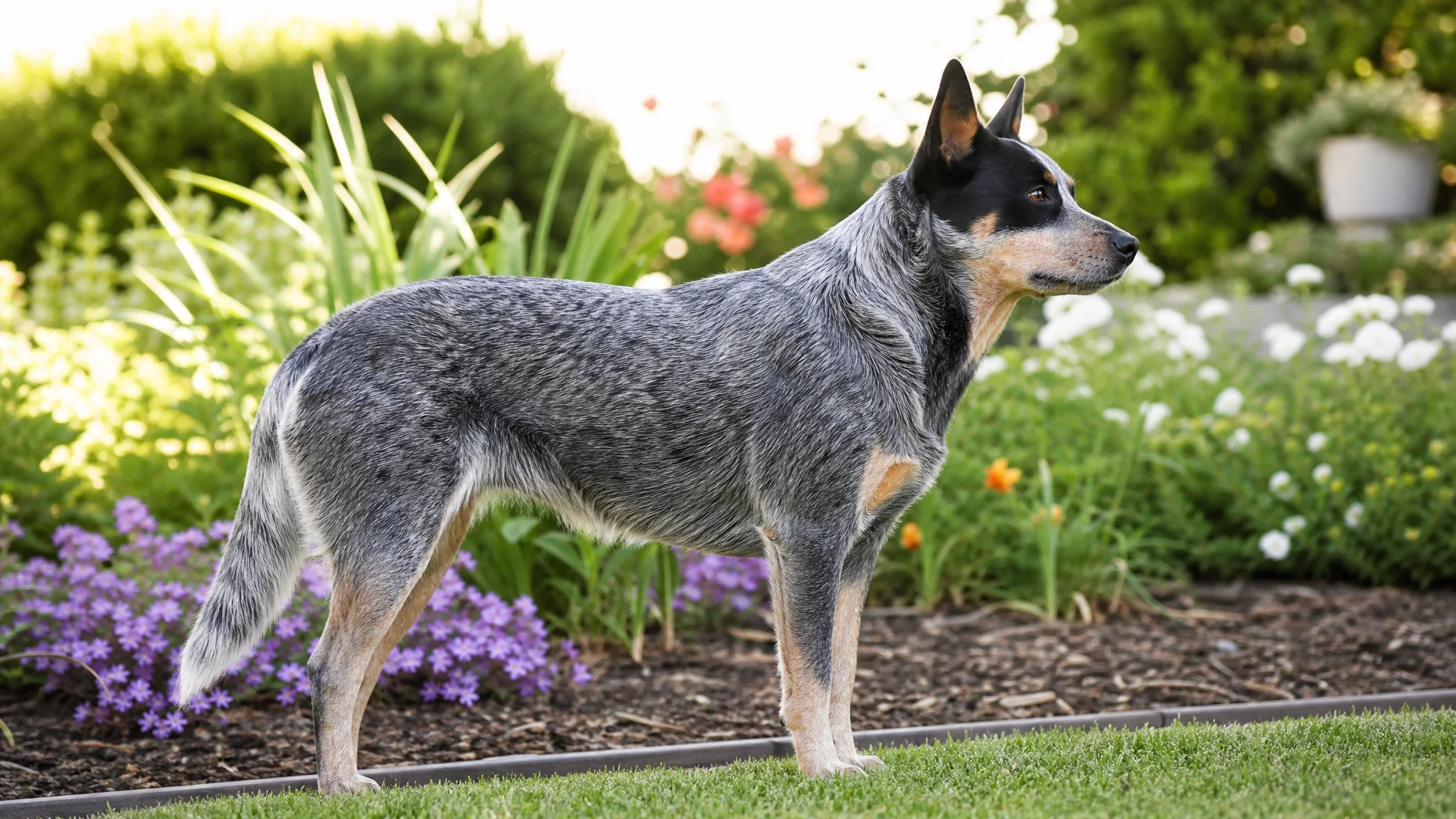
A Red Heeler puppy and a Blue Heeler puppy are the same breed, the Australian Cattle Dog, which is the official name used by PetMD and the Australian Cattle Dog Club of America (ACDCA). "Heeler" and the color names are the everyday names owners use.
This guide has two jobs. It explains where to get reliable answers about coat color, and it walks you through a growth plan built on label reading. We did not feed, raise or test any dog for this page. The food comparison uses label data published by each brand.
What this guide can and cannot say about color genetics
The sources used for this page do not explain how Red Heeler coat colors are inherited. We will not guess at which parent colors produce which puppies. Anything beyond the basics is easy to get wrong.
For color questions, ask the breeder for the parents' health and registration records. You can also contact the Australian Cattle Dog Club of America, which publishes breed information and health testing requirements at its website.
The growth and feeding sources below give one adult weight range for the breed, not separate ranges by coat color. Plan around the breed range and your own puppy's body condition.
Materials you will need
- A puppy food whose label has an AAFCO nutritional adequacy statement for growth or all life stages.
- A kitchen scale or a measuring cup, so you can portion food the same way every time.
- A notebook or phone note for weight checks and feeding amounts.
- Small, low-calorie training treats, counted as part of the daily food.
- Your veterinarian's contact details, since they decide what is right for an individual dog.
Step 1: Know the size your puppy is growing toward
PetMD and MetLife Pet Insurance both list an adult weight of 35-50 lb for the Australian Cattle Dog. The ACDCA gives adult height as 18-20 inches for males and 17-19 inches for females at the withers. It gives a life expectancy of about 12-16 years.
This makes the breed medium sized. AAFCO's large-size class starts at an expected adult weight of 70 lb or more, so a Heeler is outside it. A large-breed puppy formula is not required for the breed, according to the IVC Journal's discussion of feeding large-breed puppies.
The sources we used do not say at what age a Heeler counts as an adult. Ask your veterinarian or breeder when to move to adult food.
Step 2: Read the AAFCO statement on the bag
AAFCO says it sets model language and does not approve or certify pet food. The statement on the label is the manufacturer's claim. AAFCO recognizes four life stages: gestation/lactation, growth, maintenance and all life stages.
For a puppy, look for "growth" or "all life stages." Whole Dog Journal explains the wording for large dogs. Some statements say "including growth of large-size dogs (70 pounds or more as an adult)." Others say "except for" that group. A Heeler is under 70 lb as an adult, so either wording covers the breed's size.
Step 3: Compare label data, not slogans
Below are puppy foods whose brand pages list the data in this table. We compared label information only. This is not a ranking, and we did not run feeding trials or taste tests.
| Food | AAFCO statement | First ingredients | Calories | Protein / fat (min) |
|---|---|---|---|---|
| Royal Canin Size Health Nutrition Medium Puppy (dry) | Growth, including large-size dogs | Chicken by-product meal, chicken fat, brewers rice, corn, wheat | 410 kcal ME per cup | 30% / 18.4% |
| VICTOR Hi-Pro Plus Small & Medium Breed Puppy (dry) | All life stages, except growth of large-size dogs | Beef, chicken, beef meal, chicken meal, whole grain sorghum | 383 kcal per cup | 30% / 18% |
| Hill's Science Diet Puppy Chicken & Barley Entree (wet) | Growth and gestation/lactation | Water, chicken, whole grain corn, cracked pearled barley, pork liver | 495 kcal per 13 oz can | Dry matter averages of 29% / 20.3%, not minimums |
Kibble size is not listed on these brand pages, so check the bag if your puppy is small. The Hill's wet food lists dry matter averages rather than guaranteed minimums, so the numbers are not directly comparable to the other two rows.
The brands' own pages are Royal Canin Medium Puppy, VICTOR Hi-Pro Plus Small & Medium Breed Puppy and Hill's Science Diet Puppy Chicken & Barley Entree. For the wider picture of what to weigh, see our guide to Blue Heeler nutrition and the diet factors that matter.
Step 4: Start with the label's feeding guide
Treat every feeding chart as a starting point. PetMD says Heeler amounts should follow the bag guidance and the dog's ideal weight. It also says the breed typically eats two meals a day, though puppies often need more.
The brand pages differ on this. VICTOR's puppy page suggests feeding as much as the puppy will eat in 20 minutes, across 4 feedings spaced through the day. The Royal Canin puppy page asks for your puppy's details to calculate a recommendation. Ask your veterinarian which approach suits your puppy.
- Weigh your puppy and write the number down.
- Find the label's suggested amount for that weight or age.
- Divide it into the number of meals the label or your veterinarian suggests.
- Measure each meal. A scale is more accurate than a cup, and Royal Canin's page says the same about grams.
- Adjust up or down only after a weight check, with your veterinarian's input.
Step 5: Do not free-feed
The IVC Journal says the rate of growth and calories matter for developmental orthopedic disease in any growing dog. PetHealthMD says free-feeding puppies leads to excess weight gain that strains growing bones and joints.
Set meal times, pick up the bowl after the meal, and keep a record. Hip and elbow dysplasia are the joint conditions the ACDCA's health testing program checks for. Feeding cannot prevent them, but keeping a puppy lean avoids adding strain. PetMD notes that hip dysplasia is uncommon in the breed.
Step 6: Count treats and track weight
PetMD warns that too many treats lead to overweight Heelers. Training a bright, active breed uses a lot of treats, so use tiny pieces and subtract them from meals when the day has been treat-heavy.
Weigh your puppy on a regular schedule and note it next to the date. Share the log at veterinary visits so your veterinarian can judge growth.
Step 7: Change foods slowly
When you move from one food to another, Hill's suggests mixing increasing amounts of the new food with decreasing amounts of the old over 7 days. Use the same approach when you move to adult food. Your veterinarian can advise on timing.
Tips
- PetMD says calorically dense, high-quality diets may suit this active breed. Dense food means smaller portions, so measure carefully.
- Ask for hip, elbow, eye and hearing test results on the parents. The ACDCA's CHIC requirements list hip and elbow evaluation, a BAER-based hearing evaluation and a DNA test for primary lens luxation. PetMD notes that progressive retinal atrophy is screened by a DNA test. None of these are diet-managed.
- Keep one change at a time. Changing food, treats and schedule together makes it hard to see what is working.
Common mistakes to avoid
- Assuming color decides the diet. The sources we used give no separate nutrition rules by coat color.
- Buying a large-breed puppy formula by reflex. A Heeler's adult weight is below the 70 lb cutoff.
- Trusting a chart over the dog. Labels are guides. Body condition and your veterinarian's advice come first.
- Treating a statement as a guarantee. An AAFCO statement is a manufacturer's claim, not an AAFCO approval.
- Using food to address a health worry. No food is shown here to prevent or treat any disease. The FDA says the link between diet and canine DCM is a complex scientific issue that is not resolved, and its latest update is dated December 23, 2022. Raise heart or diet concerns with your veterinarian.
What to expect
With measured meals, limited treats and regular weigh-ins, many owners find it easier to notice early weight gain. A steady, lean growth pattern may help keep strain off growing joints, though no plan can promise a result. Your puppy's growth will vary, so talk to your veterinarian about anything that seems off.
Sources
- PetMD, Australian Cattle Dog breed page
- Australian Cattle Dog Club of America, Your New Australian Cattle Dog
- Australian Cattle Dog Club of America, OFA-CHIC Health Testing Requirements
- MetLife Pet Insurance, Australian Cattle Dog breed spotlight
- AAFCO, Understanding Pet Food
- AAFCO, Reading Labels
- Whole Dog Journal, In the Fine Print: Nutritional Adequacy Statements
- IVC Journal, Feeding large breed puppies
- PetHealthMD, Feeding Your Large Breed Puppy
- FDA CVM, Investigation into Potential Link between Certain Diets and Canine Dilated Cardiomyopathy
- Royal Canin, Medium Puppy product page
- VICTOR Pet Food, Hi-Pro Plus Small & Medium Breed Puppy product page
- Hill's Pet Nutrition, Science Diet Puppy Chicken & Barley Entree product page