What a Responsible Blue Heeler Breeder Will Ask You
General nutrition information compiled from product labels and published sources, not veterinary advice. Your veterinarian is the right person to choose a diet for your dog, especially one with a health condition.
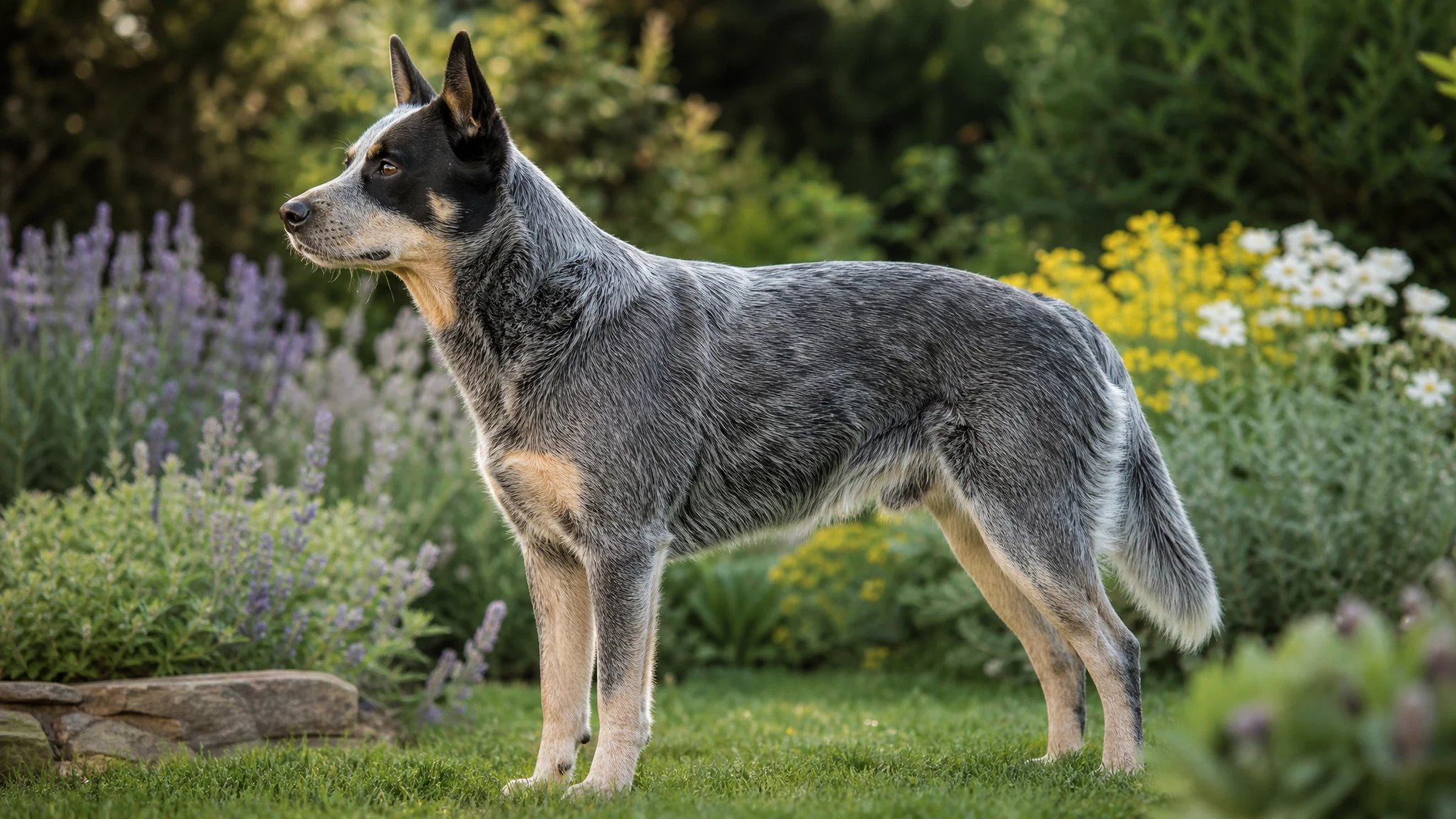
A good breeder of Blue Heelers, officially the Australian Cattle Dog, usually interviews buyers as carefully as buyers interview them. The questions can feel personal. They are mostly about one thing: whether this puppy will end up in a home that suits a busy, working-type dog.
This guide shows you how to prepare your answers, including the feeding questions that often come up. It also covers how to ask good questions back.
What You Need Before You Start
- A short written description of your household: who lives there, work schedule, yard or no yard, other pets.
- An honest list of your daily exercise and training time.
- Your veterinarian's contact details, if you already have a clinic.
- A list of your own questions about health testing and feeding.
- About 30 minutes to talk without rushing.
Step 1: Be Ready to Describe Your Daily Routine
Expect questions about who is home, for how long, and what a normal day looks like. Breeders ask because Heelers are an active herding breed, and a mismatch is hard on both dog and owner.
Write out a typical weekday and weekend. Include real exercise, not just yard time. If your honest answer is "two short walks," say so. A responsible breeder would rather hear that than guess.
Step 2: Explain Your Experience and Your Training Plan
You may be asked what dogs you have owned and how you trained them. You may also be asked how you plan to train a Heeler.
Reward-based training is the approach the American Veterinary Society of Animal Behavior (AVSAB) supports. Describing a plan built on rewards, patience and early classes is a strong answer. Methods based on force or intimidation are not recommended by AVSAB and are likely to worry a careful breeder.
Step 3: Prepare for Questions About Home and Family
Be ready to talk about children, other pets, fencing and what happens to the dog when you travel or your life changes. Breeders often ask what your plan is if you can no longer keep the dog. Many ask that the dog come back to them rather than go to a shelter.
Think about that last question before the call. A thoughtful answer shows you are planning for the whole life of the dog. The Australian Cattle Dog Club of America (ACDCA) gives a life expectancy of about 12 to 16 years, so this is a long commitment.
Step 4: Turn the Interview Around and Ask About Health Testing
The conversation should go both ways. Ask which health tests the parents have had, and ask to see the results.
The ACDCA lists the OFA-CHIC health testing requirements for the breed. They include:
- Hip evaluation and elbow evaluation.
- A hearing evaluation based on the BAER test, because congenital deafness is inherited.
- A DNA test for primary lens luxation, an inherited eye condition.
- A prcd-PRA DNA test for progressive retinal atrophy, according to PetMD's breed page, which describes PRA as an inherited eye disease.
The ACDCA also lists optional tests, such as patellar luxation, a cardiac exam, an rcd4 PRA DNA test, PennHIP at 6 months and hock OCD radiographs. Ask which of these the breeder does and why.
Testing does not guarantee a healthy puppy. It tells you the breeder is paying attention to known inherited problems. Check the ACDCA page directly for the current list, since requirements can change.
Step 5: Expect Feeding Questions and Ask Your Own
Many breeders ask what you plan to feed and how. They may also tell you what the puppy has been eating so you can keep things steady at first. Treat the breeder's feeding notes as a starting point and talk to your veterinarian about the details for your individual dog.
A few points are worth knowing before that conversation:
- Size. MetLife Pet Insurance and PetMD both give an adult weight of 35 to 50 lb. AAFCO's large-size cutoff is 70 lb as an adult, so Blue Heelers are not in the large-size class. Large-breed puppy formulas are not required for this breed, according to the IVC Journal's discussion of feeding growing dogs.
- Growth rate matters. The IVC Journal notes that growth rate and calories matter for developmental orthopedic disease in any growing dog. PetHealthMD says free-feeding puppies leads to excess weight gain that strains growing bones and joints. A breeder may ask you to feed measured meals for that reason.
- Label wording. Look for the AAFCO statement on a puppy food. Whole Dog Journal explains that foods with an "except for growth of large size dogs" clause are not meant for large-breed puppies. That does not exclude them for a Heeler, since the breed is under 70 lb. AAFCO also says it sets model language and does not approve or certify pet food.
- Activity. PetMD says an active breed like the Heeler may do well on a calorically dense, high-quality diet, typically fed in 2 meals a day, with amounts following the bag guidance and the dog's ideal weight.
- Treats. PetMD warns that too many treats can lead to overweight Heelers. Be ready to say how you will count treats toward the daily total.
For a deeper look at the label side, see our guide to Blue Heeler nutrition and the diet factors that matter.
Step 6: Ask About the Puppy's Early Care
Ask about the puppy's first weeks: what it has eaten, how often, and how it has been handled. Ask what paperwork comes with it and what the breeder expects you to do after pickup.
Ask whether the breeder offers a written agreement and what it covers. Read it fully before you commit. If something in it is unclear, check with the breeder or a veterinarian before signing.
Tips for a Better Conversation
- Answer plainly. Breeders can usually tell when an answer is polished to please.
- Take notes during the call, especially on test names and feeding advice.
- Ask to see where the dogs live and meet the mother if you can.
- Be willing to wait. Good breeders often have waiting lists, and a rushed sale is a reason for caution.
- Verify test claims yourself on the official database or club page rather than relying on a verbal summary.
Common Mistakes to Avoid
- Overstating your free time. A Heeler with too little activity and too little to do can be a hard match.
- Treating a large-breed puppy formula as a must. The breed is below AAFCO's 70 lb large-size cutoff, so this is not required.
- Letting a puppy free-feed. Measured meals are the safer habit while bones and joints are growing.
- Taking "health guaranteed" at face value. Ask what is tested and what the paperwork actually shows.
- Taking diet advice as medical advice. A veterinarian decides what suits an individual dog, and no food prevents or treats hip dysplasia or other inherited conditions.
What to Expect When You Do This Well
If you prepare, the conversation is likely to go more smoothly and feel less like an interrogation. You may come away with a clearer picture of the parents' health testing and what the breeder expects from you. You will probably also have a better sense of whether this is the right breeder and the right breed for your home.
It will not guarantee a particular outcome. Health, temperament and growth vary from dog to dog, even with careful breeding. What preparation does is help you make a calmer, better-informed decision.
Sources
- Australian Cattle Dog Club of America, OFA-CHIC Health Testing Requirements
- Australian Cattle Dog Club of America, Your New Australian Cattle Dog
- PetMD, Australian Cattle Dog breed page
- MetLife Pet Insurance, Australian Cattle Dog breed spotlight
- IVC Journal, Feeding large breed puppies
- PetHealthMD, Feeding Your Large Breed Puppy
- Whole Dog Journal, In the Fine Print: Nutritional Adequacy Statements
- AAFCO, Understanding Pet Food