Adopting a Blue Heeler: Rescue vs Breeder
General nutrition information compiled from product labels and published sources, not veterinary advice. Your veterinarian is the right person to choose a diet for your dog, especially one with a health condition.
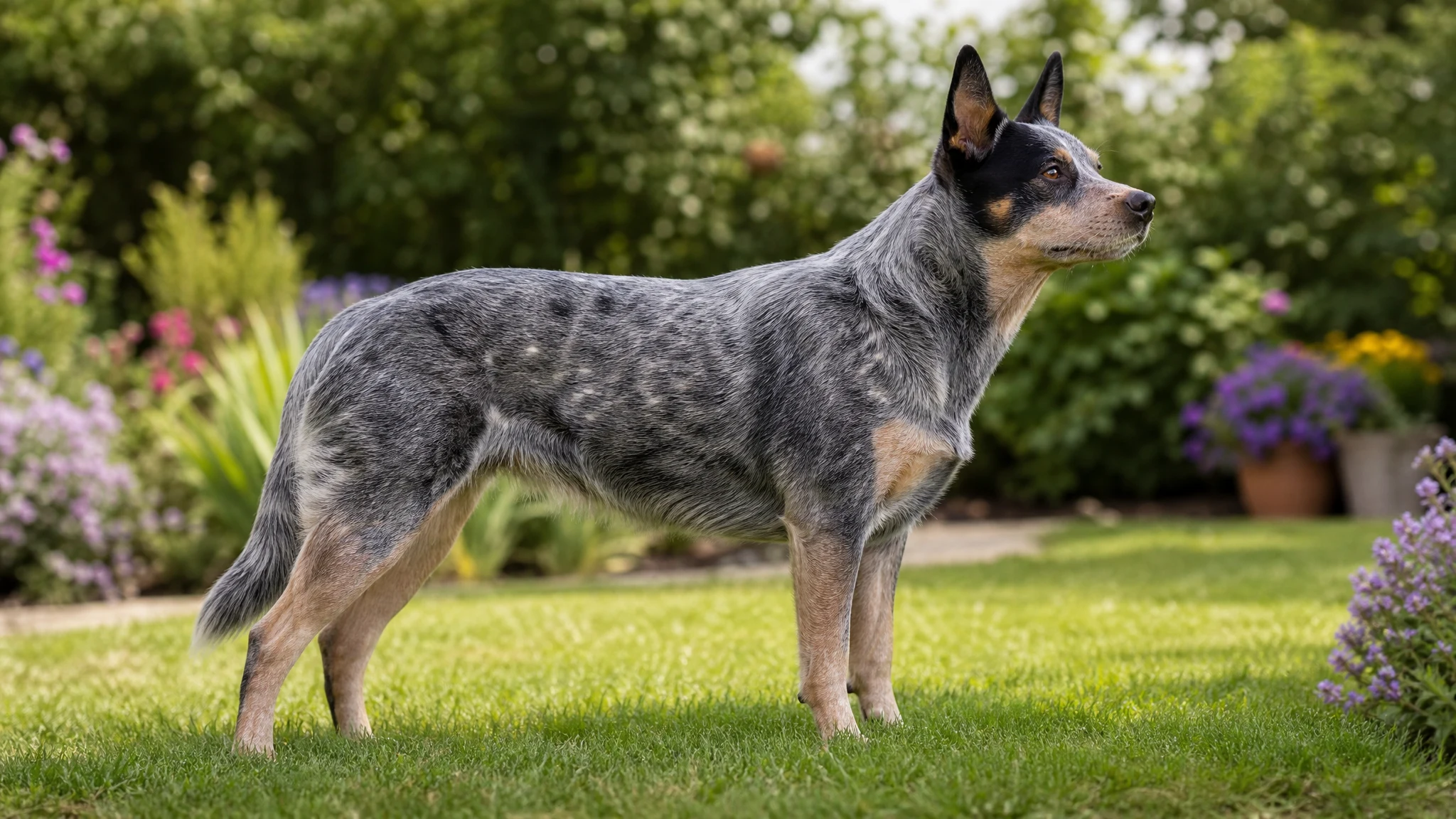
Blue Heeler is the common name for the Australian Cattle Dog, the name the Australian Cattle Dog Club of America (ACDCA) uses. Whether the dog comes from a rescue or a breeder, you are bringing home an active herding dog. The path you pick changes what you can know about its health, its age and its food history.
This guide walks through the decision in order. It covers what to gather, what to ask, and how to set up feeding in the first weeks. It does not rank rescue above breeder or the other way around. Both can be good choices, and both can go badly if you skip the questions.
What you need before you start
- A list of questions for the rescue or breeder (the steps below build it).
- The ACDCA health testing page open for reference: OFA-CHIC Health Testing Requirements.
- A budget you have checked yourself. We cannot quote prices or adoption fees, so ask each organization or breeder directly.
- A veterinarian you can call for the first checkup.
- A plan for daily exercise and mental work. The ACDCA and PetMD both describe the breed as active.
- A measuring cup or kitchen scale, plus a note of the food the dog is eating now.
Step 1: Know the dog you are signing up for
Start with the basics, so you can judge whether a dog in front of you fits them. PetMD and MetLife Pet Insurance both list adult weight at 35 to 50 lb. The ACDCA gives height at the withers as 18 to 20 inches for males and 17 to 19 inches for females. The ACDCA gives life expectancy as about 12 to 16 years.
That is a long commitment, and a medium-sized dog that eats, trains and exercises every day for a decade or more. Decide now that you are ready for it.
Step 2: Decide what you can and cannot learn from each route
The main difference is how much history comes with the dog.
Breeder route
A breeder can usually tell you about the parents, the litter and the testing done. This is where the ACDCA's OFA-CHIC requirements help. According to the ACDCA, CHIC certification requires:
- hip and elbow evaluation,
- a deafness evaluation through the OFA, based on a BAER test,
- a DNA test for primary lens luxation.
The ACDCA also lists optional tests, including patellar luxation, a cardiac exam, an rcd4 PRA DNA test, PennHIP at 6 months and hock OCD radiographs. PetMD adds that progressive retinal atrophy (PRA) can be screened with a prcd-PRA DNA test.
Ask to see the actual test results for the parents. A verbal "they're healthy" is not the same thing.
Rescue route
A rescue dog may arrive with less history. Parentage and early feeding may be unknown, and the age may be an estimate. That is not a flaw in the dog. It just means you ask different questions, and you lean more on your veterinarian's exam.
The conditions above, such as deafness, lens luxation and PRA, are described by the ACDCA and PetMD as inherited. They are not diet related. Neither route removes the chance of them, so a vet exam matters either way.
Step 3: Ask the right questions
Write these down and take them with you.
For a breeder
- Which health tests were done on both parents, and can I see the results?
- Were hips and elbows evaluated, and by whom?
- Was a BAER test done for hearing?
- Which food are the puppies eating now, and how often?
- What will you send home with the puppy, and what health paperwork comes with it?
For a rescue
- What is known about the dog's age, history and health?
- What has the dog been eating, and how many times a day?
- Has a vet examined the dog, and can I have the records?
- How does the dog behave around other animals, children and strangers?
- What support do you offer after adoption?
A good organization answers plainly, including saying "we don't know." Be cautious if answers are vague, or if you feel rushed. We do not recommend any specific rescue or breeder here. Check the ACDCA and your local shelters directly, and verify what any group tells you.
Step 4: Match the food to the dog's life stage
Heelers are below the AAFCO large-size cutoff of 70 lb as an adult, per PetHealthMD's description of the large-breed definition. A Blue Heeler puppy does not need a large-breed puppy formula. Whole Dog Journal explains that AAFCO growth statements use the wording "including growth of large-size dogs (70 pounds or more as an adult)" for foods that meet large-breed puppy levels. A food with the "except for" version is meant for dogs that will not reach that size.
Neither wording is better in itself. Read the statement on the bag and ask your veterinarian which fits your dog. AAFCO also says it sets model language and does not approve or certify pet food, so the statement tells you what the maker claims.
Label examples for a Heeler puppy
Here are two puppy foods from brand pages, described only by their label data. We compared label data. We did not run feeding trials or taste tests, and this is not a recommendation.
| Food | AAFCO statement (growth) | Protein min / Fat min | Calories |
|---|---|---|---|
| Royal Canin Size Health Nutrition Medium Puppy (dry) | Includes growth of large size dogs (70 lb or more as an adult) | 30.0% / 18.4% | 410 kcal ME per cup, calculated |
| VICTOR Hi-Pro Plus Small & Medium Breed Puppy | All life stages, except growth of large size dogs (70 lb or more as an adult) | 30.0% / 18.0% | 383 kcal per cup |
The Royal Canin page asks for pet details to calculate a tailored feeding recommendation. The VICTOR page suggests feeding as much as the puppy will eat in 20 minutes, across 4 feedings. That differs from the free-feeding warning below, so ask your veterinarian how to apply it. Neither page lists a kibble size we could confirm. Check with the brands if that matters for your dog.
If you adopt an adult, the label comparison works the same way. Check the AAFCO statement for adult maintenance, the first ingredients and the calories per cup, then follow your veterinarian's advice.
Step 5: Set up the first weeks of feeding
- Keep the current food at first. Find out what the breeder or rescue has been feeding and start there. Hill's product guidance describes switching foods by mixing increasing amounts of the new food with decreasing amounts of the old over 7 days. Use that as a starting point if you change.
- Use measured meals. PetMD says Heelers are typically fed 2 meals per day, with amounts following the bag guidance and the dog's ideal weight. For a puppy, ask your veterinarian whether more meals suit its age.
- Do not free-feed a puppy. PetHealthMD says free-feeding puppies leads to excess weight gain that strains growing bones and joints. The IVC Journal notes that growth rate and calories matter for developmental orthopedic disease in any growing dog.
- Treat the bag as a starting point. Label guides are not exact. Royal Canin's own page says its guide is only a guide. Adjust with your veterinarian as the dog grows.
- Count the treats. PetMD warns that too many treats can make a Heeler overweight, especially when you are training a smart dog with lots of rewards.
For age-by-age amounts, see our guide on how much to feed a Blue Heeler by age.
Step 6: Book the vet visit and settle in
Schedule a checkup soon after adoption. Bring the paperwork, test results and food details you collected. Your veterinarian can examine the dog, talk through screening, and advise on diet.
On joint health, the ACDCA lists hip and elbow dysplasia among the conditions CHIC testing covers. PetMD says hip dysplasia is uncommon in the breed and that joint supplements or NSAIDs manage symptoms. Healthy weight and steady growth are what diet can do here. No food prevents or treats a joint condition, and a veterinarian decides what is right for an individual dog.
The same applies to the FDA's investigation of diet and canine dilated cardiomyopathy (DCM). The FDA's latest update is dated December 23, 2022. It describes the link as a complex scientific issue that is not resolved, and says adverse event reports alone do not establish cause. If you have questions about grain-free or other diets, take them to your veterinarian.
Tips
- Meet the dog more than once, and see it in different settings.
- Keep notes from each conversation so you can compare options fairly.
- Use reward-based training from day one, in line with the American Veterinary Society of Animal Behavior (AVSAB). Short, fun sessions suit a working breed.
- Weigh the dog at the vet and track changes, so portions can be adjusted early.
Common mistakes to avoid
- Choosing on looks alone. Coat color tells you nothing about health or temperament.
- Accepting "health guaranteed" without paperwork. Ask for the test results themselves.
- Buying a large-breed puppy food by default. At 35 to 50 lb adult weight, Heelers are not in the large-size class.
- Switching foods abruptly. A stressful move plus a sudden food change is a lot for a new dog.
- Letting treats pile up. They count toward daily calories.
- Skipping the question "what don't you know?" This matters most with rescue dogs.
What to expect
With careful questions and a vet exam, you may feel more confident about the dog you choose. Steady, measured feeding may help keep a growing Heeler at a healthy weight. No route or food can promise a particular health outcome, and the first weeks usually involve some adjusting for you and the dog. If something seems off with appetite, stools or weight, call your veterinarian.
Sources
- Australian Cattle Dog Club of America, Your New Australian Cattle Dog
- Australian Cattle Dog Club of America, OFA-CHIC Health Testing Requirements
- PetMD, Australian Cattle Dog breed page
- MetLife Pet Insurance, Australian Cattle Dog breed spotlight
- AAFCO, Understanding Pet Food
- Whole Dog Journal, In the Fine Print: Nutritional Adequacy Statements
- IVC Journal, Feeding large breed puppies
- PetHealthMD, Feeding Your Large Breed Puppy
- FDA CVM, Investigation into Potential Link between Certain Diets and Canine Dilated Cardiomyopathy
- Royal Canin, Medium Puppy product page
- VICTOR Pet Food, Hi-Pro Plus Small & Medium Breed Puppy product page