Are Blue Heelers Aggressive? Understanding Herding Instincts
General nutrition information compiled from product labels and published sources, not veterinary advice. Your veterinarian is the right person to choose a diet for your dog, especially one with a health condition.
Many owners ask whether a Blue Heeler is aggressive when the dog nips at heels, circles children or stares down a passing bicycle. In most cases, these are herding behaviors that look alarming to people. They are not the same thing as a dog that wants to hurt someone.
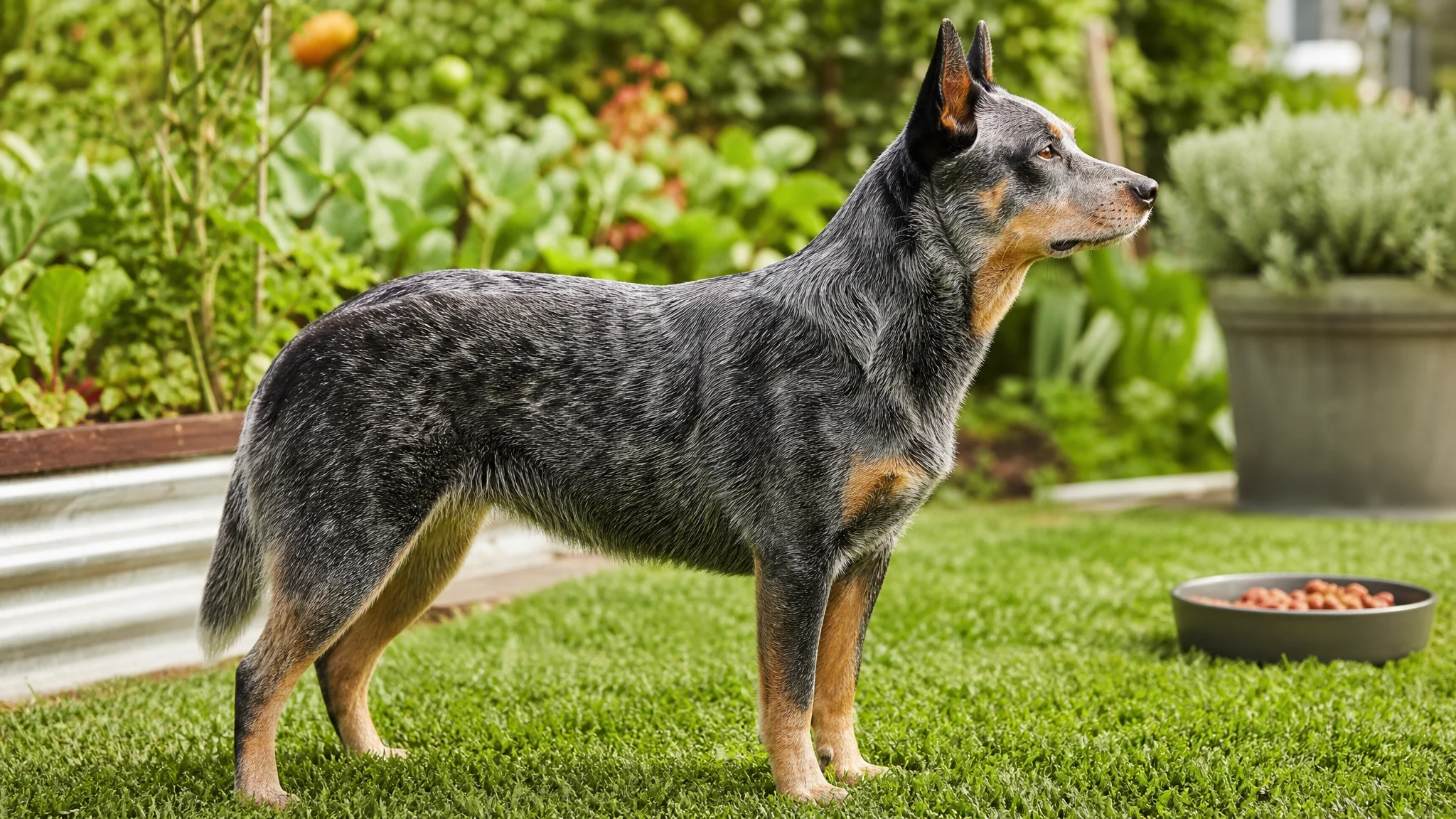
Blue Heeler is the common name for the Australian Cattle Dog, the official name used by PetMD and the Australian Cattle Dog Club of America (ACDCA). This guide is a practical routine for reading the behavior and channeling it. It also covers how mealtimes and treats fit into the plan, because this is a site about feeding.
Here is the honest limit up front. The sources we relied on give weight, size, life span and health information for the breed. They do not give a statistic on how often these dogs bite or act aggressively, so we will not quote one. If you want breed temperament details, ask the ACDCA, and ask a veterinarian or a qualified, reward-based trainer about your own dog.
What herding instinct can look like
The Orvis breed page lists the Australian Cattle Dog in the Herding Group. A dog bred to move animals may try to move people, other pets or cars. Common signs owners describe include:
- Nipping at heels or ankles when people walk or run
- Circling, blocking or bumping family members
- Fixed staring and stalking at moving objects
- Chasing bikes, joggers or children at play
These behaviors can be herding. They can also come from boredom, fear or pain, and only a professional who sees the dog can sort that out. A sudden change in behavior, growling over food, or any bite that breaks skin deserves a call to your veterinarian first, to rule out a medical cause, and then to a qualified trainer or behavior professional.
Materials you need
- A kitchen scale or a level measuring cup, so meals are measured rather than guessed
- The feeding guide printed on your dog's food bag, treated as a starting point
- Small, soft treats that you can break into tiny pieces
- A food puzzle or a lick mat for mealtime work
- A sturdy leash and a well-fitted flat collar or harness
- A notebook to log meals, treats, triggers and bad moments
- An appointment with your veterinarian for a health check
Step 1: Rule out medical causes
Before you assume temperament, book a checkup. The ACDCA's OFA-CHIC health testing requirements include hip and elbow evaluation. They also include an OFA evaluation based on the BAER hearing test for congenital deafness, and a DNA test for primary lens luxation. A dog in pain or with hearing or vision trouble can startle and snap more easily.
None of these conditions is managed by a particular food. Diet questions for an individual dog belong with your veterinarian.
Step 2: Build a predictable feeding routine
Dogs with a lot of drive often settle better when the day has a pattern. PetMD says this active breed typically eats two feedings per day, and that amounts should follow the bag guidance and the dog's ideal weight.
- Pick two set meal times and stick to them.
- Weigh or measure each meal. Use the label guide as a starting point, then adjust with your veterinarian based on body condition.
- Ask your dog to sit calmly before the bowl goes down. Reward the sit with the meal itself.
- Pick up the bowl when the meal is done rather than leaving food out.
For puppies, free-feeding is discouraged. PetHealthMD notes that free-feeding puppies leads to excess weight gain that strains growing bones and joints. Our Blue Heeler feeding chart by age walks through how to think about portions at each stage.
Step 3: Give the herding drive a job
A dog with no outlet often invents one, and the invented one is usually your ankles. Offer structured activity every day:
- Fetch or flirt-pole games with clear start and stop cues
- Scent games, where you hide pieces of kibble from the daily meal around the yard
- Short training sessions of a few minutes, repeated through the day
- Food puzzles at mealtime so some of the work is mental
Using part of the daily kibble for these games keeps treat calories in check. This matters because PetMD warns that too many treats can make Heelers overweight. PetMD also says calorically dense, high-quality diets may suit this active breed. Whichever food you use, count what you hand out against the day's total.
Step 4: Teach alternatives with rewards
Training for this breed should be humane and reward-based, in line with the American Veterinary Society of Animal Behavior (AVSAB). Do not use shock, prong or choke collars, alpha rolls, scruffing or any dominance method. These tools and tactics can raise fear and stress, and fearful dogs are more likely to bite.
- Interrupt and redirect. When your Heeler starts to stalk or nip, calmly call the dog away to a toy or a cue such as "go to your mat."
- Reward the calm choice. Pay a small treat when your dog looks at a moving trigger and then looks back at you.
- Teach a settle. Reward lying down on a mat for gradually longer periods.
- Manage the environment. Use a leash, a fence or a gate when children are running or visitors arrive.
- Keep sessions short. Stop while the dog is still doing well.
Step 5: Handle children, visitors and other pets
Running children can set off herding. Supervise every interaction. Teach children to stay calm and not to chase or grab the dog. Give the dog a quiet place to retreat, and let the dog use it without being followed there.
Do not leave a dog and a young child together unsupervised. If your dog has bitten or seems unpredictable, work with a qualified behavior professional who uses reward-based methods. Ask about their methods before you hire.
Step 6: Keep a log and review it
For two weeks, write down when the nipping or stalking happens. Note the time of day, how recently the dog ate, how much exercise the dog had, and what the trigger was. Patterns often show up, such as problems before dinner or after a skipped walk. Share the log with your veterinarian or trainer.
Tips
- Break treats into pea-sized bits so training does not add up to a meal.
- Keep weights steady. The breed's adult weight is about 35 to 50 lb according to PetMD and MetLife Pet Insurance, and the ACDCA gives height at 18 to 20 in for males and 17 to 19 in for females. A body that is too heavy can add strain to the joints.
- Do not change foods suddenly. A gradual switch over about a week, as one brand's page recommends, is gentler on the stomach.
- Check the label for an AAFCO statement. AAFCO sets model language and does not approve or certify pet food, according to AAFCO's own consumer page.
- Use puppy food that matches the dog's life stage. A Blue Heeler is below AAFCO's 70 lb large-size cutoff, so a large-breed puppy formula is not required, according to the sources we reviewed.
Common mistakes to avoid
- Punishing a growl. A growl is a warning. Removing it can leave a dog that bites without notice.
- Using harsh tools. Corrections and dominance tactics go against AVSAB guidance.
- Too little exercise, too many treats. This combination leads to a restless dog that is also overweight.
- Assuming the food is the cause. No source we used links a particular food to aggression, so do not expect a diet change to fix behavior.
- Skipping the vet. Pain and sensory problems can look like bad temper.
- Letting a puppy graze all day. It makes portions hard to track and can lead to excess weight.
What results to expect
With steady routines, daily outlets and reward-based training, many owners find that herding behaviors become easier to manage over weeks to months. Results vary by dog, age, history and household, and nothing here is a guarantee. Some Heelers will always like to herd, and the goal is control and safety, not removing the instinct.
If behavior is getting worse, or anyone is being hurt, stop trying to solve it alone and bring in your veterinarian and a qualified behavior professional. For the breed's temperament and health testing, the ACDCA is the right place to ask.
Sources
- PetMD, Australian Cattle Dog breed page
- Australian Cattle Dog Club of America, Your New Australian Cattle Dog
- Australian Cattle Dog Club of America, OFA-CHIC Health Testing Requirements
- MetLife Pet Insurance, Australian Cattle Dog breed spotlight
- AAFCO, Understanding Pet Food
- PetHealthMD, Feeding Your Large Breed Puppy