Are Blue Heelers Hypoallergenic? Shedding and Allergies Explained
General nutrition information compiled from product labels and published sources, not veterinary advice. Your veterinarian is the right person to choose a diet for your dog, especially one with a health condition.
If someone in your home sneezes around dogs, the question comes up fast: is a Blue Heeler a safe pick? The short answer is that none of the breed sources we relied on describe the Blue Heeler as hypoallergenic. This guide is a step-by-step way to find out what is true for your household and your dog.
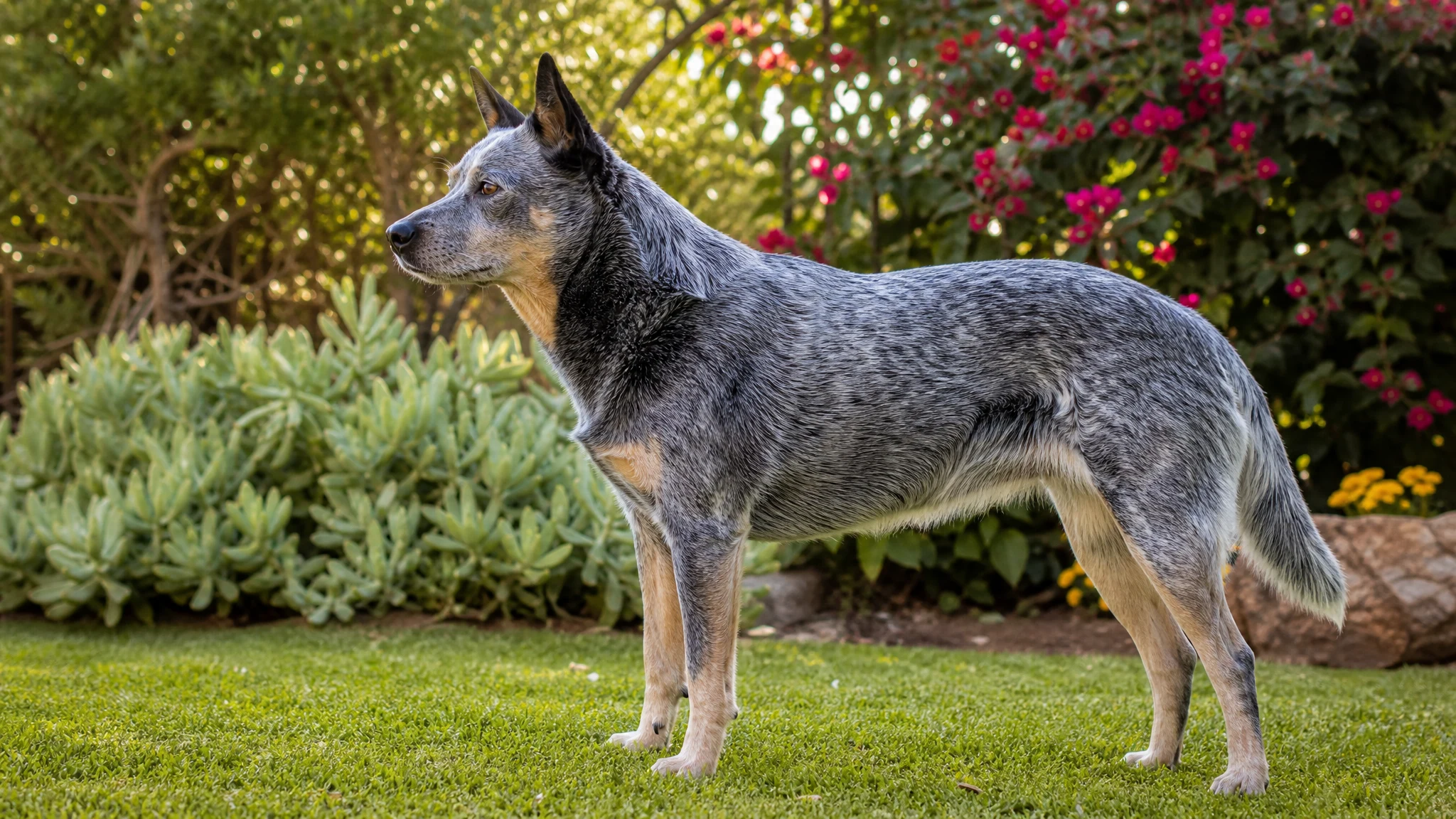
Blue Heeler is the common name. Breed clubs and references call the dog the Australian Cattle Dog, and that is the name to use when you look up health and care information.
What "hypoallergenic" does and does not tell you
"Hypoallergenic" is a marketing word, not a guarantee. It suggests a dog is less likely to trigger a reaction. It does not say a person will be free of symptoms. The sources we used for this page do not rate the breed on coat or allergen level, so we will not make a claim either way.
For shedding amounts, coat care and how the breed fares with allergic people, ask the Australian Cattle Dog Club of America, a breeder who health tests, or an allergist. Those are the people who can speak to it.
Materials you need
- A notebook or phone notes to log symptoms, dates and places.
- The names of the people in your home who react to dogs.
- The current food label (or photos of the bag or can), including the ingredient list and the AAFCO statement.
- Your veterinarian's contact details, and an allergist for any person with symptoms.
- A list of questions for the breed club or breeder.
Step 1: Separate the two problems
"Allergies" can mean two different things. One is a person who reacts to a dog. The other is a dog who itches, chews or has a poor coat and may be reacting to something in the environment or the diet.
Write down which one you are dealing with, or whether it is both. Each has a different path, and mixing them up is a common mistake.
Step 2: Ask the people who know the breed
Start with the Australian Cattle Dog Club of America. Its page for new owners covers the basics of the breed, including size and life span. It lists adult height as 18 to 20 inches for males and 17 to 19 inches for females, and a life expectancy of about 12 to 16 years.
That is a long commitment for someone with allergies. Ask the club or a breeder directly about coat care and shedding. Do not rely on a forum post or a product ad.
Step 3: Have the affected person spend real time with the breed
Reading cannot replace contact. Arrange several visits with adult Blue Heelers, ideally in a home and not only outdoors. Log any symptoms afterward, such as itchy eyes, sneezing or skin irritation.
Keep in mind that one short visit with one dog does not tell you how you will feel after months in a house with another dog. Individual dogs and individual people vary.
Step 4: Talk to an allergist
A physician or allergist can say what a person is actually reacting to and what to do about it. Bring your notes from Step 3. Do not decide based on a breed label alone.
Step 5: If the dog is the one itching, call your veterinarian
Itching, hair loss and skin or ear problems in a dog have many possible causes. Diet is only one of them. A veterinarian decides what is happening in an individual dog and whether a diet change is worth trying.
Please do not start an elimination plan or a prescription diet on your own. Prescription diets are something only a veterinarian prescribes.
Step 6: Read the food label before you change anything
If your veterinarian suggests looking at food, get the facts from the label first. According to AAFCO, the organization sets model language and does not approve or certify pet food. A label statement is the maker's claim that the food meets a standard.
AAFCO's Reading Labels page lists the recognized life stages: gestation and lactation, growth, maintenance and all life stages. Check that the statement matches your dog's age.
Then look at the first ingredients. Here is what a few makers publish on their own pages. We compared label data only. We did not run feeding trials or taste tests, and we did not feed any of these foods.
| Food (maker's page) | First ingredients listed | Calories listed |
|---|---|---|
| Royal Canin Medium Adult (dry) | Brewers rice, chicken by-product meal, oat groats, wheat, corn protein meal | 340 kcal ME per cup |
| Hill's Science Diet Adult Perfect Digestion Chicken & Barley (dry) | Chicken, cracked pearled barley, brown rice, brewers rice, whole grain oats | 368 kcal per cup |
| VICTOR Hi-Pro Plus (dry) | Beef meal, grain sorghum, chicken fat, whole grain millet, blood meal | 406 kcal per cup |
| Freshpet Tender Chicken Recipe with Carrots, Peas & Brown Rice (fresh) | Chicken, carrots, chicken broth, peas, eggs | 316 kcal per half pound (calculated); no per-cup figure given |
Notice what the table cannot tell you. It does not say any of these foods will help a dog with skin trouble or an allergy. The makers' pages do not make that promise to us, and neither do we. Kibble size is not stated on these pages either, so check with the brand.
One more label detail matters for a Blue Heeler. The breed's adult weight is 35 to 50 pounds, according to PetMD and MetLife Pet Insurance. That is below the 70 pound line AAFCO uses for large-size dogs, so a large-breed puppy formula is not required.
Step 7: Keep portions steady and track results
PetMD describes the Australian Cattle Dog as an active breed, typically fed twice a day, with amounts that follow the bag guidance and the dog's ideal weight. It also warns that too many treats lead to overweight Heelers.
Treat the bag's feeding guide as a starting point, not a rule. Our Blue Heeler feeding chart by age explains how to use it. If you change foods, mix the new food in gradually. Hill's suggests a 7 day switch on its mature adult page.
Make one change at a time and write it down. If you change the food, the treats and the shampoo in the same week, you will not know which one mattered.
Tips
- Ask your veterinarian before any supplement. Do not add one on your own.
- Keep a dated log of itching, ear trouble and stool changes. It helps your vet far more than memory does.
- Check the AAFCO statement for the right life stage, not just the front of the bag.
- Ask a breeder which health tests the parents have. The club's CHIC program lists hip and elbow evaluations, a deafness test and DNA tests for primary lens luxation and PRA. Those conditions are inherited and are not diet related.
Common mistakes to avoid
- Trusting the word "hypoallergenic." It is not a standard we can verify for this breed.
- Deciding after one visit. Spend time with several dogs and keep notes.
- Blaming food first. A dog's itching has many possible causes, and a veterinarian should sort them out.
- Switching foods too quickly or too often. It muddies the picture and can upset the stomach.
- Buying a diet because of a trend. The FDA's investigation into diet and canine dilated cardiomyopathy (DCM) shows how unsettled some food questions are. Its most recent update is dated December 23, 2022. The FDA calls the link a complex scientific issue and notes that adverse event reports alone do not establish cause. Ask your veterinarian about your dog.
What results to expect
Your notes may show a clear pattern, such as symptoms that flare around the dog's bedding or after a certain treat. They may also show nothing clear. That is useful too, because it tells you what to ask your allergist or veterinarian next.
A careful food review may help you spot a food that agrees with your dog. It may not change anything. Allergy and skin problems often take professional guidance and time. No label, brand or breed can promise an outcome.
Sources
- Australian Cattle Dog Club of America, Your New Australian Cattle Dog
- Australian Cattle Dog Club of America, OFA-CHIC Health Testing Requirements
- PetMD Australian Cattle Dog breed page
- MetLife Pet Insurance breed spotlight, Australian Cattle Dog
- AAFCO, Understanding Pet Food
- AAFCO, Reading Labels
- FDA CVM, Investigation into Potential Link between Certain Diets and Canine Dilated Cardiomyopathy
- Royal Canin US, Medium Adult product page
- Hill's Pet Nutrition, Adult Perfect Digestion product page
- VICTOR Pet Food, Hi-Pro Plus product page
- Freshpet, Tender Chicken Recipe product page