Australian Cattle Dog Puppy Growth: What's Normal
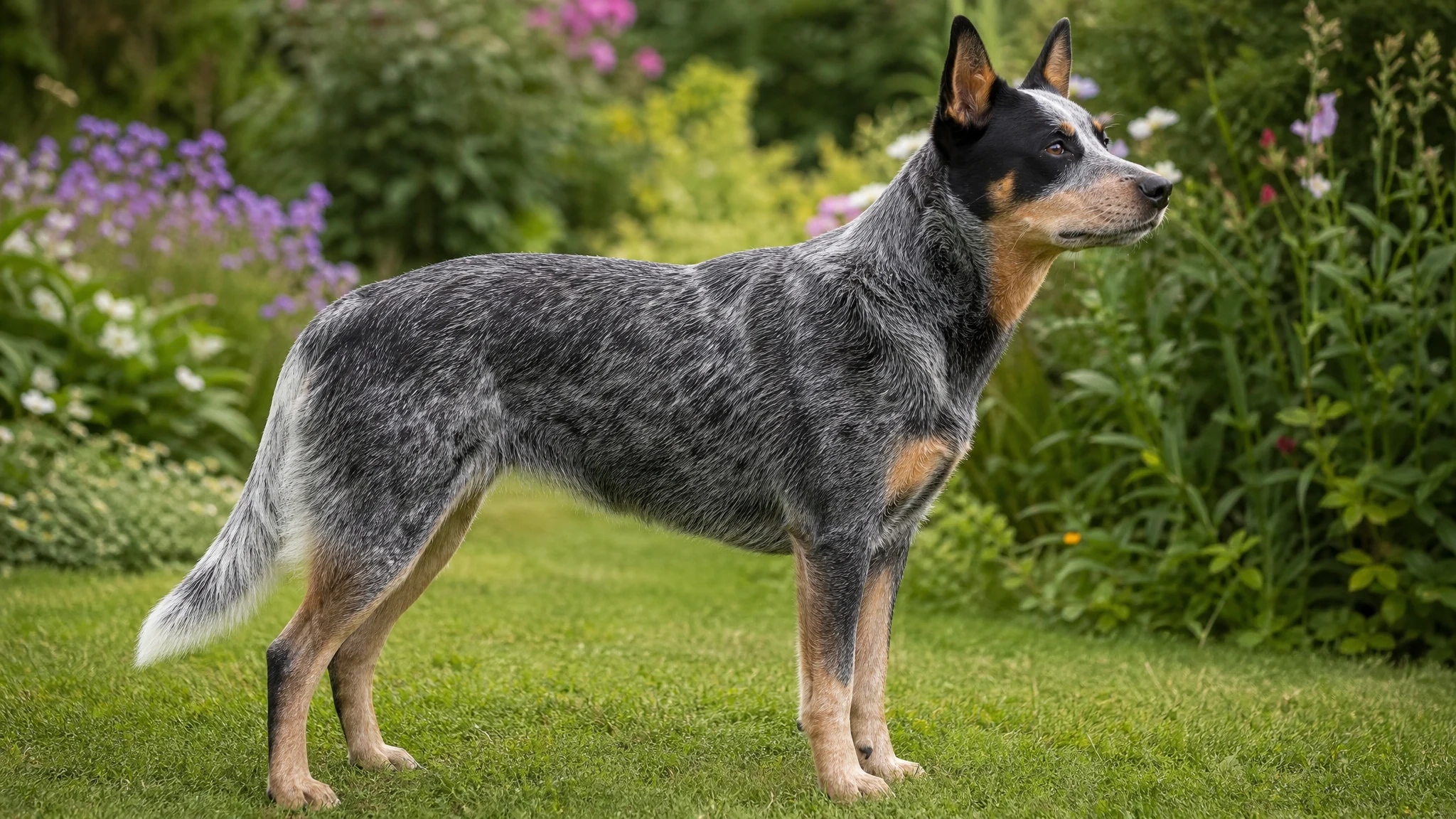
General nutrition information compiled from product labels and published sources, not veterinary advice. Your veterinarian is the right person to choose a diet for your dog, especially one with a health condition.
If you share your home with a Blue Heeler puppy, you have probably wondered whether your pup is too small, too big or growing at the right pace. This guide shows you how to track growth, feed for steady development and spot changes worth a call to your veterinarian.
One honest note first. Published sources give an adult size range for the breed, but they do not give a month-by-month weight table I can verify. So this article teaches you a method rather than handing you numbers that may not fit your dog.
What Is Normal for the Breed
Blue Heeler is the common name. The official breed name is Australian Cattle Dog, and that is how breed clubs and references list it.
The PetMD Australian Cattle Dog breed page and the MetLife Pet Insurance breed spotlight both give an adult weight of 35 to 50 lb. The Australian Cattle Dog Club of America (ACDCA) says males stand 18 to 20 inches at the withers and females 17 to 19 inches. The same club gives a life expectancy of about 12 to 16 years.
That makes the Heeler a medium dog. Your puppy is heading toward that range, but individual dogs vary with parentage, sex and body build. The point at which a Heeler counts as fully grown was not stated in the sources I checked, so ask your breeder and veterinarian when to expect it for your dog.
Materials You Will Need
- A kitchen or baby scale that reads in small increments, or access to your vet's scale.
- A notebook or spreadsheet for a growth log.
- A measuring cup or, better, a gram scale for food.
- A puppy food whose label has an AAFCO statement for growth.
- A soft tape measure, if you want to track height.
- Your veterinarian's contact details and your breeder's records, including any health test results for the parents.
Step-by-Step: Tracking Healthy Growth
Step 1: Record a starting point
Weigh your puppy on the first day home and write down the date, weight and what the puppy is eating. Ask the breeder for birth and litter weights if they kept them. These give your vet something real to compare against.
Step 2: Weigh on a schedule
Weigh at the same time each week, ideally before a meal. To weigh a squirmy pup, step on the scale holding the puppy, then subtract your own weight. Consistency matters more than precision.
Step 3: Look for a steady upward trend
A normal growth line climbs fairly smoothly. Small bumps up and down are common. A long flat stretch, a sudden drop or a sharp jump is the kind of change to raise with your veterinarian.
Step 4: Check body shape, not just the scale
Numbers alone do not tell you whether a puppy is lean or heavy. Ask your veterinarian to show you how to feel for ribs and see a waist from above. Then repeat that check at home every couple of weeks.
Step 5: Pick a growth-appropriate food
Look for the nutritional adequacy statement on the bag. AAFCO recognizes four life stages: gestation/lactation, growth, maintenance and all life stages, according to AAFCO's reading-labels guide. For a puppy, you want a growth or all-life-stages statement. AAFCO also says it sets model language and does not approve or certify pet food, so the statement describes how the maker says the food was formulated.
Because a Heeler's adult weight is well under AAFCO's 70 lb large-size cutoff, large-breed puppy formulas are not required. IVC Journal's article on feeding large breed puppies explains that growth rate and calories matter for developmental orthopedic disease in any growing dog. Whole Dog Journal notes that some statements say "except for growth of large-size dogs." That wording matters for giant breeds, not for a Heeler.
Step 6: Feed measured meals, not an open bowl
PetHealthMD's article on feeding large breed puppies says free-feeding leads to excess weight gain that strains growing bones and joints. PetMD says Heelers are typically fed twice a day, with amounts that follow the bag guidance and the dog's ideal weight. Puppies often eat more meals per day than adults, so ask your vet what schedule fits your pup.
Weigh out each portion. For help with amounts by age, see our Blue Heeler feeding chart by age. Treat any chart as a starting point, then adjust with your vet based on your puppy's body shape.
Step 7: Adjust slowly
If the weight trend or body shape is drifting, change portions in small steps and watch for a few weeks. Do not make big swings. Your veterinarian can tell you whether a change is needed.
Step 8: Keep up with checkups
Growth is one part of a larger health picture. Regular visits let your vet compare your puppy against a growth pattern and catch problems early.
How Label Data Compares for Puppy Foods
We compared label data from the brands' own pages. We did not run feeding trials or taste tests, and we did not feed any of these foods to dogs. This is not a ranking or a recommendation. It only shows what the labels say, so you can read them with more confidence.
| Food | AAFCO growth statement | First ingredients | Calories |
|---|---|---|---|
| Royal Canin Size Health Nutrition Medium Puppy (dry) | Growth, including large-size dogs (70 lb or more as an adult) | Chicken by-product meal, chicken fat, brewers rice, corn, wheat | 410 kcal ME per cup (as fed, calculated) |
| VICTOR Hi-Pro Plus Small & Medium Breed Puppy (dry) | All life stages, except growth of large-size dogs | Beef, chicken, beef meal, chicken meal, whole grain sorghum | 383 kcal per cup |
| Hill's Science Diet Puppy Chicken & Barley Entree (13 oz can) | Growing puppies and gestating or lactating females | Water, chicken, whole grain corn, cracked pearled barley, pork liver | 495 kcal per can |
The Royal Canin Medium Puppy page lists minimums of 30.0 percent protein and 18.4 percent fat. The VICTOR page lists 30.0 percent protein and 18.0 percent fat. Hill's gives dry matter averages instead of guaranteed minimums, so its numbers are not directly comparable. None of the pages gave a kibble size I could verify, so check with the brand if that matters for your puppy.
VICTOR's page says to feed as much as the puppy will eat in 20 minutes, in four feedings. That differs from the measured approach above, so talk to your veterinarian about what suits your pup. You can read each brand's own page at Royal Canin, VICTOR and Hill's.
Tips for Steady Growth
- Count treats as part of the daily food. PetMD warns that too many treats lead to overweight Heelers.
- Use part of the daily meal as training rewards. Reward-based training fits this smart, busy breed well.
- Switch foods gradually. Hill's suggests mixing increasing amounts of the new food with decreasing amounts of the old over 7 days.
- Keep a note of changes in appetite, stool or energy next to your weight log.
- Ask the breeder which health tests the parents had. The ACDCA's OFA-CHIC requirements include hip and elbow evaluation, BAER-based hearing evaluation and a DNA test for primary lens luxation.
Common Mistakes to Avoid
- Free-feeding a puppy. It makes portions impossible to track and can lead to excess weight, as noted above.
- Buying a large-breed puppy food by default. It is not required for a 35 to 50 lb dog. Choose by the label statement and your vet's advice.
- Chasing a "bigger is better" puppy. Fast growth is not a goal. IVC Journal points to growth rate and calories as factors in orthopedic development.
- Trusting the bag as the final word. Bag guides are starting points. VICTOR and Hill's both say to adjust to the dog.
- Self-treating joint or growth worries. Supplements and diet changes for suspected joint problems should be decided with a veterinarian.
- Comparing your puppy to a littermate or a friend's dog. Normal varies.
What Results to Expect
With measured meals, a growth-appropriate food and regular weigh-ins, many owners see a smooth growth curve and a lean, athletic shape. Results vary by dog, and no feeding plan can promise a particular outcome.
PetMD says hip dysplasia is uncommon in the breed, and the ACDCA lists hip and elbow evaluation among its health testing requirements. Careful growth is one part of caring for young joints, but food does not prevent or treat these conditions. Congenital deafness, primary lens luxation and progressive retinal atrophy are inherited and are not diet related, per PetMD and the ACDCA.
When to Call Your Veterinarian
- Weight is flat or dropping for more than a short stretch.
- Weight gain is rapid, or ribs are hard to feel.
- Your puppy has a lasting change in appetite, stool or energy.
- You see limping, stiffness or trouble rising.
- You are unsure which food or portion fits your puppy.
A veterinarian decides what is right for an individual dog. If you are curious about FDA's work on diet and canine dilated cardiomyopathy, note that the agency's latest update is dated December 23, 2022, and that it describes the issue as complex and unresolved. Ask your vet if you have questions about your puppy's diet.
Sources
- PetMD, Australian Cattle Dog breed page
- Australian Cattle Dog Club of America, Your New Australian Cattle Dog
- Australian Cattle Dog Club of America, OFA-CHIC Health Testing Requirements
- MetLife Pet Insurance, Australian Cattle Dog breed spotlight
- IVC Journal, Feeding large breed puppies
- PetHealthMD, Feeding Your Large Breed Puppy
- Whole Dog Journal, In the Fine Print: Nutritional Adequacy Statements
- AAFCO, Reading Labels
- AAFCO, Understanding Pet Food
- FDA CVM, Investigation into Potential Link between Certain Diets and Canine Dilated Cardiomyopathy