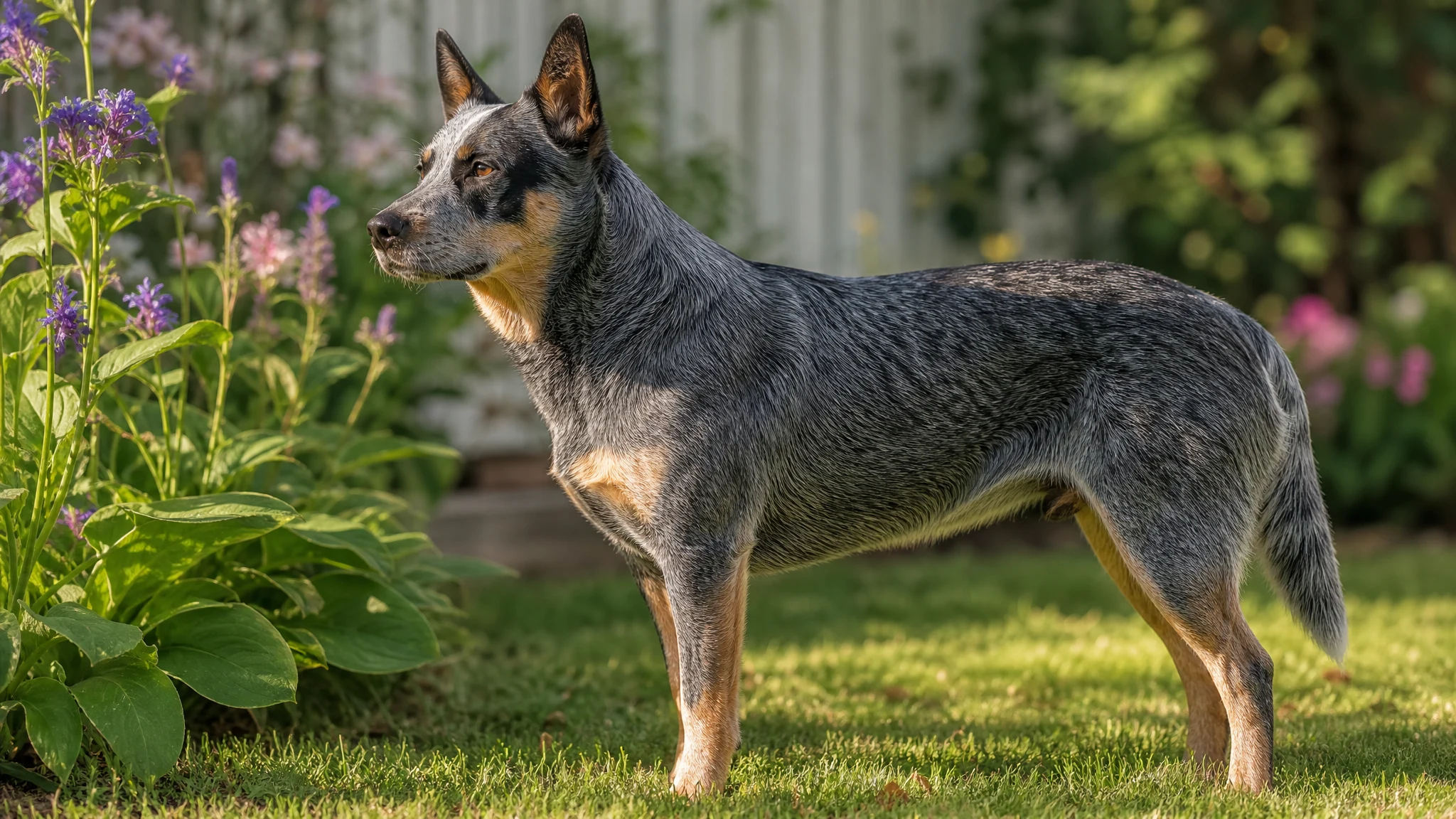
Blue Heeler Coat Colors and Markings: What They Look Like
General nutrition information compiled from product labels and published sources, not veterinary advice. Your veterinarian is the right person to choose a diet for your dog, especially one with a health condition.
"Blue Heeler" is the common name for the Australian Cattle Dog, which is the official breed name used by the Australian Cattle Dog Club of America (ACDCA) and PetMD. The coat is one of the first things people notice about the breed. It is also where a lot of loose talk starts, from color myths to claims about what a food can do for a coat.
This guide is a how-to for describing your own dog's coat accurately and checking it against the official breed standard. It does not list colors from memory. Color names and marking terms are exactly the kind of detail that should come from the breed club, so you will learn where to look and how to compare.
What You Need
- Natural daylight, ideally outdoors in open shade rather than direct noon sun.
- A phone or camera for clear photos from several angles.
- A plain, neutral background such as a gray wall or an overcast sky.
- Your dog's registration or breeder paperwork, if you have it.
- The official breed standard from the breed club (see Step 5).
- A notepad or notes app.
Step 1: Photograph the Coat in Good Light
Indoor lighting can shift how a coat looks. Warm bulbs make colors look redder. Cool bulbs push them toward blue or gray. Shade outdoors gives the most honest view.
Take at least five photos: left side, right side, face straight on, chest and front legs, and the rear and tail. Hold the camera at the dog's eye level. A standing dog is easier to read than one lying curled up.
Step 2: Describe the Base Coat Before Anything Else
Look at the main body first, not the face or paws. Write down what you see in plain words, and note whether the coat looks even or mixed in texture and shade. Part of the Blue Heeler look is that individual hairs can carry more than one shade, so a coat that seems one color from across the yard may look different up close.
Part the hair with your fingers at the shoulder and the back. Note the color near the skin and the color at the tips. Photograph both.
Step 3: Map the Markings by Body Area
Go region by region and write a short note for each:
- Head and face: any mask, patch, spot or line, and where it sits around the eyes, ears and forehead.
- Ears: whether they match the face or differ from it.
- Chest and throat: any lighter or darker area.
- Legs and feet: the color on the front of the legs compared with the back, and on the paws.
- Body: any patches, speckles or flecks over the back, sides and hindquarters.
- Tail: the color at the base, along the length and at the tip.
Describe what is there, not what you expect to be there. If you are unsure of a term, write a plain description instead, such as "small light patch on the left hip."
Step 4: Allow for Changes With Age
A puppy coat and an adult coat can look different. If you are comparing your dog to an adult standard, a young puppy may not yet look the way it will later. The ACDCA and your breeder are the right people to ask how coat appearance is expected to develop. Take a dated photo set every few months to keep your own record.
Also note that sun, shedding, and the season can change how a coat looks without any change to the dog's actual color.
Step 5: Compare to the Official Breed Standard
Now match your notes against the real source. The Australian Cattle Dog Club of America runs a page for new owners at Your New Australian Cattle Dog, and the club is the right place to find the current breed standard and its accepted color and marking descriptions. The American Kennel Club and other registries publish their own versions of the standard as well. Check the wording of the registry that matters to you, since each organization writes its own.
Read the coat section slowly. Mark each phrase that matches your notes. If a phrase does not match anything you wrote, ask the club or your breeder rather than guessing.
Step 6: Record Your Dog's Coat for Future Use
Put your final description, photos and the date in one place. A clear record helps with registration forms, a lost-dog report, and conversations with your veterinarian. Keep it short: base coat, main markings by area, and any unusual features.
What Coat Color Does and Does Not Tell You
Coat color is a look, not a feeding instruction. A Blue Heeler's food needs follow size, age, activity and body condition. PetMD gives the adult weight as 35 to 50 lb, and MetLife Pet Insurance agrees. The ACDCA lists adult height at the withers as 18 to 20 inches for males and 17 to 19 inches for females, and gives life expectancy as about 12 to 16 years.
PetMD describes the breed as active and says a calorically dense, high-quality diet may suit it, usually fed in two meals a day, with amounts following the bag guidance and the dog's ideal weight. PetMD also warns that too many treats can lead to an overweight Heeler. None of that depends on color. For a starting point by age, see our Blue Heeler feeding chart by age, and treat any figure on a label as a starting guide that your veterinarian can adjust.
Health Topics to Raise With Your Breeder and Veterinarian
Some breed health issues are inherited and are not managed by diet. The ACDCA's OFA-CHIC requirements for the breed include congenital deafness (evaluated with a BAER test), primary lens luxation (a DNA test), and hip and elbow evaluation. PetMD lists progressive retinal atrophy as an inherited eye disease screened with a DNA test.
The sources we relied on do not connect any coat color or marking to these conditions. If you wonder whether a link exists, ask the breed club or your veterinarian. Do not assume one from a color chart or a forum post. The ACDCA explains the testing on its OFA-CHIC Health Testing Requirements page.
Tips
- Take photos on the same background each time so changes are easy to see.
- Use plain descriptions when you are unsure of the right term.
- Ask the breeder what coat the parents had, since that is often a helpful clue.
- Keep your photo set updated as your dog grows.
Common Mistakes to Avoid
- Judging in poor light. Yellow indoor bulbs and harsh midday sun can both mislead.
- Trusting one photo. One angle can hide markings on the other side or on the legs.
- Relying on a random color chart. Use the breed club and registry standards.
- Linking color to health or temperament. The sources here do not support that, so ask the club or your veterinarian.
- Expecting a food to change color. Coat color comes from genetics. If you notice a sudden coat or skin change, talk to your veterinarian rather than switching foods on your own.
Expected Results
If you follow these steps, you will likely end up with a clear written and photo record of your Blue Heeler's coat, and a better sense of which standard terms fit. You may still find a few features the standard doesn't describe in a way you can match. That is normal, and the breed club or your breeder can help with those.
A Note on How We Compare Foods
When this site looks at dog foods, we compare label data such as the AAFCO statement, ingredients and calories. We have not run feeding trials or taste tests. Coat color plays no part in that comparison.