Finding a Blue Heeler Puppy Locally: What to Expect From a Home Visit
General nutrition information compiled from product labels and published sources, not veterinary advice. Your veterinarian is the right person to choose a diet for your dog, especially one with a health condition.
A home visit is often the most useful part of choosing a Blue Heeler puppy. You see where the puppies live, how the mother behaves, and whether the answers you were given match what is in front of you.
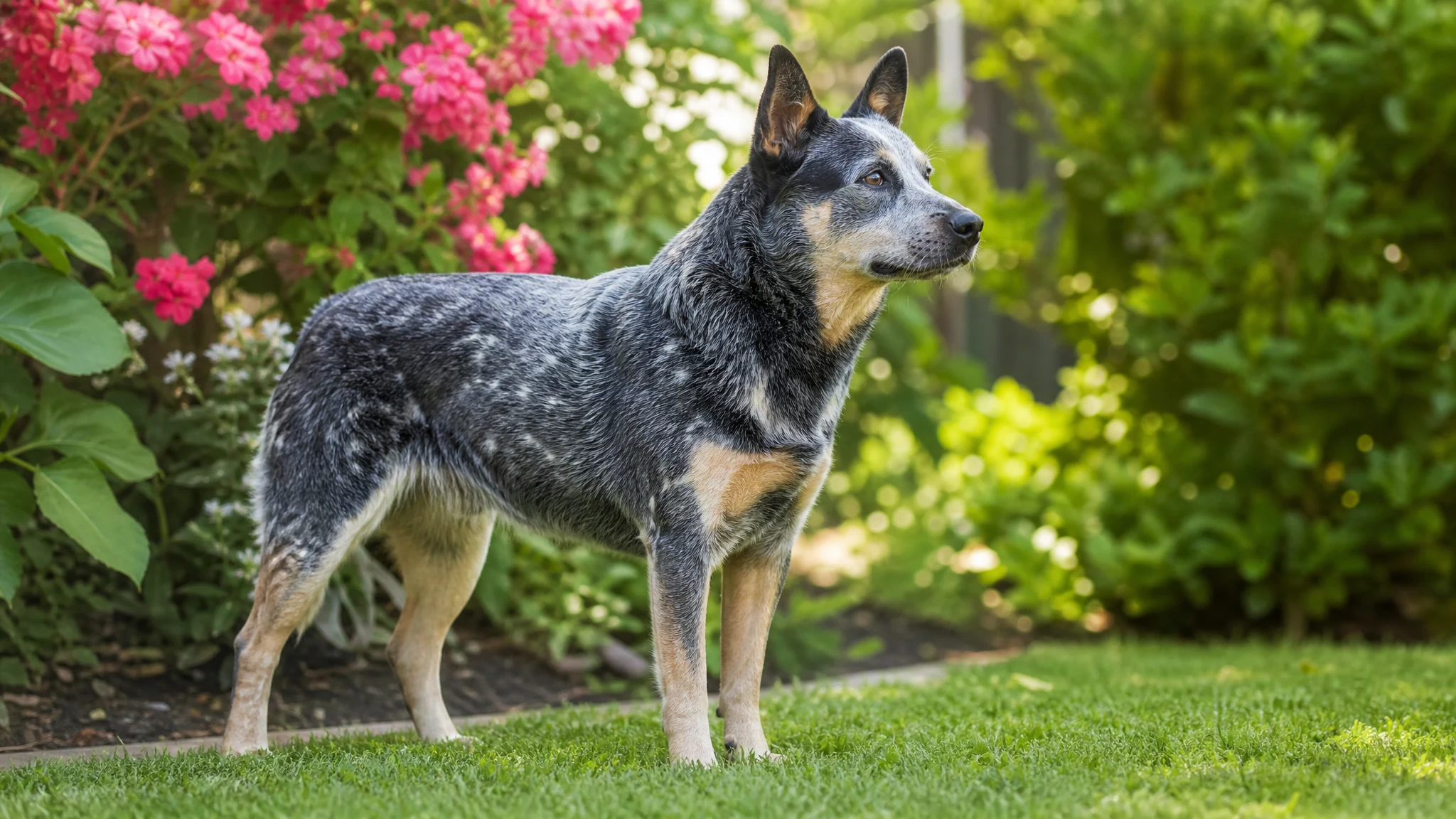
The breed's official name is Australian Cattle Dog. Most people say Blue Heeler. This guide walks through preparing for the visit, what to look at, and what to ask. It also covers how to start feeding once the puppy comes home.
What You Will Need
- A written list of questions (see step 4).
- Your phone, to take notes and, if the breeder agrees, photos.
- A calendar, so you can plan a second visit if you want one.
- Clean shoes or shoe covers. Many breeders ask visitors to avoid bringing in germs from other animals.
- A short list of local veterinary clinics you could use for a first check-up.
- Time. Plan for an hour or more and do not rush the conversation.
Step-by-Step: Preparing For and Handling the Home Visit
1. Learn the basics of the breed first
The Australian Cattle Dog Club of America (ACDCA) describes males at 18 to 20 inches and females at 17 to 19 inches at the withers. PetMD and MetLife Pet Insurance both list adult weight at 35 to 50 pounds. The ACDCA gives a life expectancy of about 12 to 16 years.
This is an active herding dog. PetMD notes that active Heelers may do well on calorically dense, high-quality diets. Knowing this helps you judge whether your home suits the dog. Ask yourself about daily exercise and your schedule, not only about how cute the puppy is.
2. Ask about health testing before you drive anywhere
Ask by phone or message which health tests the parents have had. The ACDCA's OFA-CHIC requirements list hip and elbow evaluations, a BAER-based hearing evaluation for congenital deafness, and a DNA test for primary lens luxation. PetMD also notes that progressive retinal atrophy (PRA) can be screened with the prcd-PRA DNA test.
The ACDCA also lists optional tests, including patellar luxation, a cardiac exam, rcd4 PRA DNA, PennHIP at 6 months, and hock OCD radiographs.
Ask to see the actual paperwork or the OFA records. A breeder who says "the parents are healthy" without documents has not answered your question. These tests screen for inherited conditions. They do not promise that any one puppy will stay healthy.
3. Arrive on time and observe before you ask
When you arrive, look around first. Notice the following:
- Is the area where the puppies live clean, with fresh water available?
- Do the puppies look alert, with clean eyes, ears and coats?
- Is the mother present? How does she act with strangers?
- Do the puppies seem comfortable around people, or are they all frightened?
Heelers can be reserved with strangers, so some caution is not alarming on its own. Extreme fear or constant hiding is worth a follow-up question.
4. Ask your questions and write down the answers
Useful questions include:
- Can I see the health test results for both parents?
- Has the puppy had a hearing (BAER) test? If not, when will it be done?
- What vaccines and deworming has the puppy had, and what are the dates?
- What are the puppies eating now, and how often?
- What does your contract or health guarantee say, and what is the return policy?
- How are the puppies being socialized to household sounds, people and handling?
- Will you be available for questions after I bring the puppy home?
A good breeder usually asks you questions too, about your home, your yard and your experience with active dogs. That is a good sign, not an intrusion.
5. Ask what the puppy eats and get the label
Ask for the exact brand and product name, and read the nutritional adequacy statement on the bag. The Association of American Feed Control Officials (AAFCO) sets model language for these statements. It does not approve or certify pet food. Its recognized life stages are gestation/lactation, growth, maintenance and all life stages.
Look for a growth or all-life-stages statement. The clause "including growth of large-size dogs (70 pounds or more as an adult)" is not needed for a Heeler, because the breed's 35 to 50 pound adult weight is below that cutoff. A food that says "except for growth of large-size dogs" is not automatically wrong for a Heeler, but the statement is worth reading. Whole Dog Journal explains this wording in its piece on nutritional adequacy statements.
Ask whether the puppy has been fed on a schedule. Free-feeding is discouraged. PetHealthMD notes that free-fed puppies gain excess weight that strains growing bones and joints.
6. Plan the first weeks of feeding before pickup day
Buy the same food the puppy has been eating, or ask your veterinarian before changing it. Hill's guidance on switching foods suggests mixing increasing amounts of the new food with decreasing amounts of the old over 7 days. This is a general approach, and your veterinarian can adjust it for your puppy.
Treat any bag feeding guide as a starting point. Amounts then depend on the puppy's body condition and the veterinarian's advice. For a general picture of how portions change as a Heeler grows, see our Blue Heeler feeding chart by age.
7. Step back and decide later
Do not commit during the visit if you feel pressured. Go home, review your notes, and compare what you saw with what the paperwork says. Ask follow-up questions in writing so you have a record. A responsible seller will understand a day or two of thought.
8. Book a veterinary check-up
Once you have a puppy, schedule a first visit with your own veterinarian soon after pickup. Your veterinarian can look at the puppy, review the records, and answer feeding questions for that individual dog.
Tips for a Better Visit
- Visit more than once if you can. A second visit shows whether the first impression held.
- Ask to meet the mother, and the father if he is on site.
- Bring every household member who will live with the dog.
- Write the answers down, since details blur by the next day.
- Check whether the breeder belongs to a breed club, and ask the club directly about its code of ethics.
- Keep treats minimal. PetMD warns that excess treats can lead to overweight Heelers, so build habits early.
Common Mistakes to Avoid
- Choosing by color or looks alone. Health records and temperament matter more over a 12 to 16 year life.
- Accepting "vet checked" without details. Ask which vet, what date and what was checked.
- Skipping the hearing question. Congenital deafness is inherited in the breed and is not related to diet, according to the ACDCA's CHIC information.
- Handing over money before seeing documents. Review the contract and records first.
- Assuming a special food will solve health worries. Joint and eye conditions are inherited or developmental. Diet and healthy weight are part of care, but a veterinarian decides what suits an individual dog.
- Changing food on day one. A sudden switch on top of a new home is a lot for a young puppy.
What You Can Reasonably Expect
A careful visit may help you spot warning signs and compare breeders on equal terms. It may also leave you with clear records to take to your veterinarian. It cannot guarantee a healthy dog, since inherited conditions and individual temperament vary. Health testing lowers uncertainty but does not remove it.
Many Heeler owners find that asking direct questions and requesting documents makes the process calmer. If answers are vague or documents are missing, check with the relevant breed club or the brand's own information before deciding.
Good records, a clear feeding plan and an early veterinary visit are a reasonable foundation for a growing herding dog.
Sources
- Australian Cattle Dog Club of America, Your New Australian Cattle Dog
- Australian Cattle Dog Club of America, OFA-CHIC Health Testing Requirements
- PetMD, Australian Cattle Dog breed page
- MetLife Pet Insurance, Australian Cattle Dog breed spotlight
- AAFCO, Understanding Pet Food
- AAFCO, Reading Labels
- Whole Dog Journal, In the Fine Print: Nutritional Adequacy Statements
- PetHealthMD, Feeding Your Large Breed Puppy for Healthy Growth
- Hill's Pet Nutrition, Science Diet product page (food switching guidance)