Popular Blue Heeler Mixes and What to Expect
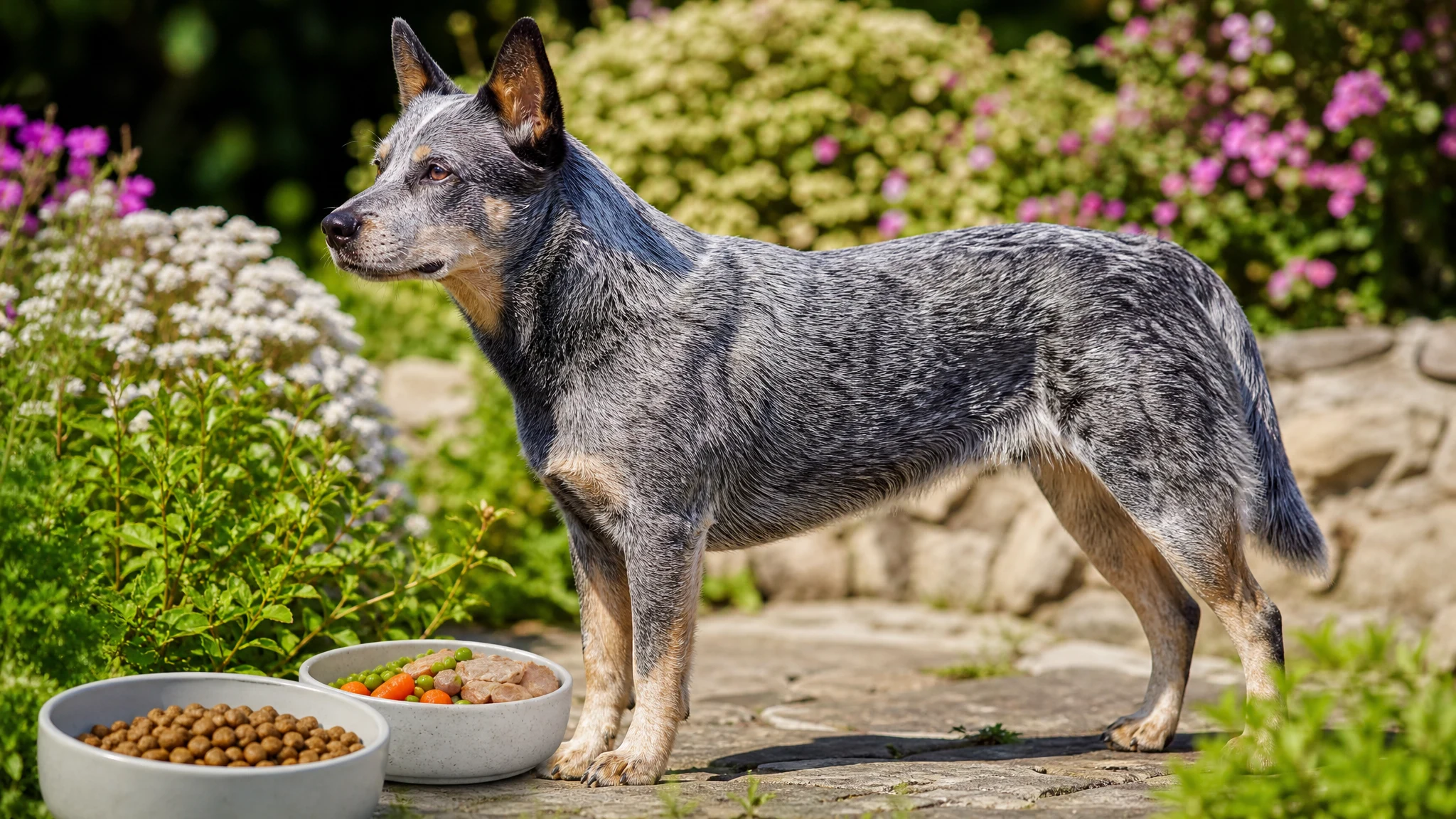
General nutrition information compiled from product labels and published sources, not veterinary advice. Your veterinarian is the right person to choose a diet for your dog, especially one with a health condition.
Blue Heeler mixes are hard to pin down. A mixed dog can lean toward the Heeler side, the other parent's side, or land somewhere in between. That makes "what to expect" a fair question, and an honest answer starts with what can and cannot be known.
This guide does not rank mixes or promise how any one cross will look, act or eat. No source we relied on gives mix-specific numbers, so we won't invent them. Instead, you will get a step-by-step method for working out what your own mixed dog needs, starting from what is documented about the Heeler side.
What this guide covers
Blue Heeler is the common name for the Australian Cattle Dog, the official breed name used by the Australian Cattle Dog Club of America and PetMD. A mix may have one Heeler parent, or a Heeler grandparent several generations back. The steps below work for either case.
The focus is feeding, because food choices depend on a dog's expected adult size and life stage. Those are the two things a mix makes uncertain.
Materials you will need
- Any paperwork from the breeder, rescue or shelter, including known parentage and any size estimate.
- Your dog's current weight, from a home scale or a vet visit.
- The food bag or can, so you can read the nutritional adequacy statement and ingredient list.
- A kitchen scale or a measuring cup, so portions are consistent.
- A notebook or phone note for weight and body condition checks.
- A veterinarian who can examine your dog and confirm the plan.
Step 1: Learn what is documented about the Heeler side
Start with the parent breed. MetLife Pet Insurance and PetMD both list adult Australian Cattle Dogs at 35 to 50 pounds, which makes the breed medium-sized. The Australian Cattle Dog Club of America gives heights of 18 to 20 inches for males and 17 to 19 inches for females at the withers. It also gives a life expectancy of about 12 to 16 years.
PetMD describes the breed as active. It says calorically dense, high-quality diets may suit these dogs and that two feedings a day is typical. It also says amounts should follow the bag guidance and the dog's ideal weight.
These numbers describe purebred Heelers. A mix may fall outside them, so treat them as one reference point and not a prediction.
Step 2: Estimate adult size, and admit the uncertainty
Size is the biggest feeding question for a mix. AAFCO defines a large-size dog as one expected to weigh 70 pounds or more as an adult, according to PetHealthMD's education page. A purebred Heeler sits well below that line.
A mix with a much larger parent breed might not. If you know both parents' breeds and sizes, ask the breeder or rescue what adult weight they expect. If parentage is unknown, ask your veterinarian to estimate from paw size, growth pattern and body build. Treat any estimate as a range, and recheck it as your puppy grows.
The Australian Cattle Dog Club of America and the breed pages we used do not list mix-specific weights. For any specific cross, check with the breeder, a breed club or your vet.
Step 3: Match the life stage on the label
AAFCO, which sets model language for pet food and does not approve or certify products, recognizes four life stages: gestation and lactation, growth, maintenance and all life stages. Find the statement on the bag and check that it fits your dog's age.
Then read the size clause for growing dogs. Per Whole Dog Journal's explanation of nutritional adequacy statements, some labels say the food covers growth "including growth of large-size dogs (70 pounds or more as an adult)." Others say "except for" growth of large-size dogs, and those should not be fed to large-breed puppies.
Here is how that looks in practice, using label data from the brands' own pages:
- The Royal Canin Size Health Nutrition Medium Puppy statement covers growth including large-size dogs.
- The VICTOR Hi-Pro Plus Small & Medium Breed Puppy statement says all life stages except growth of large-size dogs.
For a purebred Heeler, either clause is consistent with the breed's 35 to 50 pound range. For a mix that may grow past 70 pounds, the "except for" wording is a reason to ask your vet before choosing it.
Step 4: Compare labels on the same terms
We compared label data only. We did not run feeding trials or taste tests, and nothing here is a review of how a food performs in a real dog. Use the same checklist on every food you consider:
- Read the AAFCO statement and confirm the life stage.
- Read the first five ingredients as a rough picture of the recipe.
- Note the guaranteed analysis minimums for protein and fat, and the fiber maximum.
- Check calories per cup or per can, since foods vary widely.
- Look for kibble size. Several brand pages do not state it, so ask the brand if size matters for your dog.
Calories show why this matters. The Royal Canin Medium Puppy page lists 410 kcal per cup. The Royal Canin Medium Adult page lists 340 kcal per cup. The VICTOR Hi-Pro Plus page lists 406 kcal per cup. The same cup of food can deliver quite different energy, so a feeding guide from one food does not transfer to another.
Some Hill's Science Diet pages give dry matter averages and not guaranteed minimums, so those numbers are not directly comparable to a guaranteed analysis. Wet and fresh foods are mostly water, which makes side-by-side protein comparisons misleading without converting to dry matter.
Step 5: Use label feeding guides as starting points
Every feeding guide is a starting point. Royal Canin's adult page says its guide is only a guide and that grams are the most accurate measure. Hill's pages tell owners to adjust amounts to maintain optimal weight and to ask a veterinarian if unsure.
For a mix, begin with the amount on the label for your dog's current weight, then adjust by body condition over a few weeks. For age-based amounts, see our Blue Heeler feeding chart by age, and keep in mind that a mix's adult size may differ from the purebred range.
Step 6: Control growth rate in puppies
IVC Journal notes that growth rate and calorie intake matter for developmental orthopedic disease in any growing dog, and that free-feeding is discouraged. PetHealthMD says free-feeding puppies leads to excess weight gain that strains growing bones and joints.
The practical takeaway is to measure meals and feed on a schedule. Our research did not turn up a source that sets a growth-rate target for mixes, so ask your veterinarian to track your puppy's weight curve.
Hip and elbow dysplasia are the joint conditions of interest in this breed. The Australian Cattle Dog Club of America's CHIC program requires hip and elbow evaluation for breeding dogs. PetMD says hip dysplasia is uncommon in the breed. Diet does not prevent or treat it, and a veterinarian decides what is right for an individual dog.
Step 7: Watch weight and treats
PetMD warns that too many treats can lead to overweight Heelers. It does not list obesity as a breed predisposition, so this is a habit issue more than a breed issue. Count treats as part of the daily food, and reduce meals slightly on heavy training days.
Check body condition every couple of weeks. You should be able to feel the ribs under a light covering, and see a waist from above. If you are unsure, your vet can score body condition for you.
Step 8: Switch foods gradually and confirm with your vet
When changing foods, Hill's advises mixing increasing amounts of the new food with decreasing amounts of the old over 7 days. Keep notes on stool, appetite and energy during that week.
Then take your plan to the vet. Bring the label, your portion amounts and your weight log. Ask whether the plan fits your dog's expected size, age and activity level.
Tips
- Ask the breeder or rescue for any known parent weights and write them down.
- Weigh your puppy on the same scale at regular intervals so changes are meaningful.
- Feed two meals a day for most adults, as PetMD describes for the breed. Puppies often need more frequent meals, so follow the label and your vet.
- Keep the old bag's label or a photo of it. It helps when you compare against a new food.
- Ask the brand directly about anything the product page leaves out, such as kibble size.
Common mistakes to avoid
- Assuming a mix has the Heeler's size. The 35 to 50 pound range belongs to the purebred breed.
- Ignoring the "except for" clause. It matters if your dog might grow past 70 pounds.
- Comparing foods by price or marketing. Use the label data instead.
- Free-feeding a puppy. Measured meals are easier on growing joints.
- Treating a grain-free label as a health feature. The FDA says the link between diet and canine dilated cardiomyopathy (DCM) is a complex scientific issue that is not resolved. Its latest update on the investigation is dated December 23, 2022, and it says adverse event reports alone do not establish cause. If you have questions about DCM, ask your veterinarian.
- Using a food to manage a health problem. Prescription diets are something only a veterinarian prescribes.
Expected results
If you follow these steps, you may end up with a feeding plan that fits your dog's life stage and estimated size, along with a simple routine for tracking weight. Many owners find that measured meals and regular weigh-ins make it easier to notice changes early.
No food or feeding plan can promise a particular coat, energy level, temperament or health outcome. Health traits in the Heeler side, such as progressive retinal atrophy, congenital deafness and primary lens luxation, are inherited. The Australian Cattle Dog Club of America and PetMD describe them as screened by testing, not managed by diet. Whether a mix carries any of them is a question for the breeder and your veterinarian.
Sources
- Australian Cattle Dog Club of America, Your New Australian Cattle Dog
- Australian Cattle Dog Club of America, OFA-CHIC Health Testing Requirements
- PetMD Australian Cattle Dog breed page
- MetLife Pet Insurance, Australian Cattle Dog breed spotlight
- AAFCO, Understanding Pet Food
- AAFCO, Reading Labels
- Whole Dog Journal, In the Fine Print: Nutritional Adequacy Statements
- PetHealthMD, Feeding Your Large Breed Puppy
- IVC Journal, Feeding large breed puppies
- FDA CVM, Investigation into Potential Link between Certain Diets and Canine Dilated Cardiomyopathy
- Royal Canin, Medium Adult (dry)
- Royal Canin, Medium Puppy (dry)
- VICTOR, Hi-Pro Plus
- VICTOR, Hi-Pro Plus Small & Medium Breed Puppy
- Hill's Science Diet, Adult Perfect Digestion Chicken & Barley